


Introduction to Easy-to-Clean Hunter Douglas Blinds
Maintaining the beauty and functionality of your home's window treatments doesn't have to be a chore. Choosing the right Hunter Douglas blinds can significantly simplify your cleaning routine, saving you time and effort. With a focus on innovative design and quality materials, Hunter Douglas offers a range of options that are both stylish and remarkably easy to maintain.
Discovering blinds that are simple to clean means more time enjoying your home and less time spent on upkeep. From everyday dusting to deeper cleaning, selecting the right type of blind can make all the difference. Explore our collection of easy-to-clean window treatments to find solutions that fit your lifestyle and aesthetic.
For homeowners seeking a balance of elegance and practicality, understanding the specific benefits of different Hunter Douglas blinds is key. This guide will walk you through identifying and maintaining the easiest-to-clean options, ensuring your windows always look their best with minimal fuss.
Understanding Your Hunter Douglas Blinds: Material Matters
The material of your Hunter Douglas blinds plays a pivotal role in how simple or complex their cleaning process will be. Certain fabrics and constructions naturally repel dust and stains, while others require more specific care. Understanding these differences is the first step to selecting blinds that align with your desire for low-maintenance home decor.
| Material Type | Ease of Cleaning | Typical Maintenance |
|---|---|---|
| Aluminum/Vinyl | Very Easy | Wipe with a damp cloth, dust regularly. |
| Faux Wood | Easy | Wipe with a damp cloth, resistant to moisture and warping. |
| Natural Wood | Moderate | Dust regularly, wipe with a slightly damp cloth, avoid excessive moisture. |
| Fabric (e.g., Roller) | Varies by fabric; some are very easy to clean | Dusting, spot cleaning, vacuuming with brush attachment; some may be spot-cleanable. |
| Cellular/Honeycomb | Moderate to Easy (depending on material type) | Dusting, vacuuming; some fabrics can be gently spot cleaned. |
When considering window treatments that are easy to clean, materials like aluminum, vinyl, and faux wood consistently rank high for their durability and simple maintenance needs. These materials are less prone to damage from moisture and common household cleaners, making them ideal choices for busy households. Explore our selection of blinds that are easiest to clean to find the perfect fit for your home.
Step-by-Step Guide: General Cleaning for Hunter Douglas Blinds
Maintaining the pristine appearance of your Hunter Douglas blinds involves a consistent cleaning routine. Regular dusting prevents the buildup of grime, while occasional spot cleaning addresses minor blemishes. By following these straightforward steps, you can ensure your window treatments remain looking their best for years to come.
Daily Dusting:
- Use a soft microfiber cloth or a feather duster to gently wipe down the slats or fabric.
- For blinds with adjustable slats, tilt them up and down to ensure all surfaces are reached.
- Work from the top of the blind downwards.
Spot Cleaning Techniques:
- Identify the stained or soiled area.
- Test a small, inconspicuous spot with your chosen cleaning solution first.
- Gently blot the stain with a clean, damp cloth; avoid rubbing vigorously.
Using Gentle Solutions:
- For most blinds, a mild solution of soap and water is sufficient.
- Mix a few drops of dish soap with warm water in a clean bowl.
- Dampen a soft cloth with the solution, wringing out excess moisture.
Drying and Finishing:
- After cleaning, use a clean, dry cloth to gently wipe away any remaining moisture.
- Allow blinds to air dry completely before closing them.
- For fabric blinds, ensure they are thoroughly dry to prevent mildew.
For more in-depth guidance, our resources on how to clean Hunter Douglas blinds provide detailed instructions tailored to various types. If you're looking for specific advice, consider exploring our article on cleaning Hunter Douglas blinds for comprehensive tips.
Effortless Daily Dusting for Hunter Douglas Blinds
Maintaining a dust-free environment in your home starts with a simple, consistent dusting routine for your Hunter Douglas blinds. This proactive approach prevents dust from accumulating and becoming ingrained in the material, which can lead to more intensive cleaning later on. A few minutes each day can make a significant difference in the overall appearance and longevity of your window treatments.
- Gather your tools: A soft microfiber cloth, a feather duster, or a vacuum cleaner with a brush attachment are ideal.
- Adjust the blind: For horizontal blinds, tilt the slats completely open to expose all surfaces. For vertical blinds, ensure they are positioned to allow access to the entire length of each vane.
- Wipe or dust: Gently glide your chosen tool across each slat or the fabric surface. Work from the top of the blind downwards to catch falling dust.
- Reach tricky spots: For horizontal blinds, turn them upwards and then downwards to clean both the top and bottom surfaces of each slat.
- Repeat regularly: Aim to dust your blinds at least once a week, or more often if you have pets or allergies.
Regular dusting not only keeps your blinds looking fresh but also contributes to better indoor air quality. For more tips on maintaining various types of window coverings, check out our guide on window treatments that are easy to clean.
Gentle Spot Cleaning for Stubborn Marks on Hunter Douglas Blinds
Even with regular dusting, occasional spills or marks can appear on your Hunter Douglas blinds. Spot cleaning is an effective method for addressing these isolated issues without needing to clean the entire blind. The key is to use the right technique and cleaning solution to avoid damaging the material or leaving watermarks.
- Identify the mark: Pinpoint the exact location of the stain or smudge.
- Choose your cleaner: For most Hunter Douglas blinds, a mild solution of dish soap mixed with warm water is sufficient. For more specific stains, consult the manufacturer's guidelines or professional advice.
- Test in an inconspicuous area: Before applying any cleaner to the visible area, test it on a small, hidden spot to ensure it doesn't cause discoloration or damage.
- Apply gently: Dampen a clean, white cloth with the cleaning solution, wringing out excess liquid. Gently blot the affected area, working from the outside of the stain inward to prevent spreading. Avoid scrubbing.
- Rinse and dry: Use a separate, clean, damp cloth to gently wipe away any soap residue. Follow immediately with a dry, clean cloth to absorb moisture. Allow the area to air dry completely before adjusting the blinds.
For detailed instructions on caring for specific blind materials, our article on how to clean Hunter Douglas blinds offers comprehensive advice.
Creating Gentle Cleaning Solutions for Your Blinds
The right cleaning solution can make all the difference when caring for your Hunter Douglas blinds. Using harsh chemicals or abrasive cleaners can damage the material, leading to discoloration, warping, or breakdown of components. Opting for gentle, DIY solutions ensures effective cleaning while preserving the integrity and appearance of your window treatments.
- Mild Soap and Water Solution: Mix a few drops of a pH-neutral dish soap with a quart of lukewarm water. This is a versatile solution suitable for most blind materials, including faux wood and many fabric types.
- Vinegar and Water Solution (for tougher grime): For more persistent dirt or water spots, mix equal parts white vinegar and water. Vinegar's acidity can help break down mineral deposits and grime, but always test this solution on an inconspicuous area first, especially on wood or delicate fabrics.
- Specialized Cleaners: For specific materials like natural wood or delicate fabrics, consider using cleaners specifically recommended by Hunter Douglas or a professional. These are formulated to be safe for the unique properties of those materials. Always follow product instructions carefully.
Always use a soft, lint-free cloth and ensure it is only slightly damp, not wet. Excessive moisture can be detrimental to many blind materials, especially natural wood. If you're unsure about the best cleaning agent for your specific blinds, refer to our guide on cleaning Hunter Douglas blinds or contact a professional.
Proper Drying and Finishing for Pristine Hunter Douglas Blinds
After cleaning your Hunter Douglas blinds, the drying and finishing stages are crucial for preventing water spots, streaks, and potential damage. Proper techniques ensure that your blinds not only look clean but also maintain their structural integrity and aesthetic appeal. Rushing this process can unfortunately undo the hard work you’ve put into cleaning them.
- Absorb Excess Moisture: Immediately after cleaning, use a clean, dry microfiber cloth to gently pat down all surfaces of the blinds. Ensure you remove as much moisture as possible, paying attention to edges and crevices.
- Air Dry Completely: Leave the blinds in an open position to allow for thorough air drying. Ensure good ventilation in the room by opening windows or using a fan on a low setting. This is especially important for fabric blinds, which can develop mildew if not dried properly.
- Check for Streaks: Once dry, inspect the blinds in good light for any remaining streaks or water spots. If found, you can often buff these out gently with a clean, dry microfiber cloth.
- Final Inspection: Before closing or operating the blinds, ensure all components are completely dry and functioning smoothly. For wood or faux wood blinds, a light polish designed for the material can add a protective sheen and enhance their appearance.
Proper drying is a critical step in maintaining the quality of your blinds. For more advanced cleaning strategies, explore our comprehensive guide on how to clean Hunter Douglas blinds.
Deep Cleaning Specific Hunter Douglas Blind Types
While general cleaning keeps your Hunter Douglas blinds looking good day-to-day, deeper cleaning is sometimes necessary to tackle accumulated dirt, grime, or tougher stains. Different types of blinds require distinct approaches to ensure effective cleaning without causing damage. Understanding these specific methods is key to prolonging the life and beauty of your window treatments.
- Wood Blinds: Dust regularly with a soft cloth or vacuum brush attachment. For deeper cleaning, use a wood cleaner or polish sparingly on a soft cloth, wiping in the direction of the grain. Avoid excessive moisture, as it can cause warping or damage. If spills occur, wipe them up immediately. Our guide on how to clean Hunter Douglas wood blinds offers more detailed advice.
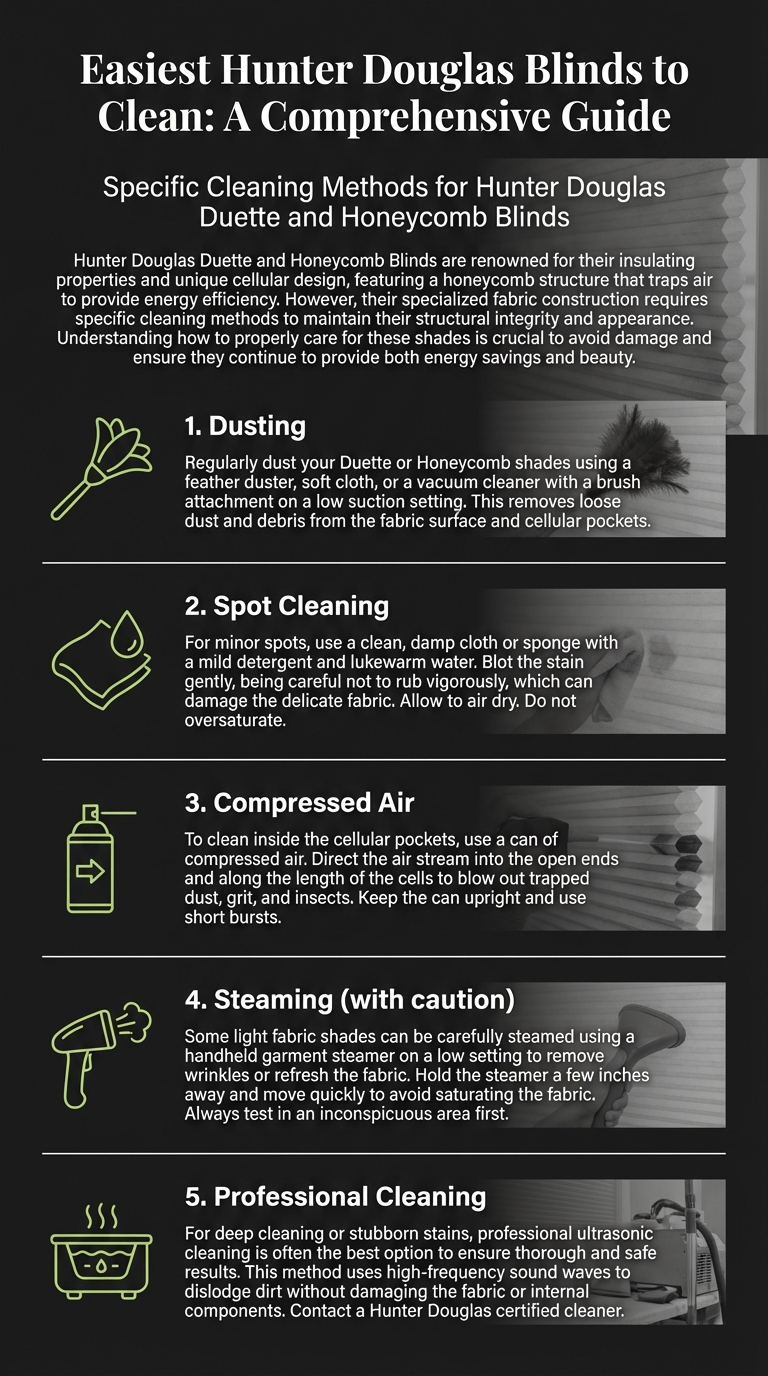
- Honeycomb Blinds (Duette®): These shades are best cleaned by dusting or vacuuming with a soft brush attachment on your vacuum cleaner. For spot cleaning, use a mild soap and water solution on a slightly damp cloth, blotting gently. Ensure the fabric dries completely before raising the shades. For more extensive cleaning needs, explore options for cleaning Hunter Douglas honeycomb blinds.
- Aluminum Blinds (e.g., Modern Precious Metals®): These are generally very easy to clean. Dust regularly. For a more thorough clean, you can wipe them down with a damp cloth and a mild detergent. For heavily soiled blinds, you might be able to remove them and wash them carefully in a bathtub with mild soap and water, ensuring they are thoroughly dried before rehanging.
- Fabric Roller Shades: Regular dusting and vacuuming are recommended. For spot cleaning, use a mild detergent solution and a clean cloth, blotting gently. Avoid saturating the fabric. Some fabric treatments may allow for specific cleaning methods, so always check product guidelines or our general advice on washing Hunter Douglas blinds.
- Faux Wood Blinds: These are highly durable and easy to maintain. Dust with a microfiber cloth or wash with a damp cloth and mild soap. They are resistant to moisture, making them ideal for kitchens and bathrooms.
When faced with challenging cleaning tasks, knowing the best approach for each blind type ensures optimal results and longevity for your investment.
What to Avoid: Common Mistakes in Blind Cleaning
Ensuring the longevity and pristine appearance of your Hunter Douglas blinds means being aware of common cleaning pitfalls. Many homeowners inadvertently use methods or products that can cause irreversible damage. Avoiding these mistakes will help maintain the beauty and functionality of your window treatments for years to come.
- Using Harsh Chemicals or Abrasive Cleaners: Solvents, bleach, ammonia, or abrasive powders can strip finishes, discolor materials, or scratch surfaces, especially on wood, faux wood, or delicate fabrics. Always opt for mild soap and water or manufacturer-recommended cleaners.
- Over-Wetting Blinds: Excessive moisture is a significant risk, particularly for natural wood blinds, which can warp, crack, or discolor. Even for other materials, saturated blinds can lead to mold or mildew growth and damage internal mechanisms. Use only a slightly damp cloth.
- Scrubbing Too Vigorously: Aggressively scrubbing can damage fabric fibers, scratch surfaces, or even tear delicate materials. Gentle blotting or wiping is usually sufficient for most stains and dirt.
- Improper Drying: Failing to dry blinds thoroughly after cleaning can lead to water spots, streaks, and potential damage, especially for wood and fabric types. Always ensure blinds are completely dry before adjusting them.
- Using Excessive Heat: High heat from steam cleaners or direct sunlight while cleaning can cause materials to warp, shrink, or fade. Stick to room temperature water and gentle methods.
- Ignoring Manufacturer Instructions: Each type of blind may have specific care recommendations. Overlooking these can lead to improper cleaning techniques that damage the product.
By understanding these common errors, you can approach the task of cleaning Hunter Douglas blinds with confidence and care. Always prioritize gentle methods and appropriate products to ensure the best results when you clean Hunter Douglas blinds.
When to Call a Professional Blind Cleaner
While many Hunter Douglas blinds can be cleaned effectively at home, there are certain situations where professional intervention is the best course of action. Complex cleaning needs, valuable or delicate materials, or simply a lack of time can all be reasons to seek expert assistance. Professionals have specialized equipment and knowledge to tackle challenging cleaning tasks safely and efficiently.
If your blinds are made from delicate fabrics, intricate natural wood, or have sophisticated operating mechanisms, a professional cleaner can ensure they are handled with the utmost care. They possess the expertise to identify materials and apply the most appropriate cleaning methods, preventing potential damage that could occur with DIY attempts. For instance, deep cleaning heavily soiled or stained blinds, or those with intricate pleats or textures, is often best left to the experts.
Consider professional cleaning when dealing with stubborn stains that resist home remedies, or if your blinds have been exposed to smoke, strong odors, or significant dust buildup over a long period. Professionals can often restore blinds that might otherwise seem beyond repair. When in doubt, reaching out for professional blind cleaning services ensures your investment is protected and your window treatments are returned to their optimal condition, far surpassing what standard home care can achieve for intricate cleaning needs.
Maintaining Your Hunter Douglas Blinds for Longevity
| Question | Helpful Answer |
|---|---|
| How often should I dust my Hunter Douglas blinds? | For optimal appearance and to prevent dust buildup, we recommend dusting your Hunter Douglas blinds at least once a week. More frequent dusting may be beneficial in homes with pets or if allergies are a concern. |
| What is the best way to clean faux wood blinds? | Faux wood blinds are very low maintenance. You can easily wipe them clean with a damp cloth and mild soap. They are resistant to moisture, making them suitable for kitchens and bathrooms where regular cleaning is often needed. |
| Can I use a vacuum cleaner on my blinds? | Yes, a vacuum cleaner with a soft brush attachment can be used for dusting most Hunter Douglas blinds, including fabric shades and cellular shades. Ensure the brush is clean and soft to avoid scratching or snagging materials. |
| How should I handle stains on fabric blinds? | For fabric blinds, it's best to spot clean stains immediately using a mild detergent solution and a clean, slightly damp cloth. Blot the stain gently, working from the outside in, and allow the area to air dry completely. |
Conclusion: Keeping Your Hunter Douglas Blinds Pristine
Maintaining the beauty and functionality of your Hunter Douglas blinds is achievable with consistent, gentle care. By understanding the materials of your blinds and employing the right cleaning techniques, you can effortlessly keep them looking pristine. Regular dusting, appropriate spot cleaning, and knowing when to seek professional help are all key components of ensuring their longevity.
Choosing Hunter Douglas means investing in quality window treatments designed for both style and durability. By following the cleaning guidelines outlined in this guide, you can continue to enjoy the aesthetic appeal and practical benefits of your blinds for years to come. Explore our range of window treatments easy to clean to ensure your home remains both beautiful and easy to maintain.
Frequently Asked Questions About Cleaning Hunter Douglas Blinds
| Question | Helpful Answer |
|---|---|
| Are Hunter Douglas blinds difficult to clean? | Hunter Douglas offers a wide range of blinds, and many are designed for easy cleaning. Materials like faux wood, aluminum, and certain fabrics are very low maintenance, requiring only simple dusting or wiping. |
| Can I use water to clean my Hunter Douglas blinds? | Yes, for most Hunter Douglas blinds, using a slightly damp cloth with mild soap and water is safe and effective. However, always avoid over-wetting, especially with natural wood blinds, and ensure they are dried thoroughly afterward. |
| What should I do if my blinds have stubborn stains? | For stubborn stains, try a mild soap and water solution and blot gently. If the stain persists, test a specialized blind cleaner on an inconspicuous area first, or consider contacting a professional blind cleaning service. |
| How do I clean the fabric components of my blinds? | For fabric blinds, regular dusting or vacuuming with a soft brush attachment is recommended. For spot cleaning, use a minimal amount of mild detergent solution on a slightly damp cloth, blotting carefully, and allowing to air dry. |