

Roman Shades vs Cellular Shades Insulation
Understanding roman shades vs cellular shades insulation is crucial for homeowners looking to enhance their home’s energy efficiency. When comparing window treatments, their ability to regulate indoor temperature can significantly impact heating and cooling costs. Making an informed choice ensures you achieve both comfort and savings.
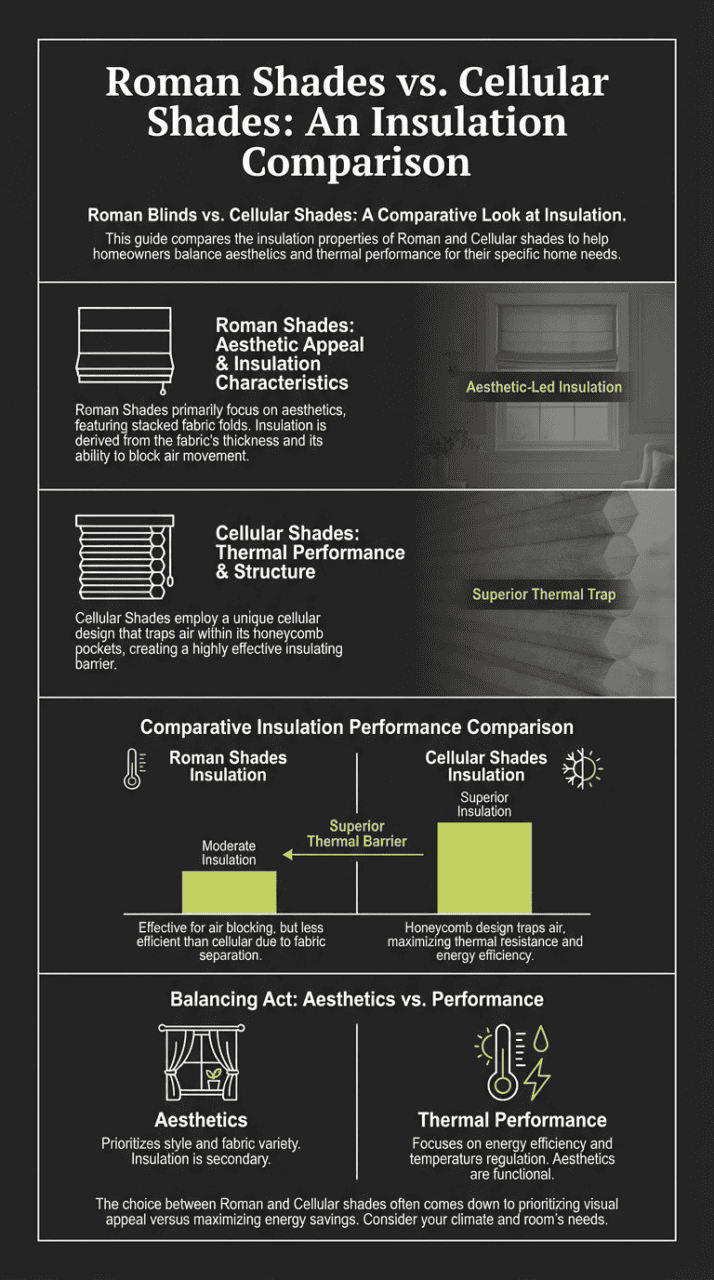
Many homeowners seek effective ways to maximize energy savings through their window coverings. Both Roman and cellular shades offer distinct advantages in this regard, but their insulation capabilities differ based on their unique construction. Exploring these differences is key to selecting the best option for your needs.
This comprehensive guide delves into the roman shades vs cellular shades insulation comparison, helping you navigate the options for modern window treatments. By understanding how each shade type performs, you can make a decision that benefits your home’s thermal performance and aesthetic appeal, much like comparing real wood vs faux wood blinds for different material considerations.
Consider how different window treatments can impact your home’s overall energy efficiency. From half arched window blinds to standard rectangular openings, the right choice plays a vital role. Effective window coverings are an integral part of a well-insulated home. If you’re considering replacing old window treatments, learning how to safely remove Bali blinds can be a helpful first step.
What Are Roman Shades & Cellular Shades?
To fully grasp the nuances of roman shades vs cellular shades insulation, it’s helpful to first understand the fundamental characteristics of each type. This foundational knowledge will guide you toward making the most effective choice for your home’s energy efficiency and aesthetic preferences. For a deeper dive into the comparison, explore our detailed guide on Roman Shades Vs Cellular Shades: Which is Best?
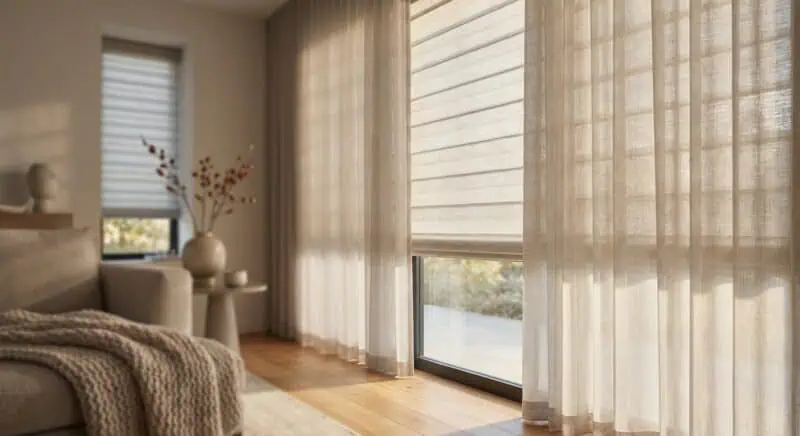
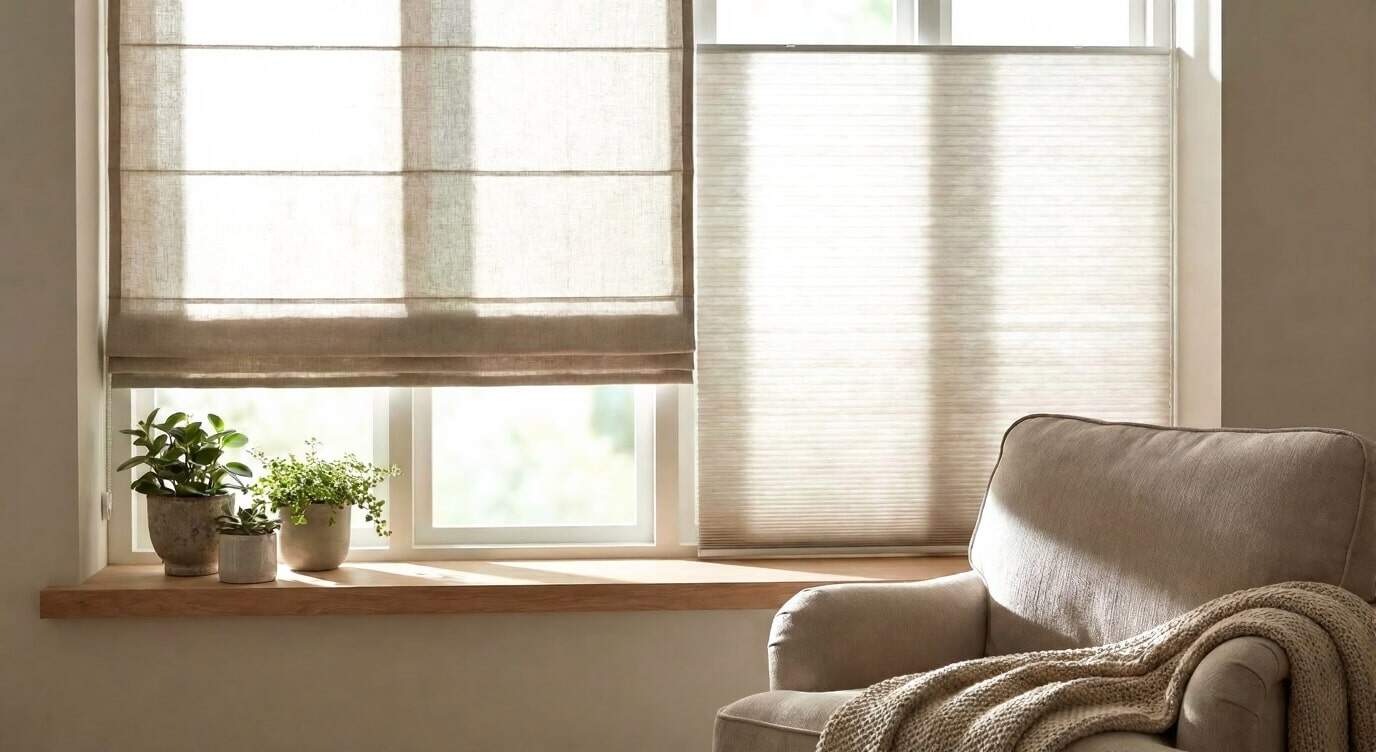
Roman shades are fabric window treatments that fold up into neat, even pleats when raised. They offer a soft, elegant appearance, combining the functionality of blinds with the decorative appeal of drapery. Their construction typically involves a flat fabric panel that is pulled up using cords or a continuous loop system.
Cellular shades, also known as honeycomb shades, are characterized by their unique, multi-layered construction. They are made of fabric cells that resemble a honeycomb, designed to trap air. This trapped air acts as an insulating barrier, making them a popular choice for energy efficiency.
Key features of Roman shades include:
- Elegant Fabric Folds: Creates a sophisticated, tailored look.
- Versatile Styles: Available in various fabrics, colors, and patterns to match any decor.
- Light Control Options: Can be designed for light filtering, room darkening, or blackout.
- Aesthetic Appeal: Offers a softer, more luxurious feel than traditional blinds.
While Roman shades offer style, cellular shades prioritize function. Designer roller shades, for instance, offer a different aesthetic but can also provide insulation benefits depending on the material chosen. It’s essential to consider the primary purpose of your window treatment when comparing options, such as exploring Roman shades vs cellular shades for your home.
For those interested in the comparison, our guide on Roman Shades Vs. Cellular Shades: Insulation? provides further details.
Insulation Properties: The Core Difference
The fundamental difference in roman shades vs cellular shades insulation lies in their construction and how they interact with air. Cellular shades are specifically engineered with air pockets within their honeycomb structure, which significantly impedes heat transfer. This design makes them inherently superior insulators compared to many other window treatments.
Roman shades, while offering some insulation due to their fabric layers, do not possess the same built-in air-trapping mechanism. Their effectiveness largely depends on the fabric’s thickness, density, and the presence of thermal linings. Investing in lined Roman shades can substantially improve their ability to prevent heat loss or gain, contributing to overall energy efficiency.
To maximize energy savings, consider the material and construction of your window treatments. Options like Maximize Energy Savings with Efficient Blinds can guide you. Understanding the thermal performance of various shades is key for modern window treatments.
Even window treatments for unique openings, like those found in Half Arched Window Blinds: Custom Solutions, can be chosen with insulation in mind. The core principle of trapping air or using dense materials remains paramount for effective thermal regulation.
Comparing Thermal Performance: Roman vs. Cellular
When comparing the thermal performance of Roman shades against cellular shades, the distinction is quite clear. Cellular shades are engineered for superior insulation due to their honeycomb structure, which creates multiple air chambers. These chambers act as a barrier, significantly reducing heat transfer through the window.
Roman shades offer a moderate level of insulation, primarily influenced by the fabric’s weight and the addition of thermal liners. While they can contribute to reducing energy loss, they typically do not match the insulating capabilities of cellular shades unless specifically designed with advanced thermal properties.
Here is a comparison of their typical thermal performance:
- Cellular Shades: Generally offer the highest R-values among common window treatments. Their honeycomb structure effectively traps air, providing excellent insulation against both heat and cold. This makes them a top choice for maximizing energy efficiency.
- Roman Shades: Provide good insulation, especially when made from heavier fabrics or equipped with thermal linings. The fabric itself offers a barrier, but the lack of air pockets means they are less effective than cellular shades in extreme temperatures.
- Lined Roman Shades: Adding a thermal lining to Roman shades can significantly boost their insulating properties, bringing them closer to the performance of cellular shades. This option offers a compromise between aesthetics and energy efficiency.
For those seeking the best in energy efficiency, cellular shades are often the preferred option. However, styled Roman shades can still offer substantial benefits, particularly when combined with energy-saving strategies. Choosing modern window treatments should always consider both form and function, much like the considerations in an Alta roller shades review for more.
Consider the overall impact on your home by exploring ways to maximize energy savings. The choice between Roman shades and cellular shades is a significant factor in this effort.
Cellular Shade Insulation
The insulating prowess of cellular shades stems directly from their innovative honeycomb design. Each cell within the shade captures a pocket of air, creating a thermal barrier between your indoor space and the outside environment. This layered effect is highly effective at preventing heat from escaping during colder months and keeping heat out during warmer months.
The number of cells (single, double, or triple) and the material used can further enhance their insulating capabilities. Shades with more cells and advanced materials will generally offer a higher R-value, meaning they provide greater resistance to heat flow. This makes them an excellent choice for homeowners prioritizing energy efficiency and consistent indoor temperatures.
When considering window treatments, understanding the specific benefits of cellular shades is key. Their construction is a testament to functional design, directly impacting your home’s comfort and energy bills. Explore how these shades can fit into your overall home improvement strategy, and compare them to other options like Roman shades vs cellular shades for a comprehensive view. For maintenance, check out our comprehensive blind repair guide for more.
Roman Shade Insulation
Roman shades offer a distinct aesthetic appeal, and their insulation properties are largely determined by their fabric and construction. While a standard Roman shade provides a basic level of insulation by adding a layer between the window and the room, their effectiveness can be significantly enhanced with specific features, much like other modern window treatments.
Heavier, denser fabrics inherently provide better thermal resistance than lighter materials. Furthermore, the addition of a thermal lining can dramatically improve their ability to block drafts and regulate temperature. For homeowners who prefer the elegant look of Roman shades but also need strong insulation, opting for lined versions is a wise choice.
The choice between Roman shades and cellular shades for insulation often comes down to prioritizing aesthetics versus pure thermal performance. However, with careful selection, Roman shades can offer a substantial contribution to your home’s energy efficiency goals. Consider them as a stylish solution for insulation needs.
Enhancing Roman Shade Insulation
To boost the insulation of Roman shades, focusing on material selection and added features is paramount. Opting for fabrics with a tighter weave and greater density will naturally provide a better barrier against temperature fluctuations. Materials like thick cotton, wool blends, or velour can offer superior performance. For a comprehensive comparison of different shade types and their energy-saving capabilities, explore our Roman Shades Vs Cellular Shades guide.
The most effective way to enhance Roman shade insulation is by incorporating a thermal lining. These linings, often made of reflective or insulating materials, are sewn directly into the back of the shade. This addition creates an extra layer of protection, significantly reducing heat transfer and improving your home’s overall energy efficiency.
When you invest in Roman shades with these features, you combine elegant design with practical energy-saving benefits. It’s a way to achieve both style and substance in your window treatments. Remember to discuss these options when exploring Modern Window Treatments: Trends & Ideas for more.
Styles and Aesthetics: Beyond Insulation
Beyond their insulation capabilities, Roman shades and cellular shades offer distinct aesthetic qualities that can greatly influence home decor. Roman shades are celebrated for their soft, draped appearance, folding into elegant pleats that add a touch of sophistication and warmth to any room. They provide a luxurious feel, reminiscent of drapery, and are available in a vast array of fabrics, patterns, and colors to complement diverse interior styles.
Cellular shades, on the other hand, offer a more modern and minimalist look. Their clean lines and unobtrusive design make them ideal for contemporary interiors. While their primary focus is often on function and energy efficiency, they are available in various opacities and a spectrum of colors, allowing them to blend seamlessly with different decor themes without overpowering the space.
The choice between these styles often hinges on personal preference and the desired ambiance of a room. For those seeking a classic or formal look, Roman shades are an excellent choice. If a sleek, understated design is preferred, cellular shades might be a better fit. Both can be chosen to enhance your home’s overall design.
Exploring various window treatment options can help you find the perfect balance. From banded roller shades to other modern designs, there are numerous ways to enhance your home’s appearance. Remember that even unique window shapes, such as those requiring Half Arched Window Blinds: Custom Solutions, can accommodate stylish and functional treatments. When considering materials, it’s also helpful to compare real wood vs faux wood blinds to see which best suits your needs.
Consider how your window coverings contribute to the overall look and feel of your home. Modern window treatments offer endless possibilities for style and function, ensuring that your choices enhance both your decor and your home’s comfort.
Installation and Maintenance Considerations
When evaluating roman shades vs cellular shades insulation, it’s also important to consider their installation and maintenance requirements. Cellular shades are generally straightforward to install, often featuring a simple bracket system that allows for easy mounting. Their durable construction means they typically require minimal maintenance, usually just occasional dusting or light vacuuming to keep the cells clear of debris.
Roman shades, while also relatively easy to install, may require a bit more care due to their fabric construction. Regular dusting is recommended to prevent fabric from accumulating dust. In some cases, professional cleaning might be necessary for deeper stains or to maintain the fabric’s appearance over time. Understanding how to care for your blinds can extend their lifespan.
For those considering a DIY approach, resources like our DIY Tutorial: How to Safely Remove Bali Blinds can be helpful. Proper installation is key to both functionality and the longevity of any window treatment.
Maintaining pristine blinds is essential for both aesthetics and performance. A thorough Blind Cleaning Guide can offer easy steps to keep your window coverings looking their best. Even complex repairs can sometimes be managed with the right guidance, as outlined in The Ultimate Blind Repair Guide for more.
Choosing the Right Shades for Your Home
Selecting the perfect window treatments involves balancing various factors, including insulation needs, aesthetic preferences, and budget. When comparing Roman shades vs cellular shades, understanding their unique strengths is paramount to making an informed decision that enhances your home’s comfort and energy efficiency.
Cellular shades are generally the front-runners for superior insulation due to their honeycomb structure, which traps air effectively. Roman shades, while stylish, offer good insulation, especially when enhanced with thermal linings and made from denser fabrics. Your choice will depend on whether your priority is maximum energy savings or a blend of style and functional insulation.
After installing hundreds of systems in the local area, our team has found that homeowners often prioritize a balance between aesthetic appeal and tangible energy savings when choosing between Roman and cellular shades. Finding the right fit for unique window openings, such as Half Arched Window Blinds: Custom Solutions, requires careful consideration of both factors.
Here’s a comparative overview to help guide your decision:
| Feature | Roman Shades | Cellular Shades |
|---|---|---|
| Primary Insulation Mechanism | Fabric density, thermal lining | Honeycomb air pockets |
| Typical Insulation Performance | Good to Very Good (with lining) | Excellent |
| Aesthetic Style | Soft, elegant, drapery-like | Modern, minimalist, clean |
| Material Variety | Wide range of fabrics, patterns | Various opacities, colors |
| Maintenance | Dusting, occasional professional cleaning | Dusting, light vacuuming |
| Price Range (General) | Mid to High | Mid to High |
Consider how your window treatments contribute to your home’s overall energy efficiency. Options like Maximize Energy Savings with Efficient Blinds can provide additional insights. Ultimately, the best choice aligns with your specific needs and design goals for your home.
We serve many areas, including Stony Plain: Premium Blinds & Window Treatments, and understand the diverse needs of homeowners. Exploring Modern Window Treatments: Trends & Ideas will help you find solutions that fit your home’s unique style and functional requirements.
Prioritizing Insulation
If maximum insulation is your top priority, cellular shades are typically the superior choice. Their inherent design with air-trapping cells provides the best defense against heat loss and gain, directly translating into significant energy savings. This makes them ideal for homes in climates with extreme temperatures or for windows that are prone to drafts. To learn more about how to maximize energy savings, consider the benefits of efficient window treatments.
When opting for cellular shades, consider the number of layers or cells they possess. Shades with double or triple cells offer enhanced insulation compared to single-cell designs. Furthermore, choosing shades with reflective coatings can further improve their performance by reflecting solar heat away from the window in the summer.
For any home, investing in quality insulation is a long-term benefit. Window treatments play a critical role in this, and cellular shades offer a proven solution for homes seeking the highest level of thermal efficiency.
Balancing Style and Insulation
For homeowners who desire both aesthetic appeal and effective insulation, a balanced approach is key. Roman shades, when equipped with thermal linings and made from dense fabrics, can offer a compelling compromise. They provide the soft, elegant look that many prefer, while still delivering significant energy-saving benefits.
When choosing Roman shades for insulation, discuss options such as blackout or thermal liners with your window treatment specialist. These additions can dramatically improve their ability to block drafts and regulate room temperature. It allows you to achieve a sophisticated look without sacrificing substantial thermal performance, especially when paired with smart home integration like Powerview automation for effortless control.
This blend of style and function means you don’t have to choose between a beautiful home and an energy-efficient one. Carefully selected Roman shades can meet both criteria effectively.
Considering Your Budget
When comparing roman shades vs cellular shades insulation, budget is a significant factor. Both types of window treatments can range in price depending on the materials, features, and customization options chosen. Cellular shades, known for their advanced insulation properties, often represent a higher initial investment due to their specialized construction. For a detailed comparison, see our Roman Shades Vs Cellular Shades guide.
Roman shades can also vary widely in cost. While basic fabric Roman shades might be more affordable, those made from premium materials or featuring intricate designs and robust thermal linings can approach or even exceed the price of cellular shades. It’s essential to weigh the upfront cost against the long-term energy savings each option provides.
Exploring options within your budget is crucial. Consider that investing in better insulation now can lead to lower utility bills over time, making the choice a wise financial decision for your home. To learn more about maximizing your home’s efficiency, check out our guide on how to maximize energy savings, or visit us for premium window treatments in Stony Plain.
Smart Features and Automation Options
Modern window treatments are increasingly incorporating smart features and automation, and this applies to both Roman and cellular shades. Motorized Roman shades can be programmed to open and close at specific times, adding convenience and enhancing security. Similarly, cellular shades can be automated to optimize light and temperature control throughout the day, contributing to energy efficiency.
Technologies like PowerView® Automation offer seamless control over your shades, whether you’re at home or away. This system allows for precise scheduling, creating customized “scenes” that adjust your shades to optimal positions for light, privacy, and insulation. Integrating these smart features can further enhance the benefits of your chosen window treatments.
Exploring smart living options can transform how you interact with your home. Systems such as Smart Living Powerview Automation: Effortless Control provide unparalleled convenience. You can manage your shades through a mobile app or voice commands, making adjustments effortless.
Consider the latest advancements, like the Your Powerview Automation Gen 3 Guide, to understand the cutting-edge technology available. Remote control blinds, including both Roman and cellular styles, offer a sophisticated way to manage your home’s environment and contribute to energy savings.
For those in the Edmonton area, Remote Control Blinds Edmonton: Smart & Convenient provides local expertise on these advanced solutions.
Making Your Insulation Choice
In conclusion, when comparing roman shades vs cellular shades insulation, cellular shades generally offer superior thermal performance due to their unique honeycomb structure that traps air. However, Roman shades can provide good to very good insulation, particularly when enhanced with thermal linings and dense fabrics, offering a stylish alternative for energy efficiency.
The best choice depends on your priorities: maximum insulation and energy savings often point to cellular shades, while a balance of style and solid insulation might lead you to consider lined Roman shades. Both options contribute to a more comfortable and energy-efficient home environment.
To make the most informed decision for your specific needs, explore various window treatment options. Consider resources like Your Commercial Blinds Guide: Types, Benefits & More, even for residential applications, as they often cover a wide range of functional aspects. Understanding modern window treatments is key to optimizing your home’s comfort and energy usage.
Our team is dedicated to helping you find the perfect solution. Visit our About page to learn more about our commitment to quality and customer satisfaction. We are here to guide you through every step of the process.