
Answer
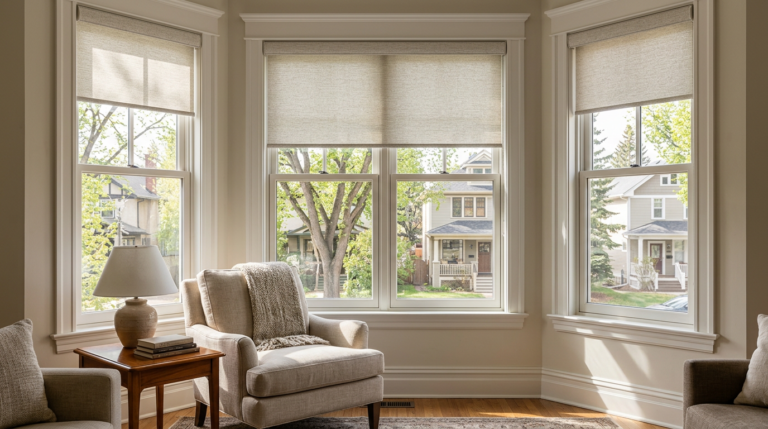
Investing in modern window treatments and smart shade options for homes allows you to pair streamlined aesthetics with intuitive solar control, energy efficiency, and total privacy throughout every room. Integrating cutting-edge PowerView® Automation gives you the freedom to synchronize motorized shades to your daily routine via remote, mobile app, or smart home voice systems. The design specialists at Blind Magic help you select the ideal materials, orientations, and automated systems tailored to your unique lifestyle and interior decor.
Overview
Homeowners evaluating modern window treatments and smart shade options for homes must weigh fabric opacity, motorization hardware, and window orientation. A labeled real-world hypothetical outlines specific equipment choices and installation considerations later in this guide.
Each section breaks down design selections, technical integrations, and investment variables across different living spaces.
- Contemporary Styles: review sleek fabric profiles and clean hardware lines among contemporary shade designs.
- Room Placement: match privacy and light control needs using this room-by-room guide.
- Living Room Options: examine thermal performance and view-through differences by comparing roller and cellular profiles.
- Smart Integration: configure handheld remotes, automated schedules, and third-party systems using motorized shade controls.
- Real-World Example: follow an illustrative project scenario in Edmonton area PowerView pricing.
- Durable Materials: assess structural hardware and warp-resistant textiles built for long-term window value.
- Climate Alignment: balance solar heat gain, frame exposure, and spending priorities by matching window coverings.
Contemporary Window Shade and Blind Designs for Modern Homes
Edmonton residences frequently feature dramatic floor-to-ceiling glazing that welcomes up to 18 hours of bright daylight each June, yet these same surfaces risk severe thermal transfer once winter temperatures drop below zero. Choosing the correct window coverings balances solar defense with cold-weather insulation, guarding interiors against seasonal extremes while preserving the clean perimeter lines of modern architecture.
Outfitting expansive glazing systems requires hardware that remains visually unobtrusive without sacrificing energy efficiency. Engineering treatments for large windows involves low-profile cassettes, multi-channel headrails, and dual-layered textiles that tuck away neatly during peak daylight hours, then form a barrier against drafts after dusk.
| Treatment Style | Primary Design Feature | Best Application in Modern Homes |
|---|---|---|
| Roller Shades | Clean fabric roll retracting into a compact valance | Guarding clear outdoor sightlines while blocking harsh solar radiation using sheer, semi-opaque, or room-darkening textiles |
| Cellular Shades | Honeycomb barrier chambers built in single, dual, or triple-cell profiles | Capturing stationary air directly against window glass to reduce heating expenses throughout sub-zero winters |
| Roman Shades | Tailored fabric panels folding without excessive bulk | Introducing soft woven character, acoustic dampening, and tailored sophistication to open-concept spaces |
| Vertical Blinds | Rotating vertical louvers engineered for expansive horizontal spans | Regulating incoming angles of light and interior privacy across patio sliders; an effective format when sourcing residential blinds for wider glass doors |
| Panel Track Blinds | Broad fabric carriers gliding quietly across multi-channel tracks | Shielding full sliding glass configurations or dividing expansive interior layouts without structural framing |
Modern drywall returns and narrow frame profiles blend naturally with neutral palettes, dark matte accents, and organic tactile weaves. To address unpredictable northern weather patterns, Blind Magic provides dual-roller assemblies that mount a light-filtering screen and a blackout fabric on one unified bracket, giving homeowners precise control over brightness and privacy throughout the year.
Room Specific Window Treatments for Balanced Light and Thermal Control
Selecting room-specific window coverings requires analyzing seasonal solar angles, interior humidity, and how daily routines interact with glass exposures. Alberta properties encounter extreme climate swings, moving from piercing summer glare to prolonged periods of sub-zero cold. Because environmental stresses shift across exterior walls, placing identical blinds throughout a floor plan leaves specific living areas vulnerable to uncomfortable heat loss, solar overheating, or premature interior fading.
Glazing facing south or west endures relentless afternoon radiation that damages hardwood finishes, art, and upholstery without targeted UV filtering. In contrast, north-facing glass loses ambient warmth quickly and benefits from cellular air barriers that restrict winter thermal transfer. At Blind Magic, our design specialists track solar progression across your property throughout the day, ensuring hardware configurations, fabric opacities, and motor paths align with the practical demands of each separate interior space.
| Room Type and Exposure | Recommended Shade Configuration | Target Operational Benefit |
|---|---|---|
| South and west living spaces with intense afternoon sun | Solar roller screens or Duette® Honeycomb Shades | Cuts up to 99% of incoming UV rays and reduces air conditioning demand. |
| Primary bedrooms and nurseries requiring complete darkness | Opaque blackout roller shades paired with LightLock® side channels | Seals light gaps to stop morning sunlight and nighttime streetlamp intrusion. |
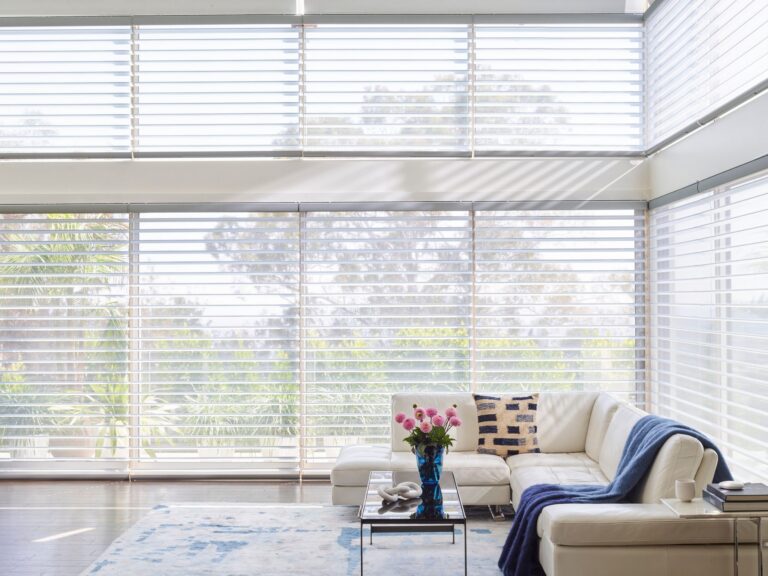
| Street-level family rooms and open dining zones | Silhouette® Window Shadings or Pirouette® Window Shadings | Softens incoming daylight while preventing pedestrian visibility into living spaces. |
| Tall entry foyers, vaulted ceilings, and expansive patio doors | PowerView® Automation motorized roller or cellular shades | Enables effortless control over inaccessible elevations using mobile apps, remotes, or automated timers. |
High-condensation areas require specialized materials that resist warping, cracking, and surface mildew. Choosing moisture-resistant bathroom shades made from synthetic composites or faux wood preserves durability while protecting privacy. Operating these units with a top-down/bottom-up adjustment lets upper natural light illuminate vanities while the lower fabric panel guards against sightlines from adjacent properties.
Roller Versus Cellular Shades for Large Living Room Glazing
Selecting modern window treatments for broad living room windows requires balancing unobstructed exterior vistas with year-round climate protection. Floor-to-ceiling glass panes in prairie residences expose interior spaces to intense summer afternoon glare while letting indoor warmth escape rapidly during sub-zero cold snaps. Property owners outfitting these wide spans regularly weigh two streamlined options: compact roller profiles against multi-cell insulating fabrics.
Real-World Decision: Treating South-Facing Living Room Glass
Consider a typical renovation scenario in an Edmonton neighborhood: Chloe is modernizing her open-concept living area, which features a continuous run of south-oriented, floor-to-ceiling glass. Her priorities center on three specific requirements:
- Preserving open outdoor sightlines with an ultra-slim headrail that conceals the fabric when drawn up.
- Preventing severe UV bleaching on hardwood floors and furniture during sunny summer afternoons.
- Stopping radiant heat loss through cold windowpanes throughout long prairie winters.
Side-by-Side Performance Comparison
Both styles address expansive glass, but each fulfills distinct architectural and thermal roles:
| Performance Factor | Hunter Douglas® roller shades | Duette® Honeycomb Shades |
|---|---|---|
| Architectural Stack | Winds flat onto an overhead roller tube inside a low-profile cassette, maximizing clear glass area. | Folds into a crisp pleated stack that gathers at the top of the casing. |
| Thermal Resistance | Blocks direct radiant heat through reflective screen weaves; provides light perimeter insulation. | Traps interior air within engineered cellular pockets, forming a protective barrier against thermal transfer. |
| Automated Movement | Operates via PowerView® Automation to trigger shade drops during peak solar exposure. | Syncs motorized schedules to adjust with outdoor temperature swings and daily sunlight shifts. |
Homeowners seeking a middle ground between both profiles can select Hunter Douglas® Sonnette® Cellular Roller Shades, which pair gentle honeycomb insulative curves with the fluid lift mechanism of a clean roller tube. Blind Magic measures and installs each system custom-fitted to preserve frame clearances and deliver dependable automated climate control.
Automated Control Systems for Energy Efficiency and Home Safety
PowerView® Automation synchronizes window shades with local sunrise and sunset patterns, shielding living areas from harsh afternoon solar glare in summer while locking in heat during frigid winter evenings. Integrating shades into platforms like Apple HomeKit®, Amazon Alexa, and Google Assistant allows homeowners to adjust light levels via voice commands, programmed routines, or hand-held Pebble® remotes.
Precision Control Methods for Modern Homes
Automated treatments adapt to single rooms or entire residences depending on your functional requirements:
- SoftTouch® Motorization delivers an intuitive battery-operated wand system for independent windows, letting you raise or lower fabrics with a gentle pull or push without requiring whole-house network integration.
- PowerView® Motorized Drapery operates heavy fabric panels across wide patio doors, high two-story spans, and hard-to-reach stairwell openings through quiet motorized track hardware.
- Cordless motorized designs remove hanging pull loops entirely, ensuring complete compliance with Canadian safety regulations for households with young children and pets.
PowerView Automation Costs and Five Step Setup Guide
Homeowners planning automated treatments can review typical investment levels before scheduling an in-home measurement. Across Edmonton and neighbouring communities, custom Hunter Douglas® shades generally price between $850 for an individual cordless unit up to $2,450 for multi-window motorized packages. Total project expenses depend primarily on window dimensions, selected fabric opacity, and whether shades operate via manual hardware or PowerView® Automation.
| Product Style | Fabric Details | Home Space | Area | Control Mechanism | Installed Price |
|---|---|---|---|---|---|
| Pirouette® Sheer Shades (3 windows) | Semi-opaque satin fabric, 5-inch vanes, stainless tone | Main Living Room | Edmonton | PowerView® Bottom-Up | $1,550 to $1,650 |
| Silhouette® Sheer Shades (single window) | Clear-view sheer with 3-inch linen vanes | Front Living Room | Sherwood Park | PowerView® Automation | $2,150 to $2,250 |
| Silhouette® Sheer Shades (single window) | Radiant white translucent sheer | Upper Bonus Room | Sherwood Park | LiteRise® Cordless | $850 to $950 |
| Designer Screen Shades (3 windows) | High-performance solar screen, 3% openness, snow white | Living and Dining Areas | Fort Saskatchewan | PowerView® Automation | $1,450 to $1,550 |
| Designer Screen Shades (3 windows) | High-performance solar screen, snow white tone | Living and Dining Areas | Fort Saskatchewan | PowerView® Gen 3 Automation | $2,350 to $2,450 |
Integrating motorized shades with a central smart home operating system coordinates window adjustments with sunrise, ambient temperatures, and family schedules. We suggest following five straightforward configuration stages:
- Confirm Platform Support: Choose shade hardware compatible with your preferred smart ecosystem, such as Apple® HomeKit®, Amazon Alexa, Google Assistant, or Control4®.
- Position Gateways and Power: Place battery wands, direct-wire low-voltage cables, or the PowerView® Gateway central hub to secure unbroken signal coverage throughout every floor.
- Complete Device Pairing: Connect individual shades through Bluetooth® and your Wi-Fi router within the manufacturer setup app, labeling each unit by room name.
- Schedule Solar Scenes: Establish automated daily routines that lower shades on west and south exposures throughout hot afternoons, stopping UV degradation and trimming cooling demands.
- Configure Voice Controls: Sync smart speaker profiles and activate mobile remote access so household members can adjust shade positions from home or while traveling.
Durable Materials and Timeless Profiles for Sustainable Window Performance
Custom residential window coverings built with neutral colour palettes, crisp profiles, and resilient substrates remain visually balanced through decades of evolving interior decor. Premium window treatments maintain operational integrity for 10 to 15 years when homeowners pair the right textile or blind slat structure with specific room humidity and solar intensity. Selecting dense timber, synthetic composites, or resilient plant fibers prevents recurring replacement cycles as wall finishes and furniture update over time.
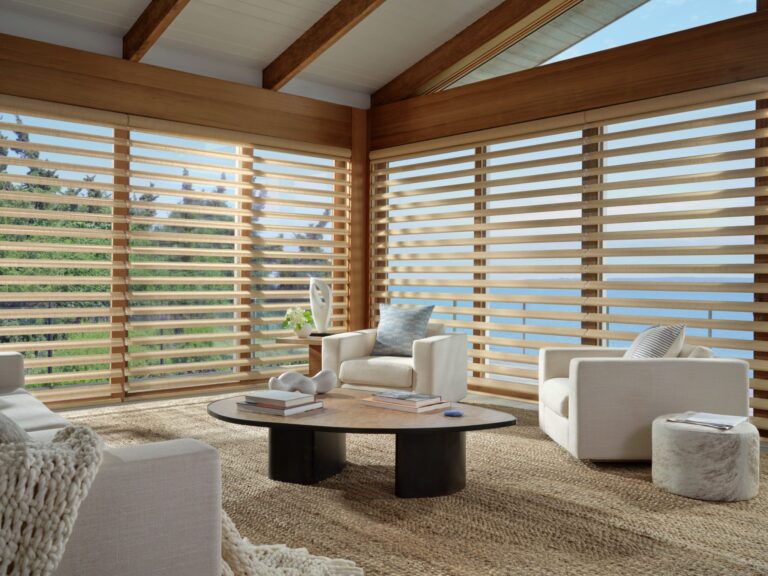
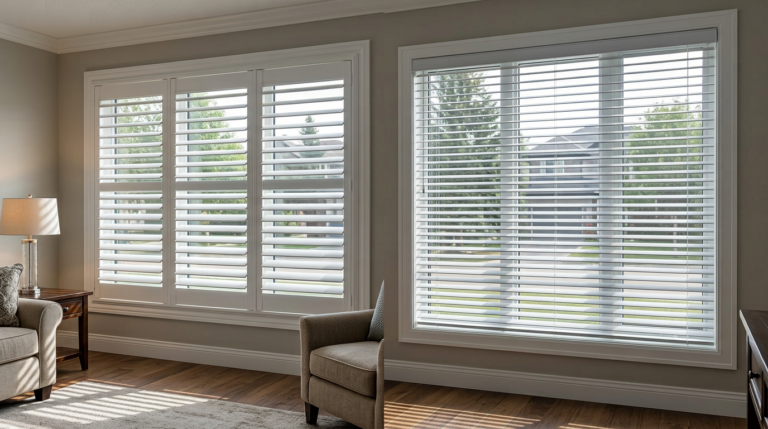
Hunter Douglas Provenance® Woven Wood shades introduce hand-woven reeds, grasses, and bamboo into modern living spaces while engineered construction prevents common issues like sagging, splitting, or stretching. For damp service areas, EverWood® Alternative Wood Blinds emulate stained natural wood grain while shielding against hot steam, yellowing, and midday solar exposure.
| Treatment Style | Core Durability Strengths | Maintenance and Placement Limitations |
|---|---|---|
| Genuine Hardwood Blinds | Authentic grain depth, natural cellular thermal barrier, fine horizontal light regulation. | Requires periodic dry dusting; degrades quickly in damp washrooms or adjacent to kitchen sinks. |
| Synthetic Wood Blinds | Resists water droplets, daily humidity changes, and UV chalking or warping. | Carries higher slat mass than basswood, placing practical limits on maximum single-headrail spans across extra-wide window openings. |
Aligning Window Coverings with Climate Demands and Solar Orientation
Standard architectural glazing allows up to 30 percent of conditioned indoor heat to escape during sub-zero winters, while unchecked solar radiation overheats interiors throughout peak summer afternoons. Selecting suitable window treatments begins with evaluating pane direction alongside seasonal weather extremes. Combining appropriate insulating materials with modern hardware configurations mitigates conductive heat loss and prevents intense UV fading across hardwood surfaces and upholstery.
Window Performance Criteria Across Distinct Exposures
- Winter Thermal Retention: Honeycomb cellular constructions encapsulate quiet pockets of air within their geometric cells. This interior barrier significantly impedes thermal transfer against freezing panes, lowering heating consumption through harsh weather.
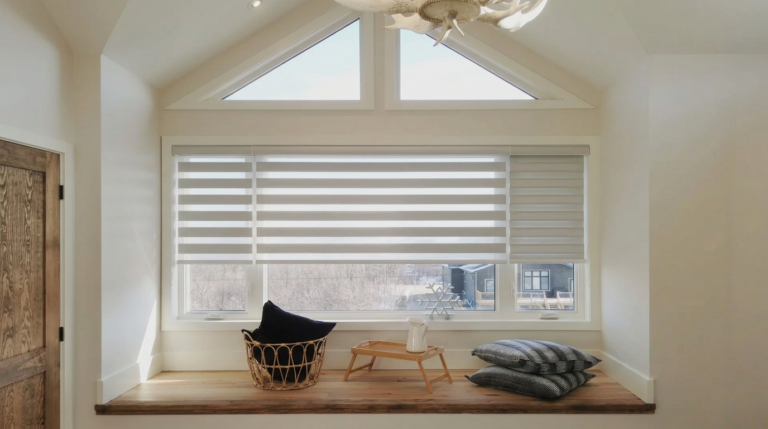
- Afternoon Glare and UV Mitigation: Installing Designer Banded® shades on south-facing or west-facing exposures balances direct incoming light with open outward sightlines by alternating solid fabric bands with sheer view-through strips.
- Acoustic Damping and Perimeter Darkening: Adding tailored custom drapery panels across flush-mounted roller or cellular tracks eliminates side-channel light leakage in sleeping quarters while absorbing ambient echo in open-concept floorplans.
- Broad-Span Sliding Access: Hanging vertical shades and panels across terrace doorways guarantees quiet tracking and neat lateral stacking, keeping high-traffic thresholds clear.
Performance and Application Comparison
| Treatment Style | Primary Room Placement | Relative Cost | Core Advantage |
|---|---|---|---|
| Roller Shades | Minimalist spaces, media lounges, sunlit living rooms | Moderate | Compact headrail housings conceal versatile fabrics ranging from transparent daylighting scrims to opaque textiles. |
| Cellular Shades | Draft-prone windows, primary suites, children’s nurseries | Moderate to High | Multi-cell pockets provide insulating thermal barriers across glass and offer flexible dual-direction adjustment. |
| Roman Shades | Formal dining rooms, professional home offices | Moderate to High | Clean fabric folds introduce rich decorative texture without consuming the floor footprint of long drapery. |
| Vertical Blinds and Gliding Panels | Patio entrances, glass walls, wide room dividers | Moderate | Interlocking fabric vanes rotate through 180 degrees for refined sun redirection across wide expanses. |
FAQ
Explore our answers below to common questions about selecting and maintaining modern window treatments and smart shade options for homes, tailored to the demands of year-round comfort and local climate conditions.
| Question | Answer |
|---|---|
| How do battery-powered smart shades compare to hardwired options for renovations in Edmonton, Alberta? | Battery motors fit finished spaces easily because they require no drywall cutting or electrical rough-ins near the casing. Hardwired shades suit major remodels or new construction where direct wiring avoids periodic recharging. If your window sits high in a two-story foyer or vaulted ceiling, hardwiring eliminates the hassle of climbing a ladder for maintenance. |
| Should you select blackout roller shades or honeycomb fabrics for drafty bedroom windows? | Honeycomb fabrics trap air inside built-in cellular pockets, which blocks window glass drafts better than single-layer vinyl or fabric rollers during sub-zero Alberta cold snaps. Roller shades offer sleek lines and tight edge gaps for light control, but lack the thermal resistance of multi-cell construction. If stopping window heat loss is your primary goal, cellular shades provide higher insulation for winter nights. |
| What power options keep motorized shades running reliably through cold Edmonton winters? | Lithium-ion rechargeable battery wands and low-voltage wired transformers handle temperature drops near glass better than standard alkaline cells. Alkaline batteries lose output quickly when exposed to chilly window frames, causing motors to stall or drop off network hubs. Positioning battery packs slightly away from single-pane draft zones keeps automated schedules running smoothly year-round. |
| Can automated smart shades adjust based on changing sun angles throughout the year? | Smart shade platforms connect to app schedules and outdoor light sensors that track seasonal sun shifts across south- and west-facing exposures. During bright June evenings, shades lower automatically to block harsh glare and prevent furniture fading, then stay raised during short December afternoons to capture free solar warmth. This automated positioning maintains balanced indoor temperatures across shifting regional seasons. |