

If you are searching for dependable window treatments near me, understanding how different styles manage heat transfer is crucial for maintaining comfort and lowering utility bills throughout the year, especially when considering the aesthetic appeal of Roman shades against the proven thermal performance of cellular shades near Edmonton.
For those looking to enhance their home’s energy profile, we offer a full spectrum of sophisticated window solutions, whether you are in Glenora, Edmonton, AB or elsewhere in the region. We recognize that refreshing your space demands durable, stylish solutions that also provide tangible energy savings, which is why comparing these two popular options is essential before making a final selection.
Key Insights
When evaluating which shade type provides superior insulation, several key factors come into play regarding their design and material composition.
- Cellular shades are specifically engineered with honeycomb-shaped air pockets that trap air, creating a natural insulating barrier against heat transfer.
- Roman shades, while offering a softer, fabric-based look, achieve insulation primarily through the density and layering of their material.
- Cellular shades generally outperform Roman shades in preventing heat loss in the winter and heat gain in the summer, making them the Insulation Leader.
- Roman shades often win on custom fabric aesthetics, while cellular shades prioritize thermal performance, representing a key Style vs. Function consideration.
- If you are interested in the latest in automated solutions, consider exploring our options for PowerView® Automation to manage your shades efficiently.
Roman Shades vs Cellular Shades: Which is Better for Insulation?
The fundamental difference in insulation capability between these two shade types lies in their internal structure, which directly impacts their R-value.
Cellular shades, such as the Hunter Douglas Duette® Honeycomb Shades, are designed with distinct honeycomb cells that trap air, creating multiple insulating layers. Roman shades, like the Vignette Modern Roman Shades, rely on fabric folds, which offer some insulation but lack the sealed air pockets of cellular designs. For homeowners seeking a way to save money on their power bill, considering insulated blinds and shades from Blind Magic is a great first step, as we discuss in our guide on Creating Insulating Barriers With Shades.
For those prioritizing thermal performance, cellular shades are the clear winner due to their construction, which is why they are often highlighted when discussing How To Use Window Treatments As Insulation.
- The double-cell construction found in shades like the Applause® Honeycomb Shades provides superior insulation compared to standard fabric treatments.
- The choice often comes down to balancing this superior insulation with the desired aesthetic, as Roman shades offer a more traditional, drapery-like appearance.
Energy Efficiency Showdown: Roman Shades Versus Cellular Shades
When comparing the energy efficiency of these two popular window coverings, the structural design dictates their performance in managing indoor temperatures.
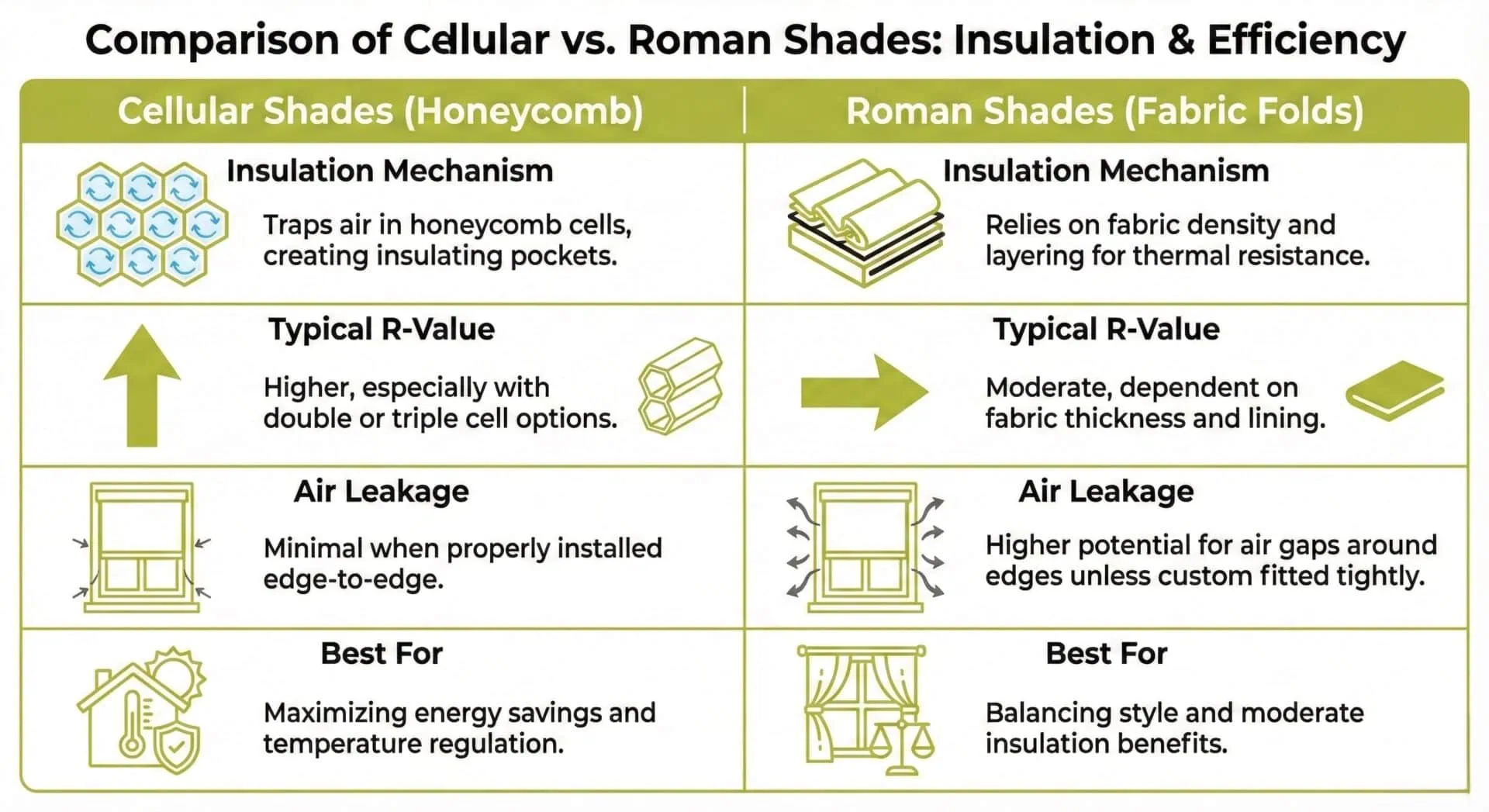
| Feature | Cellular Shades (Honeycomb) | Roman Shades (Fabric Folds) |
|---|---|---|
| Insulation Mechanism | Traps air in honeycomb cells, creating insulating pockets. | Relies on fabric density and layering for thermal resistance. |
| Typical R-Value | Higher, especially with double or triple cell options. | Moderate, dependent on fabric thickness and lining. |
| Air Leakage | Minimal when properly installed edge-to-edge. | Higher potential for air gaps around edges unless custom fitted tightly. |
| Best For | Maximizing energy savings and temperature regulation. | Balancing style and moderate insulation benefits. |
If you are looking for a solution that combines the soft look of a Roman shade with cellular construction, the Solera Soft Shades offer an interesting hybrid option available near Edmonton. Understanding The Science Behind Energy Efficiency At The Window confirms that trapped air is the key to reducing energy loss, a feature cellular shades excel at providing.
- Cellular shades are often recommended when homeowners are specifically looking for ways to keep cold air from coming through windows during the winter months.
- Roman shades provide a softer, more decorative element, but their insulating power is secondary to their visual appeal.
- For those in the Westmount, Edmonton, AB area seeking expert advice, we can demonstrate the thermal differences in our showroom.
Insulation Comparison: Roman Shades vs Cellular Shades for Your Home
The primary goal of insulating window treatments is to reduce the transfer of heat across the glass surface, which both Roman and cellular shades attempt to achieve through different means.
| Shade Type | Primary Insulation Method | Energy Performance Rating |
|---|---|---|
| Cellular Shades | Trapped air pockets (honeycomb structure) | Excellent |
| Roman Shades | Fabric thickness and lining material | Good to Moderate |
When considering options for your home, remember that the Hunter Douglas Applause® Honeycomb Shades are specifically engineered for superior insulation, helping keep your house cool in the summer and warm in the winter. If you are exploring options in the University of Alberta, Edmonton, AB area, we can show you the construction details.
- Cellular shades create a superior thermal barrier because the honeycomb structure minimizes convection currents near the window.
- Roman shades, while elegant, rely more on the material itself, making them less effective at sealing the window opening against drafts.
- For homeowners interested in automation alongside efficiency, exploring Hunter Douglas PowerView® Automation can further optimize energy usage by scheduling shade adjustments.
For residents in areas like Jasper Place, Edmonton, AB, choosing the right shade involves balancing aesthetics with tangible energy savings.
- The investment in cellular shades often yields a quicker return through reduced heating and cooling costs.
- Roman shades, such as the Vignette Modern Roman Shades, offer a rich, drapery-like fabric look that many prefer for interior design purposes.
Understanding Window Shade Insulation Properties
The effectiveness of any window covering in providing insulation is often quantified by its R-value, which measures resistance to heat flow, and the ability to minimize air leakage around the edges.
| Insulation Property | Cellular Shades Advantage | Roman Shades Consideration |
|---|---|---|
| R-Value | High due to trapped air pockets. | Dependent on fabric layers; generally lower than cellular. |
| Air Sealing | Excellent when installed with side channels or tight side treatments. | Requires precise mounting and potentially edge sealing for optimal performance. |
| Material Composition | Synthetic materials designed for structure and air retention. | Wide variety of fabrics, some offering better thermal resistance than others. |
If you are a homeowner in North Glenora, Edmonton looking to improve your home’s thermal envelope, understanding these properties is key, and we encourage you to review our Residential Blinds Edmonton selection. The Duette shade system, for example, is known for its ability to trap air effectively, which is why it is a top choice for energy efficiency.
- Shades that utilize the Duette® LightLock™ system not only block light but also enhance the insulating properties of the shade structure itself.
- Roman shades can be enhanced with insulating liners, but they still cannot replicate the inherent air-trapping structure of honeycomb shades.
- For those seeking durable, low-maintenance options that still offer good insulation, considering Faux Wood Blinds Edmonton AB might be an alternative, though cellular remains superior thermally.
Choosing the Right Shade for Thermal Performance in Your Home
Selecting the best shade for thermal performance requires matching the shade’s construction to your primary concern, whether it is blocking summer heat or retaining winter warmth.
| Shade Type | Primary Benefit for Insulation | Installation Consideration |
|---|---|---|
| Cellular Shades | Superior R-value due to honeycomb structure. | Best when installed as inside mounts for maximum edge seal. |
| Roman Shades | Aesthetic versatility and moderate insulation with liners. | Can be mounted inside or outside; outside mounts can help seal perimeter gaps. |
When you are searching for dependable window treatments near me, remember that Blind Magic has been enhancing spaces for over 30 years, providing a full spectrum of custom residential window blinds, shades, shutters, and drapery solutions across the region, including for those in Empire Park, Edmonton, AB. If you are looking to upgrade to motorized options, exploring our Smart Shades Sale can help you find energy-efficient shades with convenient control.
- Prioritize cellular shades if your main goal is maximizing energy savings, as their construction is inherently designed to reduce heat transfer.
- If aesthetics are paramount and you are willing to accept slightly less insulation, choose Roman shades, perhaps adding a thermal lining for improvement.
- Consider the Hunter Douglas Right Choice Promise® when making your final decision, ensuring you can exchange your choice if it doesn’t meet your comfort expectations.
For residents in areas like Crestwood, Edmonton, AB, understanding these trade-offs ensures you select a product that meets both your comfort and design needs.
- Cellular shades are the scientifically proven choice for superior thermal performance due to their unique air-trapping design.
- Roman shades offer a softer look but require added features like specialized liners to approach the insulation levels of cellular shades.
- For those interested in the latest technology to manage their home environment, learning about PowerView Automation Gen 3 Is Here! can complement your energy-saving window treatments.
Key Insulation Factors When Selecting Roman or Cellular Shades
When comparing these two options for thermal performance near Edmonton, focusing on construction details and installation methods will clarify which shade is the better insulator for your specific windows.
- Cell Structure vs. Fabric Layers: Cellular shades feature internal honeycomb pockets that trap air, which is the most effective way to create an insulating barrier, while Roman shades rely on the density of fabric layers, which is less effective at stopping conductive heat transfer.
- Light Gaps and Sealing: Cellular shades, especially when fitted with side channels or used with systems like LightLock™, minimize air leakage around the window frame, a critical factor in overall energy efficiency.
- Material Density: While Roman shades can be made from heavy, insulating fabrics, they do not create the same dead-air space as cellular shades, meaning their R-value is generally lower unless heavily lined.
- Installation Precision: For both shade types, a tight inside mount installation is crucial for maximizing insulation, preventing conditioned air from bypassing the shade material.
If you are looking for high-quality window treatments near the 34 Avenue NW corridor, we can help you assess the best fit. We are located at 10615 170 St NW, Edmonton, AB and can be reached at 780-484-2390 for consultation.
- The honeycomb design is the fundamental reason why cellular shades are often cited as the best option for those concerned with reducing energy bills, as discussed when comparing Duette® Honeycomb Shades Vs. Solera® Soft Shades.
- Roman shades provide a softer, more decorative look, making them a popular choice for living areas where style is prioritized alongside moderate energy savings.
- For those interested in the latest in automated solutions, you can learn more about Hunter Douglas Soft®Touch Automation which can be integrated with energy-efficient shades.
Conclusion
Ultimately, when the primary concern is superior insulation and minimizing energy transfer, cellular shades are the better choice due to their inherent honeycomb structure designed to trap air. Roman shades offer significant aesthetic advantages and provide moderate insulation, especially when paired with thermal linings, but they do not match the R-value potential of cellular designs. Homeowners near Edmonton looking for the best thermal performance should lean toward cellular options, while those prioritizing fabric texture and traditional styling might opt for Roman shades, understanding the slight trade-off in energy savings. We invite you to contact us at hello@blindmagic.com or visit our showroom to see the insulation differences firsthand.
Faq
| Question | Answer |
|---|---|
| Which shade type offers the highest R-value? | Cellular shades, particularly double-cell or triple-cell models, offer the highest R-value because their honeycomb structure traps air effectively. |
| Can Roman shades be energy efficient? | Yes, Roman shades can improve energy efficiency significantly when they feature dense, heavy fabrics or specialized insulating liners, though they typically lag behind cellular shades. |
| Are cellular shades available with motorized options? | Absolutely, cellular shades are compatible with advanced operating systems like PowerView® Automation, allowing for scheduled adjustments that maximize energy savings. |
| Where can I see these shades near me in Edmonton? | You can view our extensive selection of Hunter Douglas products at our showroom located at 10615 170 St NW, Edmonton, AB. |
| Do Roman shades block light as well as cellular shades? | Cellular shades, especially those with blackout liners or the LightLock™ feature, offer superior room darkening compared to most standard Roman shades. |