

Understanding Window Insulation Roman Blinds vs Cellular Shades
Effective window insulation is crucial for maintaining a comfortable home environment and reducing energy costs. Windows are often a significant source of heat loss in the winter and heat gain in the summer, making the choice of window treatments a key factor in your home's thermal performance. Understanding how different types of window coverings contribute to insulation can help you make more informed decisions.
Both Roman blinds and cellular shades are popular choices, but they offer different levels of insulation due to their unique designs and materials. Exploring these differences is essential for optimizing your home's energy efficiency. Learning about energy efficient blinds can lead to significant savings on your utility bills throughout the year.
By selecting the right window treatments, you can create a more comfortable living space, reduce your carbon footprint, and enhance the overall value of your home. We are committed to providing homeowners with the knowledge they need to choose the best insulating window coverings for their specific needs.
Are Roman Blinds Good for Insulation?
Roman blinds offer a sophisticated aesthetic and can contribute to your home's insulation, though their effectiveness varies based on construction and material. Unlike cellular shades with their inherent air pockets, Roman blinds rely on the fabric's density and the way they fit against the window frame for their insulating properties. Thicker, heavier fabrics tend to provide better thermal resistance, helping to block drafts and reduce heat transfer.
| Roman Blind Material | Insulation Properties | Notes |
|---|---|---|
| Light-weight fabrics (e.g., sheer linen) | Low | Primarily decorative, minimal insulation value. |
| Medium-weight fabrics (e.g., cotton blends) | Moderate | Offers some thermal benefit, especially with a lining. |
| Heavy-weight fabrics (e.g., velvet, thick weaves) | Good | Provides a noticeable barrier against heat transfer. |
| Lined Roman Blinds | Very Good | Adding a thermal lining significantly enhances insulation. |
Having worked with homeowners for years, we've observed that thicker Roman blind fabrics offer better thermal performance, especially when paired with a suitable lining. Properly fitted Roman shades that minimize gaps around the edges can also help to prevent air leakage, further improving their insulating capabilities. For enhanced thermal performance, consider Roman blinds made from dense materials or those with an added thermal liner. Exploring customizable window treatments allows for a perfect balance of style and function.
Cellular Shades The Insulation Champion?
Cellular shades, often called honeycomb shades, are renowned for their exceptional insulating properties. Their unique design features internal air pockets, formed by cells that resemble honeycombs, which create a natural barrier against heat transfer. This structure traps air, effectively reducing the amount of heat that escapes in the winter and enters in the summer, leading to significant energy savings.
- Single Cell Shades Offer moderate insulation, a good balance of cost and energy efficiency.
- Double Cell Shades Provide enhanced insulation due to two layers of trapped air, making them highly effective for extreme climates.
- Triple Cell Shades Deliver the highest level of insulation, creating a robust thermal barrier ideal for maximizing energy savings.
These energy efficient window treatments are available in a variety of opacities and colors, allowing you to customize their look while still benefiting from their superior insulation. The air trapped within the cells acts as a natural insulator, much like the air between panes in double-glazed windows. Many cellular shade options can also improve acoustic insulation, further enhancing comfort. Choosing the right cellular shades can dramatically improve your home's climate control.
Understanding Cellular Shade Construction for Maximum Insulation
The effectiveness of cellular shades as insulators is directly tied to their construction. The more cells and the deeper they are, the more air is trapped, and the better the insulation. This layered air pocket design significantly reduces conductive heat loss and gain.
The Energy Saving Benefits of Honeycomb Designs
Honeycomb shades are celebrated for their ability to reduce heating and cooling costs. By creating a thermal buffer between your indoor environment and the outside temperature, they help your HVAC system run less often. This translates to lower energy bills and a more consistent indoor climate, contributing to overall home comfort.
Customizing Cellular Shades for Your Home's Needs
Beyond their insulating capabilities, cellular shades offer a wide range of customization options. You can choose from various cell depths, fabric opacities from sheer to blackout, and a spectrum of colors to match your decor. Motorized options also enhance convenience and can be programmed for optimal energy savings.
Roman vs Cellular Shades A Direct Insulation Comparison
When comparing Roman blinds and cellular shades solely on their insulating capabilities, cellular shades generally emerge as the superior option. This is primarily due to their innovative honeycomb structure, which inherently traps air and creates a significant thermal barrier. Roman blinds, while capable of providing insulation, rely more on the density of their fabric and how well they seal against the window.
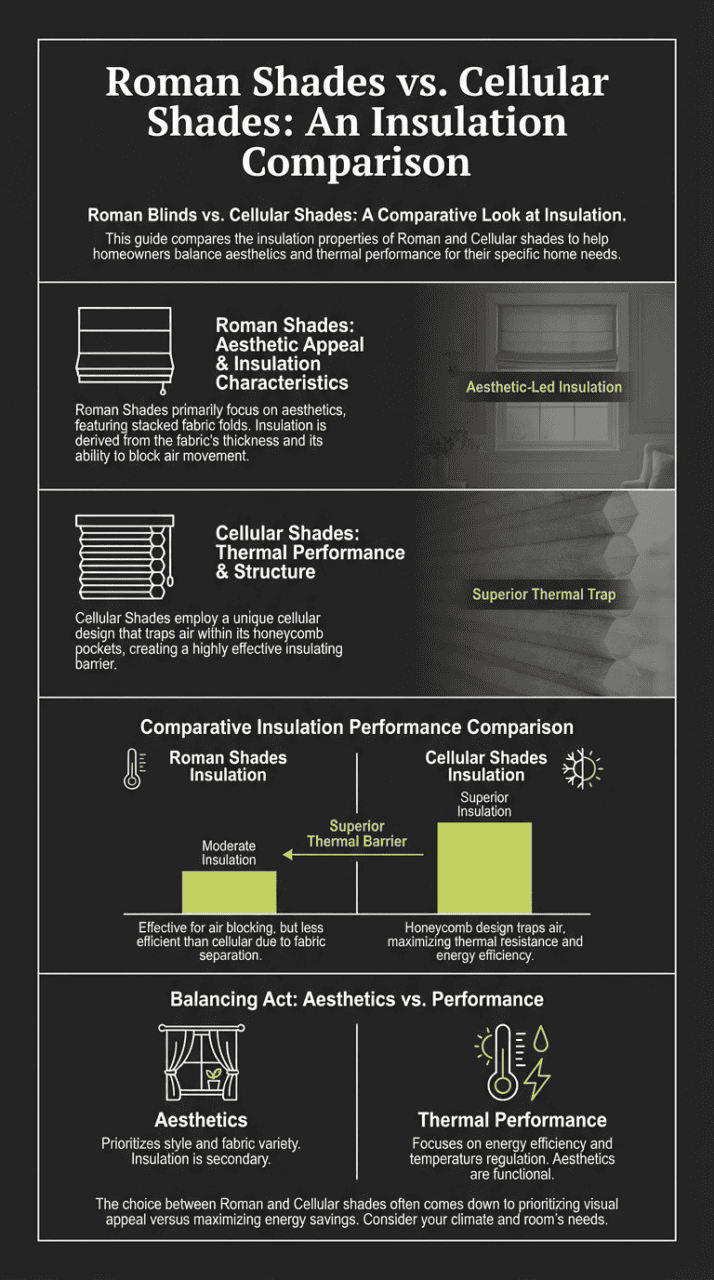
Here are the key insulation factors to consider when comparing these two popular window treatments.
- R-value Cellular shades typically boast higher R-values than standard Roman blinds, indicating better resistance to heat flow.
- Air Sealing The way each shade fits the window frame impacts air sealing. Cellular shades, when installed correctly, can offer a tighter seal.
- Material Thickness Thicker fabrics in Roman blinds can improve insulation, but cellular shades' air pockets provide an inherent advantage regardless of fabric thickness.
- Cellular Structure The multi-layered air pockets in cellular shades are a unique insulating feature not found in Roman blinds.
- Lining Options While Roman blinds can be lined for better insulation, cellular shades come with built-in insulating layers.
Understanding these differences helps in making an informed choice for your home's energy efficiency. Whether you prioritize aesthetics with Roman shades or maximum insulation with cellular shades, there are options to suit your needs.
Choosing the Best Insulated Window Coverings
While Roman blinds and cellular shades are excellent choices for insulation, they are not the only options available for enhancing your home's energy efficiency. Many other window treatments can contribute to a more comfortable and cost-effective living environment. Layering different treatments can also significantly boost insulation, creating a robust barrier against temperature fluctuations.
- Insulated Drapes Heavy, lined draperies can provide a substantial thermal barrier, especially when closed.
- Layered Systems Combining blinds or shades with curtains offers dual benefits for insulation and light control.
- Woven Wood Shades Certain woven wood materials, especially when lined, can offer moderate insulating qualities.
- Roller Shades Specialized roller shades with thermal backing can also be effective.
Exploring various window treatment styles allows you to find the perfect blend of function and fashion for your home. Considering options like energy-efficient blinds ensures you are making a choice that benefits both your comfort and your wallet. When looking for the best insulated window coverings, it's wise to assess the unique construction of each type.
Conclusion Making the Right Choice for Your Home's Comfort
Ultimately, both Roman blinds and cellular shades can contribute to your home's insulation, but cellular shades generally offer superior thermal performance due to their unique honeycomb structure. Roman blinds can be effective, particularly when made with dense fabrics and thermal linings, and they provide a distinct aesthetic appeal.
The best choice for your home depends on your priorities, whether that's maximizing energy savings, achieving a specific look, or finding a balance between the two. We recommend exploring various window treatment options to find the perfect fit for your needs. Consulting with our experienced team can help you navigate the choices and ensure you select window coverings that enhance both your home's comfort and its energy efficiency.
Frequently Asked Questions About Window Insulation
| Question | Helpful Answer |
|---|---|
| Which type of blind offers the best insulation | Cellular shades are generally considered the best for insulation due to their honeycomb structure that traps air, creating a significant thermal barrier. |
| Can Roman blinds provide good insulation | Yes, Roman blinds can offer good insulation, especially when made with thick, dense fabrics and an added thermal lining. Proper fitting to minimize gaps is also key. |
| How do cellular shades save energy | Cellular shades save energy by trapping air in their honeycomb cells, which reduces heat transfer. This helps keep homes warmer in winter and cooler in summer, lowering heating and cooling costs. |
| Are there other window treatments that insulate well | Yes, besides cellular and Roman shades, insulated drapes, layered window treatments, and specialized roller shades can also provide effective insulation for your home. |