



Guide to Cleaning Hunter Douglas Blinds
Maintaining the pristine condition of your Hunter Douglas blinds is essential for both their aesthetic appeal and longevity. Regular cleaning not only keeps them looking their best but also prevents the buildup of dust and grime that can degrade materials over time. Implementing a consistent cleaning routine is a straightforward way to ensure your window treatments remain a beautiful focal point in your home for years to come.
Keeping your window treatments in top shape is easier than you might think with a few simple strategies. Understanding the basics of cleaning can make a significant difference in how well your blinds perform and how long they last. We offer expert advice and solutions to help you preserve the beauty and functionality of your window coverings.
By following a few key principles, you can effectively clean your Hunter Douglas blinds without causing damage. This guide will walk you through the easiest and most effective methods, from daily dusting to tackling tougher stains, ensuring your investment continues to enhance your home's interior. Explore our range of energy-efficient blinds to complement your clean and stylish windows.
General Dusting and Light Cleaning for Hunter Douglas Blinds
Routine dusting is the cornerstone of maintaining your Hunter Douglas blinds, preventing dust from settling into fabric folds or accumulating on slats. A soft microfiber cloth or a feather duster is ideal for this task, gently wiping down surfaces to remove loose particles. For blinds that are frequently exposed to the elements or are in high-traffic areas, incorporating this simple step into your weekly cleaning routine can significantly extend their lifespan and preserve their appearance.
After installing hundreds of systems in local homes, we've found that regular dusting significantly extends blind life. This preventative measure is crucial, especially for delicate materials that can be easily damaged by harsh cleaning chemicals or abrasive scrubbing. Light cleaning can often be achieved with just a dry cloth, ensuring that minor dust accumulation doesn't become a larger issue.
For slightly more persistent dust or light smudges, a slightly damp microfiber cloth can be used, followed by immediate drying with a clean, dry cloth. This approach is effective for most blind materials and avoids the need for more intensive cleaning methods. Consider exploring smart window treatments that can help manage light and dust accumulation with automated features.
Deep Cleaning Methods for Stubborn Stains and Grime
When dusting isn't enough and stubborn stains or accumulated grime mar the appearance of your Hunter Douglas blinds, it's time to consider more intensive cleaning methods. The approach you take will depend on the specific material of your blinds, as some fabrics and finishes require gentler treatment than others. Always test any cleaning solution on an inconspicuous area first to ensure it doesn't cause discoloration or damage.
The science behind cleaning different blind materials involves understanding their composition and how they react to moisture and cleaning agents. For instance, fabric blinds might require specific upholstery cleaners, while faux wood or aluminum blinds can often withstand slightly more robust cleaning solutions. Exploring energy-efficient window treatments also means understanding their material composition for proper care.
Proper care can also be linked to the overall functionality of your window coverings, such as child-safe blinds. Ensuring they are clean and well-maintained contributes to their safety and performance. For more specialized needs, our guide to power view automation can help you maintain your automated systems.
| Cleaning Solution | Suitable For | How to Use | Cautions |
|---|---|---|---|
| Mild Soap and Water | Most Blinds (Fabric, Vinyl, Aluminum, Faux Wood) | Mix a few drops of mild dish soap with lukewarm water. Dampen a microfiber cloth, wring out excess water, and gently wipe the blinds. Rinse with a clean damp cloth and dry thoroughly. | Avoid soaking fabric blinds. Ensure all soap residue is removed. |
| Upholstery Cleaner | Fabric Blinds (e.g., Silhouettes, Duettes) | Use a cleaner specifically designed for upholstery. Follow the product's instructions carefully, typically involving spraying lightly and blotting with a clean cloth. | Always test in an inconspicuous area first. Do not oversaturate. |
| All-Purpose Cleaner (Diluted) | Vinyl, Aluminum, Faux Wood Blinds | Dilute a general-purpose cleaner with water according to product directions. Apply sparingly with a cloth or sponge, wiping gently. | Ensure the cleaner is safe for the specific material. Avoid harsh chemicals. |
| White Vinegar Solution | Stubborn Grime on Hard Surfaces (Vinyl, Aluminum, Faux Wood) | Mix equal parts white vinegar and water. Apply with a cloth, wipe down the affected areas, and rinse thoroughly with a damp cloth. | The smell of vinegar can be strong; ensure good ventilation. Test for colorfastness. |
Tackling Fabric Blinds and Delicate Materials
For fabric blinds, such as Hunter Douglas Silhouettes or Duette honeycomb shades, a gentle approach is paramount to avoid damaging the delicate fibers or internal structures. A vacuum cleaner with a brush attachment can be used on a low setting to remove surface dust. For spot cleaning, a mild detergent mixed with water can be applied sparingly to a clean cloth, and then gently blotted onto the stain. It is crucial to avoid oversaturating the fabric, as this can lead to watermarks or structural damage, and always allow the blinds to air dry completely before adjusting them.
Cleaning Rigid Blinds with Ease
Rigid blinds, including faux wood, real wood, aluminum, and vinyl options, are generally more resilient and easier to clean. For faux wood and vinyl blinds, a damp cloth with a mild soap solution is usually sufficient for regular cleaning. For stubborn grime or tougher spots on these materials, a diluted all-purpose cleaner can be effective, but always ensure it's safe for the specific material and rinse thoroughly with a clean, damp cloth afterward to remove any residue. Real wood blinds require more specialized care; avoid excess moisture as it can cause warping or damage. A dry or slightly damp cloth is best, and specialized wood cleaners can be used for tougher marks. Remember to explore wood blinds vs. faux wood blinds to understand the maintenance differences.
Restoring Shine to Metal and Vinyl Blinds
Metal and vinyl blinds, often found in styles like aluminum blinds or some roller shades, can typically handle slightly more robust cleaning. A mixture of mild dish soap and water is usually effective for removing dust, fingerprints, and light smudges. Wring out your cleaning cloth thoroughly to avoid dripping water, which can streak or damage surfaces. For tougher grime on these materials, a diluted all-purpose cleaner can be used, followed by a thorough rinse with a clean, damp cloth and a final wipe-down with a dry cloth to prevent water spots and ensure a streak-free finish. Consider how energy-efficient blinds can also benefit from regular cleaning to maintain their performance.
Specific Cleaning Instructions for Different Hunter Douglas Blind Types
Hunter Douglas offers a diverse range of window treatments, and each type often requires a specific cleaning approach to maintain its integrity and appearance. Understanding these distinctions is key to preventing damage and ensuring your blinds remain beautiful and functional. Regular maintenance is not only about aesthetics but also about the longevity of your investment.
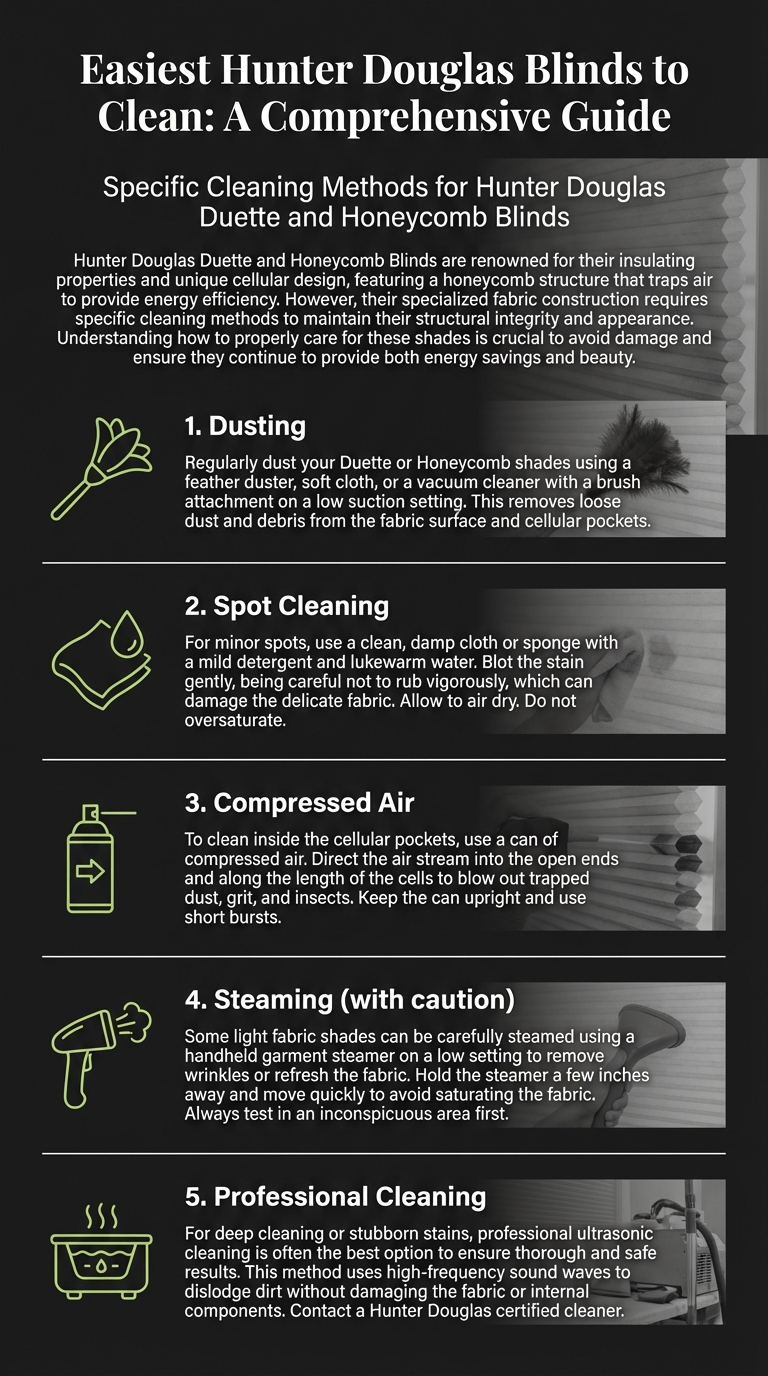
Honeycomb Shades (Duette Architellla and Duette Honeycomb). For general dusting, use a vacuum cleaner with a soft brush attachment on a low setting. For deeper cleaning or spot treatment, mix a mild solution of dish soap and water. Dampen a microfiber cloth, wring it out thoroughly, and gently blot the affected area. Avoid saturating the fabric, as excess moisture can compromise the cellular structure. Allow the shades to air dry completely before raising or lowering them. For more information on insulation properties, see our comparison of Roman shades vs. Cellular shades.
Sheer Shadings (Silhouette, Pirouette, Luminette). These elegant window treatments have delicate fabric vanes suspended between sheer fabric panels. For dusting, use a feather duster or a vacuum with a soft brush attachment on the lowest setting. To clean smudges or light marks, a slightly damp microfiber cloth can be used very gently on the vanes. For more persistent stains, specific fabric cleaners designed for delicate upholstery may be recommended, but always test in an inconspicuous area first and follow product instructions precisely.
Faux Wood and Real Wood Blinds. Faux wood blinds are quite durable and can be cleaned with a damp cloth and mild soap solution, similar to vinyl blinds. Ensure you wring out the cloth well to avoid excess moisture. Real wood blinds are more sensitive to moisture. Dust them regularly with a dry microfiber cloth. For occasional deeper cleaning or to remove stubborn marks, use a cleaner specifically formulated for wood furniture, applying it to the cloth rather than directly to the blinds, and wipe gently. Understand the differences when considering faux wood vs. wood blinds.
What to Avoid When Cleaning Your Hunter Douglas Blinds
When caring for your Hunter Douglas blinds, knowing what not to do is just as important as knowing the correct cleaning methods. Certain products and techniques can cause irreversible damage, leading to faded colors, warped materials, or compromised functionality. Avoiding these common pitfalls will help preserve the beauty and extend the lifespan of your window treatments.
- Harsh Chemicals and Solvents. Never use abrasive cleaners, ammonia-based products, bleach, or strong solvents. These can strip finishes, discolor fabrics, and degrade plastic components.
- Excessive Moisture. Avoid soaking any type of blind, especially fabric or real wood. Too much water can lead to staining, warping, stretching, or damage to internal mechanisms. Always wring out cloths thoroughly.
- Abrasive Tools. Do not use scouring pads, steel wool, or stiff-bristled brushes, as these can scratch surfaces, snag fabrics, and damage delicate parts.
- Machine Washing or Steam Cleaning. Unless specifically instructed by the manufacturer for a particular product (which is rare), never put blinds in a washing machine or use a steam cleaner, as the heat and agitation can cause severe damage.
- Direct Sunlight While Wet. Do not leave wet blinds exposed to direct sunlight, as this can cause water spots or lead to uneven drying and potential warping.
For blinds that require specialized care, such as those with motorization, consult guides on Powerview vs. SoftTouch systems to understand their unique maintenance needs.
Cleaning Blinds While Still Hanging. Tips and Tricks
Cleaning your Hunter Douglas blinds without removing them from the window is often the most convenient approach for routine maintenance. This method saves time and effort while effectively keeping your blinds dust-free and looking great. The key is to use the right tools and techniques to ensure a thorough clean without causing damage.
Start by gathering your supplies, which typically include a microfiber cloth, a feather duster, or a vacuum cleaner with a soft brush attachment. For dusting, a simple swipe with a microfiber cloth is often sufficient. If more cleaning is needed, lightly dampen a cloth with water or a mild soap solution, wring it out thoroughly, and gently wipe down the slats or fabric. For hard-to-reach areas or fabric blinds, a vacuum with a brush attachment on its lowest setting can be very effective at removing dust and debris. Consider how smart window coverings can simplify your life, including their cleaning.
For stubborn spots, use a slightly damp cloth with a minimal amount of appropriate cleaner, blotting gently rather than rubbing. Always ensure the blinds are completely dry before operating them, especially if they are automated systems like those with PowerView automation. If you're concerned about the delicate nature of your blinds or have intricate mechanisms, exploring professional cleaning services might be a worthwhile consideration for a thorough and safe clean.
When to Call a Professional for Hunter Douglas Blind Cleaning
While routine dusting and light cleaning can often be handled at home, there are specific situations where calling a professional for your Hunter Douglas blinds is the wisest choice. Delicate materials, intricate designs, or heavily soiled blinds may require specialized knowledge, equipment, and cleaning solutions that professionals possess. Entrusting your blinds to experts ensures they are cleaned thoroughly and safely, preserving their appearance and functionality.
Consider professional cleaning if your blinds are made from particularly sensitive materials like silk, delicate fabrics, or real wood that is prone to moisture damage. Also, if your blinds are automated, such as those with PowerView automation, professionals have the expertise to clean them without interfering with the motorization systems. Heavily soiled blinds with set-in stains or significant accumulation of grime can also benefit from professional attention, as they have access to industrial-grade cleaning equipment and solutions that are safe for the specific materials.
If you're unsure about the best cleaning method for your specific Hunter Douglas blind model, or if DIY attempts have yielded unsatisfactory results, it's always best to seek professional assistance. They can provide a deep clean that revitalizes your blinds, saving you time and potentially preventing costly damage that could result from incorrect cleaning methods. Many professionals also offer repair services, addressing any wear and tear while cleaning, ensuring your window treatments are in optimal condition. This is especially relevant when considering the longevity and investment of premium window coverings.
Conclusion. Keeping Your Hunter Douglas Blinds Pristine
Maintaining the beauty and functionality of your Hunter Douglas blinds is an achievable goal with the right approach to cleaning. From regular dusting to addressing stubborn stains, a consistent and informed cleaning routine ensures your window treatments remain a stunning feature of your home. By understanding the specific needs of different materials and styles, you can effectively preserve their appearance and extend their lifespan.
Remember that gentle care is often the best policy, especially with delicate fabrics and intricate mechanisms. For those times when professional expertise is needed, don't hesitate to seek out specialized cleaning services to ensure the safest and most thorough results. Proper care not only enhances your home's aesthetics but also protects your investment in high-quality window coverings.
By implementing the tips outlined in this guide, you can confidently keep your Hunter Douglas blinds looking pristine. Whether you're opting for a simple dusting or a more comprehensive clean, prioritizing the correct methods will ensure your blinds continue to provide light control, privacy, and style for years to come. Explore our range of energy-efficient blinds and other window treatment style trends to enhance your home's beauty and comfort.
Frequently Asked Questions About Cleaning Hunter Douglas Blinds
| Question | Helpful Answer |
|---|---|
| What is the easiest way to dust Hunter Douglas blinds? | The easiest way to dust your Hunter Douglas blinds is with a soft microfiber cloth or a feather duster. Gently wipe down the slats or fabric surfaces regularly to prevent dust buildup. For hard-to-reach areas, a vacuum cleaner with a soft brush attachment on a low setting can be very effective. |
| Can I use water to clean my Hunter Douglas blinds? | Yes, you can use water for cleaning most Hunter Douglas blinds, but always with caution. Mix a few drops of mild dish soap with lukewarm water and use a well-wrung-out microfiber cloth. Avoid soaking any type of blind, especially fabric or real wood. Always dry thoroughly with a clean cloth afterward. |
| How do I clean fabric blinds like Silhouettes or Duettes? | For fabric blinds, start with gentle dusting using a vacuum's soft brush attachment. For spot cleaning, use a very mild soap and water solution applied sparingly to a cloth, then blot the stain. Never oversaturate the fabric, and allow it to air dry completely. Always test any cleaner in an inconspicuous area first. |
| Are there specific cleaning instructions for faux wood blinds? | Faux wood blinds are generally quite durable. You can clean them with a damp microfiber cloth and a mild soap solution. Ensure the cloth is not too wet, and wipe down the slats. For tougher spots, a diluted all-purpose cleaner safe for vinyl or plastic can be used, followed by rinsing and drying. |
| What cleaning products should I absolutely avoid on my Hunter Douglas blinds? | You should avoid harsh chemicals, abrasive cleaners, bleach, ammonia-based products, and strong solvents. Also, refrain from using scouring pads, steel wool, or stiff brushes that can scratch surfaces. Never use excessive moisture or attempt to machine wash or steam clean blinds unless specifically instructed by the manufacturer. |