
Answer
When conducting a blinds comparison of faux wood and roller shades for homes, your decision hinges on balancing directional slat control against minimalist fabric design. Choosing premium residential blinds ensures you get either the moisture-hardy durability of composite louvers for high-humidity areas or the streamlined solar defense of roll-up textiles for contemporary spaces. The window covering specialists at Blind Magic can measure your layout and recommend the ideal treatment to match your room-specific privacy and insulation needs.
Overview
Selecting window treatments requires evaluating mechanical hardware, maintenance demands, and optical performance across daily living spaces. Homeowners evaluating a blinds comparison of faux wood and roller shades for homes must weigh how louvered slats and rolled textiles interact with window frame depths, seasonal solar angles, and exposure to indoor moisture.
The sections below outline how these two window coverings function across diverse residential layouts, along with an illustrative local scenario that demonstrates realistic hardware selection based on specific room demands.
- Hardware Mechanics: Examine how operating systems and physical profiles differ by reviewing core structural differences between horizontal slats and fabric rollers.
- Local Pricing: Review current material tiers and installation variables outlined in the area pricing breakdown for regional residential builds.
- Durability Factors: Compare daily wear, moisture tolerance, and surface care within the material lifespan guide to plan long-term maintenance.
- Design Profiles: Match architectural aesthetics and window trim styles using the detailed interior design profiles for contemporary and traditional casings.
- Light Controls: Assess glare reduction and variable privacy settings by comparing light filtering options across open, tilted, and lowered positions.
- Selection Matrix: Match specific functional needs to each household zone with a comprehensive room selection matrix covering living spaces and wet zones.
- Climate Performance: Evaluate thermal insulation, winter draft resistance, and motorized upgrades within the climate performance guide tailored to northern regional seasons.
Mechanical Architecture and Structural Frameworks
Treating large windows in Edmonton demands careful assessment of how contrasting mechanical operating systems respond to sub-zero winters and intense summer UV exposure. A direct blinds comparison shows that horizontal louvers and rolling fabric screens manage solar gain, glare, and room privacy through fundamentally different physical mechanisms.
| Mechanical Characteristic | Faux Wood Blinds | Roller Shades |
|---|---|---|
| Primary Architecture | Extruded PVC or polymer louvers connected by braided ladder strings | Single continuous textile panel wound around an overhead aluminum core |
| Daylight Modulation | 180-degree slat rotation angles incoming light while keeping the treatment lowered | Vertical movement sets exact drop position, with light entry dictated by textile openness |
| Gathered Profile | Forms a 2.5-inch to 4-inch solid stack below the casing when elevated | Nests tightly inside a 2-inch to 3-inch headbox, cassette, or exposed roller |
| Broad Span Behavior | Significant panel mass often necessitates splitting broad widths into multiple independent units | Minimal rolling mass permits broad singular spans across expansive architectural glazing |
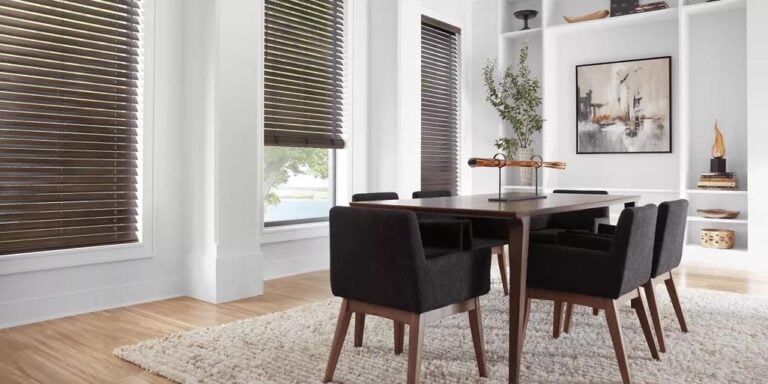
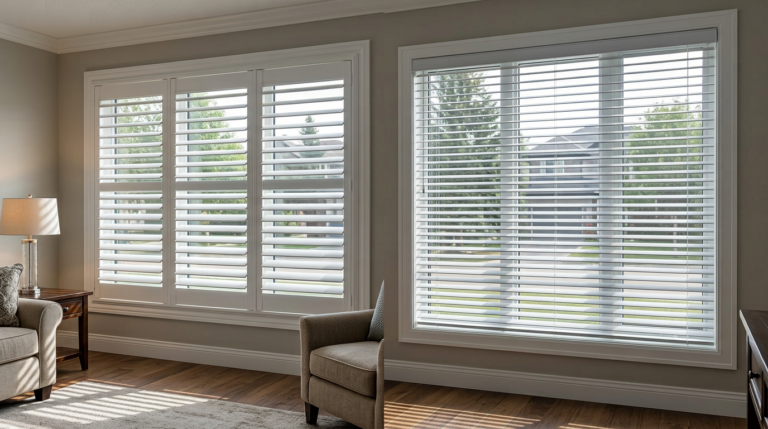
Installing Hunter Douglas® EverWood® Faux Wood blinds equips spaces with 2-inch or 2.5-inch composite slats that withstand heavy condensation in laundry rooms, kitchens, and high-humidity en suites without twisting or fading. Because these louvers rotate on an internal tilt gear, homeowners can angle intense sunlight toward the ceiling without exposing the interior to street-level viewing.
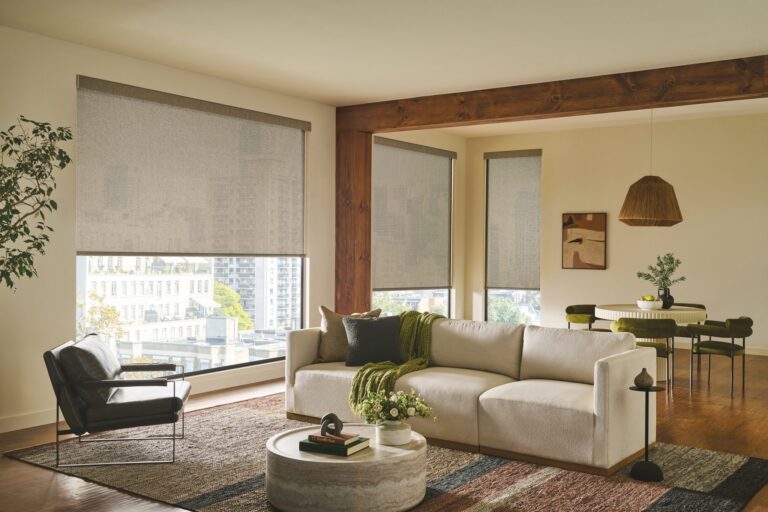
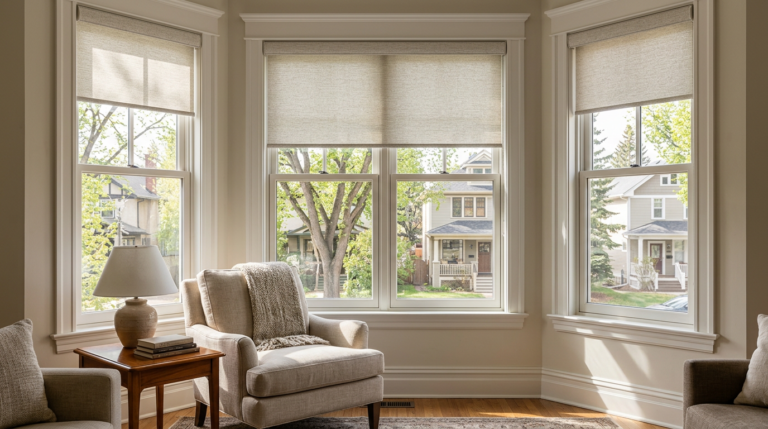
Choosing Hunter Douglas® Designer Roller shades gives residential properties a seamless, uninterrupted barrier free of ladder rout holes, vertical lift cords, or slat separations. This uniform fabric plane delivers crisp sightlines, blocks solar heat wash evenly across tall picture windows, and rolls completely out of view to preserve sweeping outdoor vistas.
Edmonton Project Pricing and Technical Specifications
Installing Hunter Douglas® EverWood® Faux Wood Blinds or tailored roller treatments creates noticeable differences in financial outlay and functional daylight management. Base installations for single windows across the Edmonton metro zone begin around $500 to $800, adjusting according to dimensions, base textiles, and drive assemblies.
Regional Installation Cost Benchmarks
Integrating PowerView® Automation into an individual kitchen roller shade in Edmonton typically prices out near $700 to $800. In comparison, outfitting seven main-floor windows in Sherwood Park with manual cordless SimpleLift™ composite blinds totals between $2,150 and $2,250. Regional project examples highlight typical investments across nearby communities:
| Product Line and Scope | Material Description | Room Placement | Region | Drive Mechanism | Total Investment |
|---|---|---|---|---|---|
| EverWood® Faux Wood (1 window) | Salt Box Warm White | Spare Bedroom | Beaver County | SimpleLift™ Cordless System | $500 to $600 |
| EverWood® Faux Wood (7 windows) | Monterey Crisp White | Living and Dining Areas | Sherwood Park | SimpleLift™ Cordless System | $2,150 to $2,250 |
| Designer Roller Shades (1 window) | Urban Loft Charcoal Weave | Kitchen Window | Edmonton | PowerView® Gen 3 Motorization | $700 to $800 |
| Designer Screen Shade (3 windows) | Omni 3% Solar White | Living and Dining Area | Fort Saskatchewan | PowerView® Gen 3 Motorization | $1,450 to $1,550 |
| Designer Screen Shade (6 windows) | Omni 3% Solar White | Bedrooms and Home Office | Fort Saskatchewan | UltraGlide® Retractable Wand | $1,350 to $1,450 |
Material and Operational Properties
Configuring custom residential blinds requires evaluating mechanical construction alongside solar exposure and ambient moisture levels. Extruded composite slats and tensioned fabric sheets function quite differently inside standard window casings:
| Feature | Faux Wood Blinds | Roller and Screen Shades |
|---|---|---|
| Primary Construction | Molded PVC polymer composite | Woven polyester, fiberglass, or solar mesh |
| Mechanical Action | Slats rotate through 180 degrees or gather upward | Continuous panel rolls around an overhead cylinder |
| Glare and Privacy | Variable louver angle deflects rays while retaining views | Static textile density from transparent view-through to blackout |
| Moisture Resistance | Resists humidity, direct vapor, and moisture damage | Depends on textile; coated vinyl handles wash areas well |
| Visual Character | Structured horizontal profile resembling painted woodwork | Clean horizontal surface that rolls into a compact profile |
| Care Process | Wipe slats across with a slightly damp cloth | Gently dust with a brush vacuum or spot sponge clean |
| Best Placement | Basement suites, washrooms, and standard trim frames | Expansive main-floor glass, media zones, and automated areas |
Long-Term Durability and Maintenance Demands for Faux Wood Blinds and Roller Shades
Edmonton experiences severe winter temperatures reaching -30°C alongside prolonged sunny summer afternoons, testing the physical stamina of interior window dressings throughout the year. Reviewing our custom blinds comparison shows that synthetic builds and specialized technical fabrics react differently to airborne moisture, intense sun exposure, and repetitive physical contact.
Physical Durability Across Local Seasons
Extruded PVC and polymer-based composite slats deliver impervious protection against steam, splashes, and condensation. This structural stability prevents warping, swelling, or split edges in high-humidity zones like laundry areas, kitchens, and basements. The dense material also functions as an insulated barrier against perimeter window drafts when winter chills set in.
For heavy solar exposure, Hunter Douglas® Designer Solar shades utilize precision-woven fiberglass coated in vinyl or polyester filaments to block damaging ultraviolet rays without edge unraveling. Continuous panel construction eliminates internal lift cords and string ladders entirely, reducing mechanical wear points in active family spaces.
| Evaluation Criterion | Synthetic Wood Slats | Roller Screen Fabrics |
|---|---|---|
| Base Construction | Solid extruded polyvinyl chloride or polymer composites | Woven polyester yarns, vinyl-wrapped fiberglass strands, or natural threads |
| Moisture Resistance | Immune to standing humidity, vapor, and liquid contact | Outstanding on vinyl-treated screen materials; specialty fabric blends prefer dry zones |
| Solar Heat and Light Exposure | UV-resistant outer coat prevents yellowing; slat density minimizes cold air transfer | Filters up to 99% of damaging sunlight; intense southern exposure can fade deeply saturated dyes |
| Standard Dusting Routine | Requires wiping both sides of horizontal slat surfaces | Simple vertical vacuum passes or localized surface spot-cleaning |
| Resistance to Pet Damage | Firm slats withstand side contact, but heavy pressure can crease lower segments | Vertical planar alignment sheds fur and rolls out of reach inside the head cassette |
Daily Maintenance and Cleaning Protocols
Installing resilient custom window coverings reduces household chores in spaces with active pets or airborne cooking grease. Each style presents a different profile for routine upkeep:
- Roller shade fabric panels: Because the material hangs as a continuous vertical sheet, dust particles struggle to find purchase. Shed dog and cat fur drifts off the slick polyester weave, and factory-applied antimicrobial finishes allow fast surface washing with warm soapy water.
- Faux wood blind slats: Horizontal two-inch or two-and-a-half-inch profiles naturally catch circulating household debris over time. Fortunately, the non-porous polymer allows homeowners to wash away oil splatters, sticky prints, and grime using a damp cloth without staining or stripping the core substrate.
Architectural Profiles and Visual Scale in Home Design
Modern window treatments establish the interior proportions of a space while moderating local light extremes from long northern summer days to bright snow glare in winter. Every window framing decision creates a defined visual footprint. Homeowners evaluating both formats face a fundamental layout choice between heavy horizontal louver lines and sleek, planar fabric panels.
Comparing Frame Depth and Surface Geometry
Selecting durable living room window coverings involves checking jamb depths and aligning casing details with existing interior furnishings.
- Faux Wood Louver Dimension: Built from rigid synthetic polymers or composite extrusions in standard 2-inch or 2.5-inch widths, these horizontal slats mirror stained timber or painted baseboard finishes. Their deliberate shadow lines complement Craftsman, colonial, and transitional spaces by filling out deep sills and anchoring prominent window trim.
- Roller Fabric Geometry: Manufactured from continuous panels of screen, room-darkening, or translucent textiles, these units retract entirely into a minimal headrail or small exposed roller. Hanging Hunter Douglas Alustra® Woven Textures® Roller shades introduces tactile woven warmth to minimalist layouts without creating stack-back bulk that cuts off outdoor views.
Living Room Renovation Case Study
A homeowner named Chloe recently renovated her south-facing formal sitting area, which features a massive central picture window bordered by wide decorative woodwork. She had to decide whether to mount solid louvers to match the baseboards or mount a flat textile panel to keep the glass unobstructed during overcast afternoons.
Blind Magic advises installing faux wood slats when the space showcases detailed crown moldings, substantial sill framing, or structured furniture. The solid vanes echo traditional millwork while offering immediate tilt adjustments to redirect outdoor sightlines.
Light Management and Privacy Mechanics for Window Treatments
Selecting the right window coverings requires assessing how distinct mechanical systems handle incoming daylight and outdoor sightlines. A direct comparison between horizontal composite louvers and continuous fabric panels reveals fundamentally different methods for securing daytime seclusion and blocking solar glare across street-facing rooms, main-floor living areas, and sleeping quarters.
Horizontal Slat Articulation on Composite Blinds
Adjusting horizontal louvers across a full 180-degree sweep gives homeowners precise directional brightness control without changing the physical height of the window treatment. Premium Hunter Douglas® blinds allow users to pitch the slats upward, casting intense overhead sun across the ceiling while blocking direct sightlines from sidewalk pedestrians outside. Angling the louvers tightly shut closes off interior visibility for private quarters, though subtle light bleeds still slip through the standard punch-hole cord routs and micro-gaps between consecutive overlapping slats.
Continuous Fabric Opacity and Edge Enclosures
Solid-panel roller treatments rely on vertical travel and specific yarn densities to dictate room brightness and nighttime seclusion. Homeowners customize these solid screens using distinct textile grades depending on room exposure:
- Transparent Solar Weaves (5% to 14% Openness Factor): Tame intense monitor reflections in dedicated home workspaces while preserving exterior sightlines across the yard.
- Translucent Light-Filtering Textiles: Convert raw midday sunlight into a balanced, comfortable ambient glow while hiding interior shadows after dusk.
- Total Room-Darkening Textiles: Stop 99% to 100% of solar rays from penetrating the textile face itself.
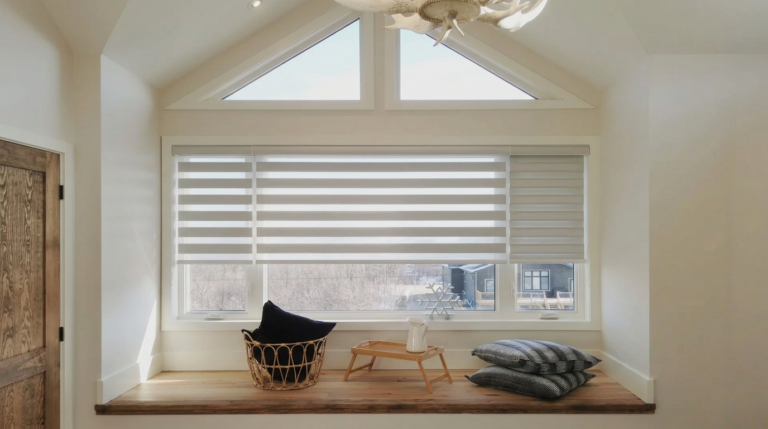
Precision LightLock® side-channel enclosures mount inside the window jamb to capture edge halo bleeds that escape standard roller gaps. For spaces that require daytime view-through alongside pitch-black nighttime conditions, installing a dual-opacity system like Duolite® pairs two distinct fabric layers onto a single headrail.
Room Specific Selection Guide for Faux Wood and Roller Shades
Evaluating indoor humidity levels, sun orientation, and casing depth determines the right treatment for each space. In northern climates like Edmonton, long summer daylight hours and winter freeze-thaw cycles create distinct demands on residential window coverings. Choosing between composite slats and continuous fabric rolls requires matching each product profile to specific daily room activities.
Shop by room considerations show that faux wood blinds deliver unmatched moisture protection in laundry rooms, half-baths, and above kitchen sinks. Synthetic polymer slats shrug off steam, heavy condensation, and airborne water droplets without swelling or cracking. In contrast, dry spaces like bedrooms, entertainment dens, and main living areas benefit from low-profile fabrics, where selections like Aura™ Illuminated Shades and standard roller hardware preserve glass exposure while blocking late-evening northern sun.
| Operational Metric | Faux Wood Blinds | Roller Shades |
|---|---|---|
| Moisture Resistance | Extruded polymer slats withstand splashing water and direct steam indefinitely. | Standard woven fabrics suit moderate humidity, while damp rooms require specialty polyester or vinyl-coated yarns. |
| Daylight Adjustment | Horizontal slats rotate through 180 degrees, bouncing direct glare upward without closing off sightlines. | Vertical roll profiles offer singular coverage, relying on pre-selected openness factors or opaque room-darkening liners. |
| Casing Depth Demands | Needs 2.5 to 3.25 inches of head jamb depth for a flush mount and creates a noticeable stack at the top. | Installs neatly in shallow window jambs under 2 inches, rolling into a discreet headbox to maximize incoming sunlight. |
Conducting a detailed Hunter Douglas® blinds comparison helps homeowners pinpoint which treatment matches their window depths and daily light requirements. Blind Magic helps homeowners across the capital region measure frame clearances accurately to confirm that every installation sits flush against the jamb.
Thermal Efficiency and Seasonal Performance Upgrades for Edmonton Homes
Custom window treatments shield interior spaces from extreme temperature swings, which prove invaluable when Alberta winter conditions plunge past -20°C. Unprotected glazing bleeds indoor warmth quickly during prolonged sub-zero stretches, while low winter sun paths create harsh indoor reflections. Selecting materials engineered for localized seasonal stress stops thermal leakage, cuts persistent glare, and guards against condensation damage along chilly sill edges.
Standard synthetic slats and base roller fabrics satisfy baseline visual screening, yet demanding exposures frequently demand specialized engineering from Hunter Douglas®. Combining Blind Magic Custom Drapery over primary shades or faux wood blinds creates an insulating dead-air pocket that slows window drafts during severe freeze events. For dry formal living spaces where synthetic compounds are unnecessary, homeowners often evaluate authentic Parkland® Wood Blinds alongside moisture-resistant composite builds to balance natural timber textures with seasonal room needs.
| Product Configuration | Primary Room Application | Relative Investment | Core Performance Advantage |
|---|---|---|---|
| Faux Wood Blinds | Bathrooms, laundry areas, and kitchens | Mid-Range | Dense polymer or PVC slats stop water absorption, heat twisting, and surface peeling. |
| Standard Roller Shades | Home offices and modern living spaces | Entry-Level | Varied fabric openness ratings wind tightly around a slim roller profile. |
| Blackout Roller Shades | Nurseries and bedrooms of shift workers | Mid-Range | Solid reflective backings stop morning daylight and artificial outdoor night glare. |
| Duolite® Roller Shades | Open-concept multi-use spaces | Higher-End | Combines independent sheer diffusion and opaque privacy backings on one hardware track. |
| LightLock® System | Media suites and east-facing bedrooms | Higher-End | U-shaped side channels fit inside jambs to trap perimeter light leaks completely. |
| Aura® Illuminated Shades | Basement lounges and formal dining areas | Premium | Integrated dimmable LED backlighting casts artificial daylight directly through the shade weave. |
FAQ
Explore our detailed blinds comparison of faux wood and roller shades for homes in the table below to see how each style handles everyday maintenance, window sizing, and seasonal temperature shifts. These quick answers will help you weigh your options and determine the best fit for your space.
| Question | Answer |
|---|---|
| Which option works better for drafty Edmonton windows during cold winter months? | Cellular roller shades provide a continuous thermal barrier over glass that seals window drafts better than slatted alternatives. Faux wood blinds block radiant heat loss through their solid composite slats, but small gaps between closed slats allow slight airflow. If insulating against sub-zero Edmonton temperatures is your main priority, choose a blackout fabric roller shade paired with side channels. |
| How do cleaning requirements differ between faux wood slats and fabric roller materials? | Faux wood blinds withstand damp microfibre cloths and common household degreasers, making them simple to wipe down in busy Edmonton kitchens. Fabric roller shades require periodic vacuuming with an upholstery brush attachment or spot-cleaning with mild soapy water. If you manage a home with pets or heavy cooking grease, faux wood requires less delicate handling than textured shade fabrics. |
| Can large picture windows in Edmonton living rooms accommodate heavy faux wood blinds? | Faux wood composite material carries substantial weight, which can make extra-wide blinds difficult to lift and cause headrail strain over time. Roller shades use lightweight fabric tubes that span wide picture windows easily, whether operated manually or with a motorized wand. For windows wider than 72 inches in Edmonton homes, split faux wood into multiple blinds on one headrail or choose a single wide roller shade. |
| Should you choose cordless faux wood blinds or motorized roller shades for higher window frames? | Cordless faux wood blinds require you to reach the bottom rail by hand to lift the blind, which creates reach issues on tall or transom windows. Motorized roller shades adjust with a wall switch, remote, or smartphone app, eliminating manual reach entirely. If your Edmonton property features vaulted ceilings or high stairwell windows, motorized roller shades provide far safer day-to-day operation. |