
Answer
Navigating this comprehensive hunter douglas guide to blinds and motorized shades allows you to evaluate energy-efficient fabrics, light-filtering capabilities, and advanced smart-home integrations. Integrating intuitive PowerView® Automation enables effortless scheduling and synchronized tilt control across all your window coverings via remote, app, or voice command. Blind Magic delivers tailored consultations, precise measurements, and factory-trained installation to help you design the perfect automated shading setup for your space.
Overview
Selecting custom window coverings requires balancing light control, thermal performance, and convenient everyday operation. The following sections walk through hardware capabilities, operating options, maintenance protocols, and practical planning steps to configure shades for specific window dimensions.
A labeled real-world hypothetical examines how room orientation and privacy demands influence product selection for common household layouts. Review each topic below to plan custom shading projects effectively.
- Performance Criteria: Review light management, solar protection, and insulating fabrics by examining core window treatment performance criteria.
- Motorization Systems: Discover wireless operation, power wands, and smart integration through motorized blinds and PowerView® automation options.
- Automation Pricing: Compare hardware power choices, motor configurations, and network gear using project pricing and smart capabilities benchmarks.
- Maintenance Steps: Protect fabric integrity and mechanical components by following practical blind repair and cleaning steps.
- Product Lines: Evaluate cellular, sheer, and modern architectural options across standard product lines and core specifications.
- Selection Steps: Narrow choices by following structured steps to select window treatments for specific window layouts.
- Local Consultations: Prepare for on-site measuring and certified placement through consultations and installation in Edmonton.
Core Performance Factors for Hunter Douglas Window Coverings
Selecting premium Hunter Douglas® blinds allows homeowners to regulate daylight, interior temperatures, and family privacy across every season. Since 1962, Blind Magic has supplied custom configurations built specifically to handle Alberta’s climate variations, which range from harsh sub-zero cold spells to extended summer sunlight.
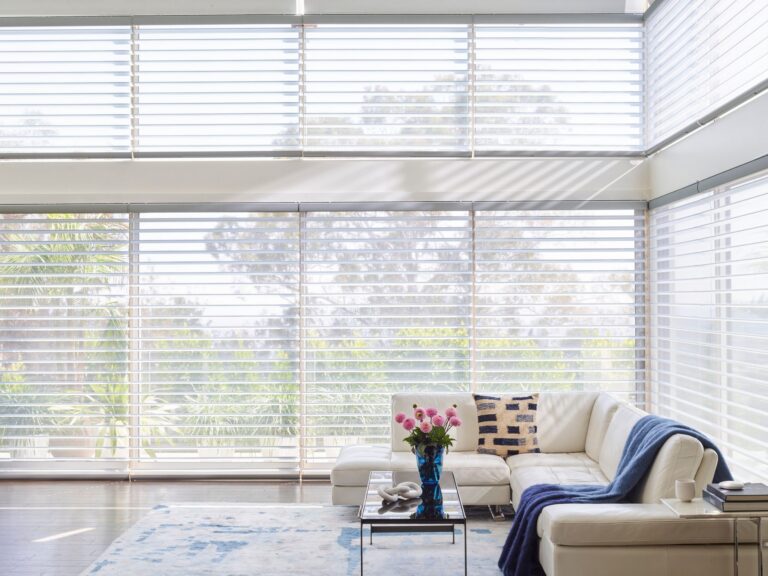
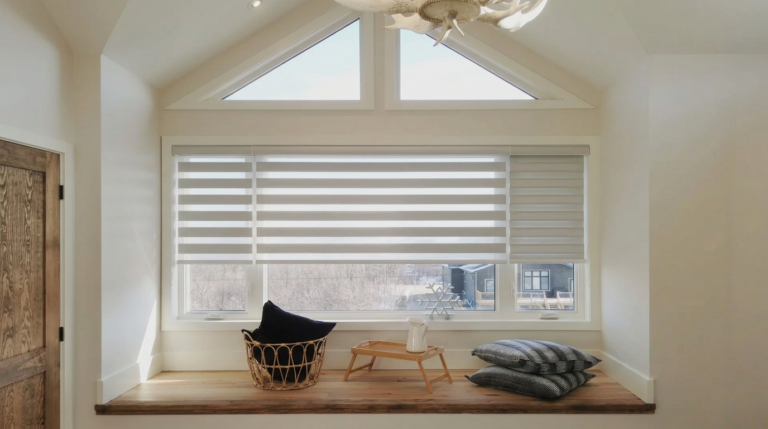
Investing in Hunter Douglas® window treatments requires balancing clear outward views against direct solar heat and ultraviolet exposure. South-facing living spaces benefit from Hunter Douglas® sheer shades that diffuse glare while keeping outdoor sightlines open. Conversely, street-level bedrooms depend on room-darkening fabrics and tightly closing vanes to ensure continuous darkness and privacy.
| Performance Factor | Hunter Douglas® Design Engineering | Recommended Product Styles |
|---|---|---|
| Daylight Management | Adjustable horizontal louvers and rotating fabric vanes diffuse sunlight into soft glow or provide blackout closure. | Silhouette® Window Shadings, Parkland® Wood Blinds, Designer Banded Shades |
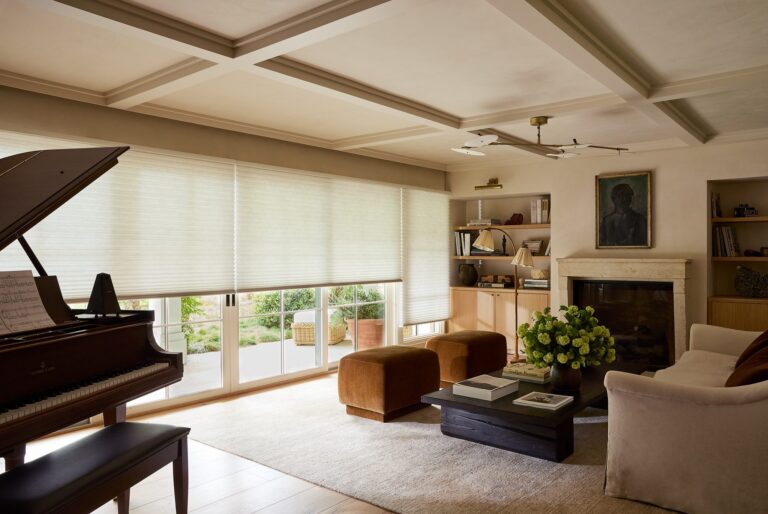
| Thermal Insulation | Trapped honeycomb air pockets buffer the glass pane to prevent winter heat loss and block summer solar warmth. | Duette® Architella® Honeycomb Shades, Sonnette® Cellular Roller Shades |
| Day and Night Privacy | Top-down/bottom-up hardware and dual-fabric rollers shield ground-level interiors while drawing natural skyward light. | Duette® Honeycomb Shades, Vignette® Modern Roman Shades |
| Child and Pet Safety | Cordless hand-operated lifts, retractable wands, and motorized controls remove exposed cords around busy play spaces. | LiteRise® Cordless System, UltraGlide® Wand, PowerView® Automation |
| Aesthetic Finish | Coordinated wood stains, architectural weaves, and specialized hardware align with existing casing and mouldings. | Custom fabric groupings and coordinated valance packages |
When existing blinds stick, slip off tracks, or struggle to tilt, professional blinds repairs re-align internal cords and gears to guarantee flawless daily performance.
Smart Motorization Controls and PowerView® Architecture
PowerView® Automation Gen 3 relies on Bluetooth® Low Energy (BLE) architecture, giving property owners precise percentage-based positioning for every treatment. Users manage routines through mobile software, command up to six distinct groupings with the handheld Pebble® Remote, or integrate hardware with Apple® HomeKit®, Amazon Alexa®, and Google Assistant™ platforms.
Hunter Douglas® cellular shades remove dangling draw cords entirely, protecting children and pets while solving access challenges for vaulted spaces or high clerestory glass. For oversized sliding entries, motorized Luminette® Privacy Sheers glide smoothly across the top track and tilt their internal fabric vanes simultaneously with one touch.
| Power Source | Installation Style | Service Interval | Ideal Window Placement |
|---|---|---|---|
| Internal Rechargeable Battery | Hidden inside headrail | Magnetic USB-C top-up every 6 to 12 months | Standard retrofits without wall wiring |
| 18V DC Power Supply | Hardwired low-voltage cabling | Maintenance-free constant power | New builds, major rebuilds, tall window walls |
| Solar Charger Kit | Slim exterior-facing panel | Continuous solar trickle charge | High-reach glass with direct sunlight exposure |
Configuring Rooms and Autonomous Schedules
- Pair Treatments in the App: Sync mobile devices running iOS® or Android™ directly to Gen 3 motors via localized Bluetooth® signals.
- Set Physical Travel Bounds: Confirm that the bottom rail touches the window sill firmly and retracts flush beneath the top headrail before linking units together.
- Store Custom Room Scenes: Record precise vane tilts and fabric heights for distinct times, such as setting afternoon exposure limits across south-facing rooms.
- Automate Around the Solar Cycle: Connect an optional PowerView® Gateway to trigger stored positions automatically alongside local sunrise and sunset patterns year-round.
PowerView® Smart Shade Costs and Automation Features
Homeowners planning automated treatments can review recent regional project costs across the Greater Edmonton area, where installations usually average between $700 and $2,450 depending on textile opacity, motor hardware, and total window counts. Assessing real-world project bills clarifies how distinct fabric selections and window configurations influence the final installation invoice.
| Product Line | Fabric Style and Color | Room Application | Location | Drive System | Installed Price Range |
|---|---|---|---|---|---|
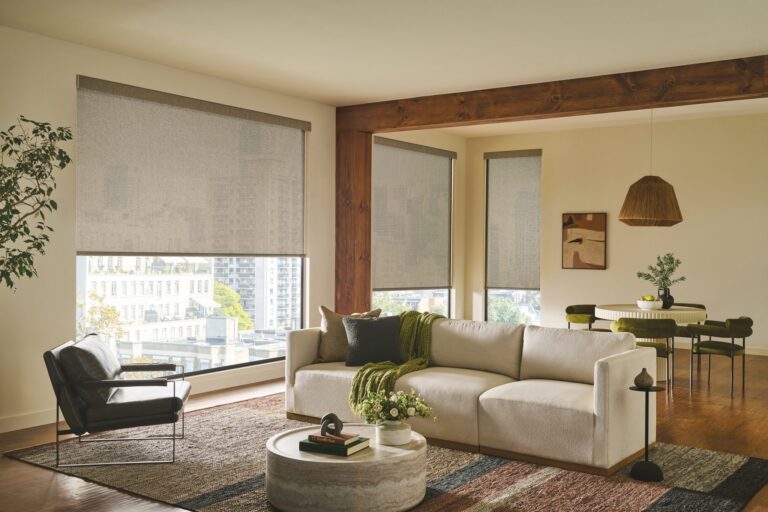
| Designer Roller Shades | Urban Loft Lead Gray | Kitchen (single window) | Edmonton | PowerView® Gen 3 Automation | $700 to $800 |
| Pirouette® Window Shadings | Satin 5-Inch Stainless Light-Filtering | Living Room (3 windows) | Edmonton | PowerView® Bottom-Up | $1,550 to $1,650 |
| Designer Screen Shades | Omni 3% Solar Screen Alpine Snow | Main Living Area (3 windows) | Fort Saskatchewan | PowerView® Automation | $1,450 to $1,550 |
| Omni Solar Shades | 3% Openness Alpine Snow Screen | Living and Dining Areas (3 windows) | Fort Saskatchewan | PowerView® Gen 3 Automation | $2,350 to $2,450 |
| Duette® Honeycomb Shades | 3/4-Inch Architella® Elan Daisy White Room-Darkening | Primary Suite (2 windows) | Morinville | PowerView® Automation | $2,200 to $2,300 |
Functional Benefits of Motorized Shade Systems
Integrating PowerView® Automation into residential windows replaces dangling manual loops with wireless battery or hardwired drives, giving residents immediate control over solar gain, blinding reflections, and indoor privacy through several automated capabilities:
- Handheld and Mobile Scene Selection: The Pebble® remote and companion smartphone software reposition individual treatments or synchronized window groups without physical adjustments at the glass.
- Astronomical Clock Scheduling: Pre-set scenes shift shade positions automatically to match real-time Edmonton dawn and dusk schedules throughout changing seasons.
- Hands-Free Voice Command Sync: Dedicated gateway hubs pair motor arrays with Google Assistant, Apple HomeKit®, and Amazon Alexa platforms for rapid verbal commands.
- Compliant Cord-Free Living Spaces: Mechanical elimination of tension chains and lift cords strictly adheres to federal Canadian window covering safety laws to safeguard young children and pets.
- Solar Heat and Energy Management: Automated timers lower cellular and screen materials during peak afternoon heat, reducing glass heat transfer and trimming summer cooling utility costs.
Hunter Douglas Window Treatment Maintenance and Troubleshooting Protocols
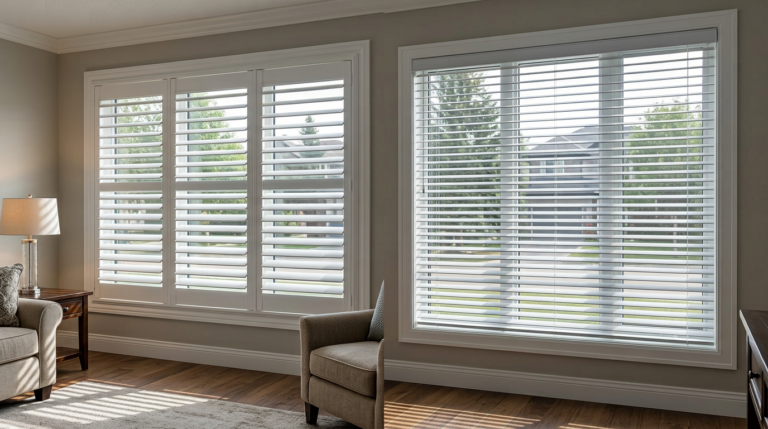
Consistent maintenance schedules shield precision-engineered window coverings against premature mechanical failure. For high-humidity spaces, EverWood® faux wood blinds withstand light cleanings with a damp microfiber cloth, preserving slat integrity without swelling. In contrast, natural hardwood options like Parkland® wood blinds demand strictly dry dusting methods to safeguard organic grain finishes from moisture warping, while aluminum models such as Modern Precious Metals® require anti-static cloths to prevent dust accumulation.
Following proper operating guidelines prevents early wear across internal clutches, suspension cords, and motorized drive shafts. When unexpected operating hitches arise, homeowners can consult professional Blinds Repairs Edmonton services or apply the diagnostic steps outlined below to resolve basic operational faults.
| Symptom | Probable Cause | Recommended Action |
|---|---|---|
| Shade will not lift or drop | Clutch blockage, line tangle, or power cut | Examine the headrail carriage for physical snags. On motorized systems, check wand voltage levels or inspect hardwire cables. |
| Bottom rail sits crooked | Ladders slipped out of place or uneven string tension | Draw the treatment down fully, then guide it upward evenly using two hands to balance ladder cords. |
| PowerView® Automation stops cycling | Drained CR2032 cells or dropped gateway link | Swap out the remote batteries, restore power to the headrail module, and press the manual program button for six seconds to reboot. |
| Dust buildup or fabric discoloration | Airborne dirt settling into pleats | Gently clean slats using a vacuum equipped with a soft dusting brush on low suction. Treat minor spots using lukewarm water paired with gentle soap if permitted by the care instructions. |
Architectural Performance and Specifications of Flagship Hunter Douglas® Lines
Glass assemblies permit approximately 30 percent of residential heating and cooling energy to escape, which positions thermal construction as the deciding factor when evaluating window treatments for cold climates. Blind Magic pairs specific architectural challenges with engineered textile profiles that stabilize indoor temperatures, preserve sightlines, and shield interior furnishings.
| Product Line | Mechanical Design | Primary Functional Advantage |
|---|---|---|
| Duette® Honeycomb Shades | Internal air pockets built with single-cell or Architella® honeycomb-within-a-cell construction | Substantial thermal barrier performance, winter interior warmth retention, and opaque room darkening |
| Silhouette® Window Shadings | S-curved adjustable fabric vanes suspended between front and rear sheer textile facings | Natural light diffusion, up to 88 percent UV deflection, and continuous outdoor visibility |
| Pirouette® Window Shadings | Contoured fabric louvers mounted horizontally to a single sheer backing foundation | Sculpted fabric aesthetics with swift adjustment from wide exterior views to full evening privacy |
| Luminette® Privacy Sheers | Vertical fabric vanes that rotate 180 degrees within drapery-style sheer facings | Precise daylight distribution and view management across wide patio sliders and large picture windows |
| Vignette® Modern Roman Shades | Tailored rolling or stacking fabric folds constructed with no exposed rear operating cords | Consistent outer backing, elevated fabric depth, and built-in cord-free home safety |
Evaluating Performance Factors for Edmonton Residences
Selecting the ideal window coverings involves auditing light exposure, household safety requirements, and thermal resistance:
- Thermal Efficiency and Glass Defense: Investing in Duette® cellular shade insulation creates a trapped air buffer directly against the windowpane, reducing conductive chill during -30°C winter cold snaps while resisting intense summer solar heating.
- Solar Heat and Glare Moderation: Daily exposure direction governs fabric requirements. South-facing and west-facing exposures benefit from dual-roller configurations or tilting vanes, while sleeping quarters require opaque blackout textiles to block midsummer dawn light. Choosing Silhouette® Window Shadings allows homeowners to deflect direct glare across workstations without plunging the room into darkness.
- Operating Safety and Cordless Systems: Installing Vignette® Modern Roman Shades equipped with LiteRise® push-pull operation or retractable UltraGlide® systems removes dangerous hanging cords while accommodating the scale of broad window casings.
Edmonton Case Study: Screen Reflection in a South-Facing Office
A remote professional in Edmonton struggled with harsh afternoon sunlight bouncing across dual computer monitors in a south-facing study. Opaque roller blinds removed the intense glare but forced the homeowner to rely on artificial desk lamps throughout the brightest hours of the day.
Blind Magic resolved this issue by mounting Silhouette® Window Shadings inside the window casing. Tilting the internal fabric vanes dispersed harsh direct rays into gentle ambient daylight. This balance shielded hardwood flooring from UV discoloration, illuminated the workspace naturally, and kept video calls properly lit without washed-out computer screens.
Step-by-Step Selection Process for Hunter Douglas® Coverings
Following a precise hunter douglas guide to blinds and motorized shades prevents costly sizing errors, light leaks, and mounting conflicts. At Blind Magic, we inspect architectural layout, sun exposure, and daily usage patterns before finalizing product selections.
1. Take Three-Point Frame Measurements
Booking professional custom measures confirms whether narrow window casings can accommodate internal headrails or require outside mounts. Check the horizontal span at the upper, central, and lower portions of the frame down to 1/8 inch, then determine total sill depth to ensure adequate bracket clearance.
2. Calibrate Fabric Opacity by Room Zone
Balancing ambient brightness and seclusion requires matching textiles to room activity. Living spaces and culinary zones benefit from sheer weaves that preserve exterior vistas while muting solar glare, whereas sleeping quarters demand opaque liners to seal out morning light.
3. Align Window Scale with Architecture
Large sliding doors and multi-panel expanses operate smoothly with Skyline® Panel Track blinds, which slide horizontally along low-profile ceiling channels without cluttering walkways. In contrast, standard double-hung casements gain warmth from textured Provenance® Woven Wood shades crafted from organic grasses, reeds, and bamboo fibers.
4. Choose Verified Child-Safe Controls
Eliminate hazardous dangling cords by selecting spring-tensioned LiteRise® handles, retractable UltraGlide® wands, or motorized PowerView® Automation systems configured for elevated transoms and hard-to-access clerestory windows.
5. Specify Insulation Levels
Windows facing north or exposed to heavy wind lose significant indoor heat during sub-zero months. Cellular honeycomb shades feature structured hexagonal air cells that create an insulating thermal barrier directly against the glass plane.
6. Review Physical Swatches on Location
Book an in-home evaluation with our specialists to review material swatches under your interior incandescent or LED bulbs, inspect structural framing headers, and check operating clearances around window cranks.
Edmonton In-Home Consultations and Certified Fitting Services
Alberta properties absorb roughly 2,300 hours of intense sunshine each year, combined with winter chills plunging past -30°C. Installing high-performance Hunter Douglas® window treatments balances harsh midsummer heat loads with wintertime insulation around exposed glass.
Blind Magic pairs homeowners with certified technicians who document framing dimensions down to one-sixteenth of an inch. During an on-site visit or showroom walk-through, our specialists guide you through each stage of the specification process:
- Precision Framing Scans: Our installers verify header clearance, trim depth, and sill bevels using custom measures to eliminate side light gaps on inside-mounted casings.
- Direct Sunlight Glare Checks: Sample textiles such as Designer Solar™ roller shades and insulating cellular honeycombs are evaluated directly against your glass panes to assess privacy levels, daylight filtration, and ultraviolet protection.
- Drive and Control Configurations: Window placements, sill reach, and child safety considerations determine whether frames receive PowerView® Automation, UltraGlide® retractable wands, or cordless LiteRise® hardware.
- Trim and Finish Integration: Coordinating fabric textures from Hunter Douglas® Roman shades with your baseboards, wall pigments, and millwork preserves architectural harmony across the room.
Every completed order includes factory-trained installation alongside direct warranty backing handled at our local Edmonton facility, allowing you to cross-reference motor options, opacity grades, and thermal data before approving final production.
FAQ
To help you select the ideal window treatments for your home, this Hunter Douglas guide to blinds and motorized shades addresses common questions about styles, smart automation, and cold-weather performance in the quick-reference table below.
| Question | Answer |
|---|---|
| Which Hunter Douglas® shade works best for patio doors and wide picture windows? | Luminette® Privacy Sheers suit wide expanses and patio doors because their vertical fabric vanes rotate 180 degrees for precise light control. Unlike horizontal treatments, vertical sheers glide smoothly across large spans without catching along the sill. If your sliding door faces intense north-central winter drafts in Edmonton, Alberta, vertical Duette® Honeycomb Shades provide better edge-to-edge thermal defense. |
| How do PowerView® Automation shades stay charged during cold northern winters? | Hunter Douglas® PowerView® Automation systems run on internal rechargeable lithium-ion battery wands, alkaline battery packs, or hardwired DC power supplies. Cold window draft zones in Edmonton, Alberta can shorten standard alkaline battery life during prolonged cold snaps below -30°C. If you choose battery power, the slim rechargeable battery wand mounts discreetly behind the headrail and recharges using a standard magnetic cable without removing the shade. |
| Should I choose Silhouette® or Pirouette® shadings for street-level front rooms? | Silhouette® Window Shadings work well for daytime privacy because the sheer backing diffuses incoming daylight while obscuring the interior view from the sidewalk. Pirouette® Window Shadings feature contoured fabric vanes mounted to a single sheer backing, allowing them to close flat for complete room darkening and total nighttime privacy. If your Edmonton room faces street traffic or bright streetlights at night, Pirouette® shadings deliver superior light closure. |
| Can motorized Hunter Douglas® shades integrate with existing smart home setups? | PowerView® Automation connects directly with smart home platforms including Apple® HomeKit®, Amazon Alexa, and Google Home™ through the PowerView® Gateway. Homeowners in Edmonton, Alberta can schedule shades to lower automatically at sunset to retain furnace heat or lift during sunny midday hours to capture natural passive solar warmth. The system also syncs with wall switches and handheld Pebble® remotes for quick manual override in any room. |