
Answer
Evaluating powerview vs tahoma smart blind systems and home integration comes down to choosing between the proprietary refinement of Hunter Douglas® and the broad, multi-brand protocol flexibility of Somfy®. Investing in PowerView® Automation gives homeowners precise two-way shade feedback, dynamic scene scheduling, and direct sync with leading smart home platforms like Apple® HomeKit, Control4®, and Amazon Alexa. The window treatment experts at Blind Magic help you configure the ideal gateway, remote, and motor combination to guarantee reliable daily performance across every room.
Overview
Selecting between motorized shading platforms requires balancing motor hardware, wireless protocols, and third-party automation platforms. A detailed evaluation of powerview vs tahoma smart blind systems and home integration clarifies how each system controls daily sunlight, privacy, and room comfort.
This comparison examines hub specifications, voice assistant pairing, and retrofit flexibility across distinct window types. The review also includes a labeled real-world hypothetical featuring a homeowner balancing multiple motor platforms, illustrating practical installation tradeoffs before finalizing an automation plan.
- Core Mechanics: Review fundamental transmission protocols and motor designs through this hardware engineering breakdown.
- Platform Syncing: Connect third-party voice assistants and smart hubs using ecosystem bridge options.
- System Selection: Identify whether proprietary shades or open-radio architecture fits your space via this matching criteria framework.
- Everyday Reliability: Track app responsiveness, multi-room schedules, and physical remote habits in daily home performance.
- Real-World Example: Walk through an illustrated layout and seasonal automation profile in the practical installation scenario.
- Bridge Specs: Compare processing bands, power supplies, and signal reach with gateway hardware specifications.
- Final Recommendations: Match architectural constraints and wiring paths to the right product using installer system recommendations.
Network Architecture And Hardware Protocols In PowerView® And TaHoma® Systems
Hunter Douglas® blinds in Edmonton rely on a tightly managed closed ecosystem, whereas Somfy® builds on an open hardware framework designed for broader product cross-compatibility. PowerView® Automation channels commands through a dedicated mesh arrangement pairing Bluetooth® Low Energy with proprietary radio frequencies. This setup transmits real-time diagnostics directly to mobile screens, reporting battery life, slat angles, and shade heights down to the millimeter. Somfy® TaHoma® Switch works instead as an expansive central bridge, uniting Radio Technology Somfy® (RTS), Zigbee® 3.0, and standard Wi-Fi protocols to run shade motors, exterior patio awnings, and environmental monitors through a unified hub.
Multi-level layouts require dependable radio frequencies to protect transmissions from wall interference. Comparing different motorized operating systems highlights how each brand addresses data distribution across larger properties:
| Feature Category | Hunter Douglas® PowerView® Gen 3 | Somfy® TaHoma® Switch |
|---|---|---|
| Compatible Treatments | Proprietary Hunter Douglas® shades, blinds, and motorized draperies | Somfy® motor lines across multi-brand blinds, rolling shutters, and exterior screens |
| Transmission Standards | Bluetooth® Low Energy plus proprietary PowerView® RF mesh | RTS (433.42 MHz), Zigbee® 3.0, Wi-Fi, and io-homecontrol® via bridge |
| Smart Home Integrations | Apple® HomeKit®, Amazon Alexa, Google Assistant, Crestron®, Control4® | Amazon Alexa, Google Assistant, Samsung SmartThings®, Apple® HomeKit® (Zigbee® lines), IFTTT |
| Handheld Hardware | Pebble® remote, wall-mount Scene Controller, smart surface plates | Situo® handheld remotes, Smoove® wall transmitters, integrated hub push-buttons |
| Positional Feedback | Two-way data logging covering precise percentages and battery status | Two-way verification with Zigbee® units; blind one-way commands on RTS motors |
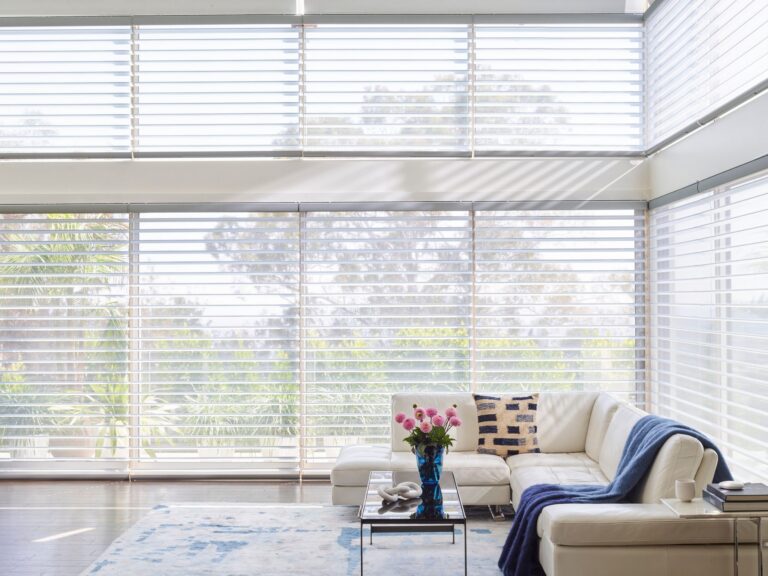
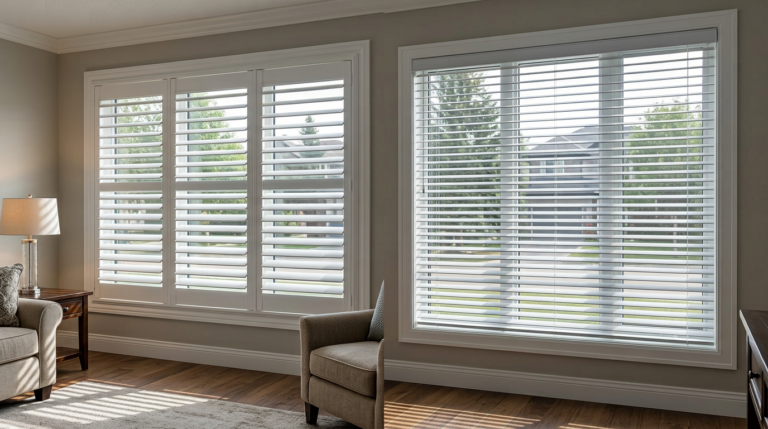
Window styles featuring tiltable slats demand exceptionally tight motor control. Premium products such as Parkland® Wood Blinds and Silhouette® window shadings depend on fine gear adjustments to shift ambient daylight without shifting the bottom rail. PowerView® Gen 3 hardware is engineered specifically for these minute angle shifts, positioning fabric veins and horizontal louvers with exact repeatability. TaHoma® Switch stands out when an automation strategy extends past the window frame, coordinating indoor roller screens, weather sensors, and motorized backyard shade structures through a single controller.
Voice Assistants Wireless Protocols And Smart Hub Connections
PowerView® Automation delivers dedicated, native functionality across Hunter Douglas® treatments, whereas the Somfy® TaHoma® switch operates as a versatile controller across multi-brand environments. Both manufacturers integrate directly with Apple HomeKit®, Amazon Alexa, and Google Assistant, giving residents hands-free speech activation and automated daily schedules. The technical divide between the two systems stems from network protocol flexibility and hardware isolation.
PowerView® motorized drapery and automated blinds communicate via Bluetooth® Low Energy in Gen 3 installations, pairing with the PowerView® Gateway to broadcast proprietary radio frequency signals across multi-room layouts. Homeowners adjust these shades using the handheld Pebble® Remote, wall-mounted Surface controls, or the mobile application. In contrast, Somfy® TaHoma® bridges into expanded home networks by incorporating Zigbee® 3.0, Z-Wave® connections, RTS frequencies, and IFTTT applets. This multi-protocol approach lets the TaHoma® Switch trigger exterior solar screens, smart climate control, and architectural lighting alongside interior window coverings.
| Integration Category | Hunter Douglas® PowerView® System | Somfy® TaHoma® Switch Platform |
|---|---|---|
| Primary Network Scope | Purpose-built for Hunter Douglas® blinds, shades, and drapery tracks | Coordinates Somfy® motors, exterior screens, and partner smart devices |
| Supported Voice Assistants | Apple HomeKit®, Amazon Alexa, Google Home | Apple HomeKit®, Amazon Alexa, Google Home, plus IFTTT services |
| Radio Protocols | Bluetooth® Low Energy (Gen 3) and proprietary 2.4 GHz Gateway RF | Radio Technology Somfy® (RTS), Zigbee® 3.0, and optional Z-Wave® modules |
| Physical Interface Options | PowerView® App, Pebble® Remote, Surface Remote | TaHoma® App, TaHoma® Switch buttons, Situo® handheld remotes |
| Central Signal Hub | PowerView® Gateway and plug-in range repeaters | Somfy® TaHoma® Switch gateway hub |
| Ideal Deployment | Properties unified on Hunter Douglas® products seeking quick setup | Complex residences linking different device brands, sensors, and relays |
Selecting Between PowerView And TaHoma For Your Smart Home Configuration
Hunter Douglas® blinds equipped with PowerView® Automation deliver specialized motor engineering, whereas the Somfy® TaHoma® switch focuses on broad multi-brand versatility. Deciding on the right platform hinges on whether you plan to deploy custom fabric shades from a single manufacturer or connect varied exterior screens, roll-up shutters, and interior motors to a single hub.
When PowerView® Automation Delivers the Advantage
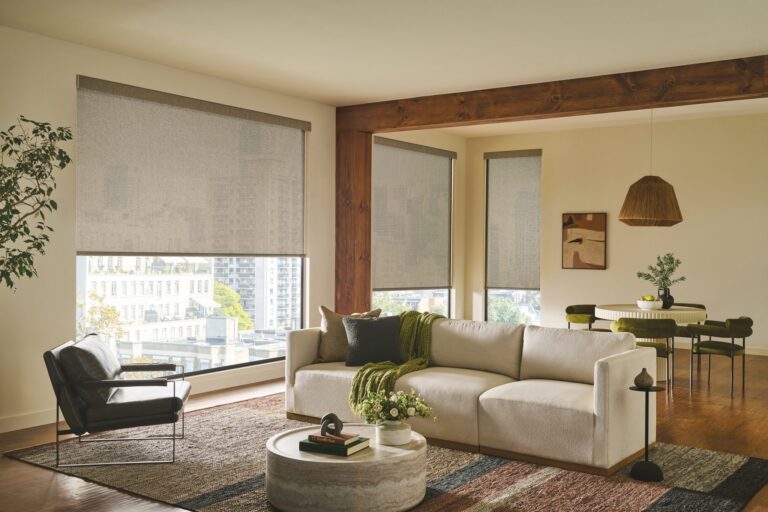
Top-Down/Bottom-Up shades and dual-roller products demand precise positioning that generic controllers cannot replicate. PowerView® Gen 3 relies on Bluetooth® Low Energy communication alongside proprietary motor firmware to achieve whisper-quiet movement and sub-millimeter vane adjustments. Integrating the PowerView® Gateway supplies voice activation and schedule coordination across Apple® HomeKit®, Amazon Alexa®, and Google Assistant™ while maintaining strict synchronization across wide banks of windows.
When Somfy® TaHoma® Fits Better
Homes incorporating a mix of Radio Technology Somfy® (RTS) motors, Zigbee® 3.0 devices, and outdoor shade hardware gain substantial utility from TaHoma®. This bridge excels at pulling heterogeneous equipment into unified smart schedules, allowing custom IFTTT automation recipes to manage lighting, outdoor patio shades, and secondary motorized treatments under a single controller.
Edmonton Case Study: Balancing Precision and Multi-Brand Control
Consider Arthur, a homeowner in Edmonton looking to install automated window treatments throughout his property. Arthur wants sunrise-to-sunset automation, pinpoint vane tilting on south-facing windows to block afternoon glare, and smart home sensor integration.
For Arthur, PowerView® Gen 3 is the ideal choice for his interior living areas because Hunter Douglas® designs the shade mechanics and motor protocols together. This cohesive engineering guarantees reliable daily travel limits, silent operation, and flawless aesthetic alignment across every room.
Everyday Thermal Regulation and Privacy Automation
Motorized window treatments block up to 45% of incoming solar heat during peak afternoon warmth while retaining indoor warmth throughout sub-zero winters. Comparing the Hunter Douglas® PowerView® system with the Somfy® TaHoma® hub reveals how both architectures manage room temperature, incoming daylight, and nighttime security across entire floor plans. Setting automated routines eliminates manual adjustments by aligning shade movements with dynamic astronomical clocks that shift alongside seasonal sunrise and dusk times.
Solar Gain and Glare Defense
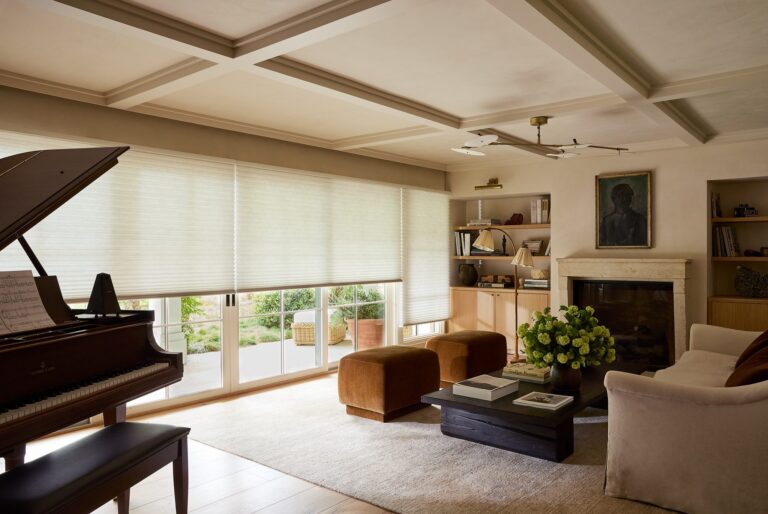
Expansive picture windows facing west or south admit harsh UV radiation that discolours hardwood floors, bleaches furniture fabrics, and drives cooling systems beyond target loads. Both PowerView® and TaHoma® allow homeowners to schedule cellular or solar shade closures minutes before midday radiation spikes. Programmable thresholds drop fabric barriers down precisely when direct radiation strikes the glass, maintaining natural view-through during early morning hours and sealing off radiant heat during high-noon exposure.
High Ceilings and Hard-to-Reach Glass
Custom large windows mounted high in two-storey great rooms create severe draft zones and solar hotspots if left uncovered. Installing motorized systems on high transom units or overhead skylights enables homeowners to manage inaccessible glass panes through centralized app dashboards or handheld remotes. Shades close over elevated glass during freezing nights to prevent warm air migration, then draw upward on bright winter afternoons to welcome free thermal energy into the living space.
Scheduled Privacy Management
Automated privacy routines trigger shade deployments as the sun dips below the horizon. Ground-level living spaces and street-facing bedrooms close completely at dusk, barring outside visibility whether residents occupy the property or travel abroad on vacation. PowerView® scenes and TaHoma® smart rules run autonomously in the background, maintaining dependable household routines every day of the year.
PowerView® Real World Project Costs And Seasonal Schedules
Investing in PowerView® Automation across Edmonton and Sherwood Park typically requires between $700 for an individual kitchen window treatment and $9,050 for whole-room multi-shade installations. Custom fabric selections, window dimensions, and drive configurations influence these final figures, giving homeowners predictable baselines when planning automated upgrades.
Representative Installation Costs In Greater Edmonton
Actual project invoices reflect how motorization hardware pairs with specific Hunter Douglas® fabric collections across different room layouts:
| Window Treatment | Fabric and Opacity | Room Location | Area | Motorization Profile | Installed Price |
|---|---|---|---|---|---|
| Designer Roller Shades | Urban Loft Lead, semi-opaque | Kitchen (single window) | Edmonton | PowerView® Gen 3 Bottom-Up | $700 to $800 |
| Pirouette® Window Shadings | Satin 5-inch Stainless, light filtering | Living Room (3 windows) | Edmonton | PowerView® Gen 3 Bottom-Up | $1,550 to $1,650 |
| Duette® Honeycomb Shades | Journal semi-opaque | Bedrooms (5 windows) | Sherwood Park | PowerView® Gen 3 Internal Motor | $3,900 to $4,000 |
| Silhouette® Window Shadings | ClearView® Originale 3-inch Linen Flirt | Living Room (single window) | Sherwood Park | PowerView® Gen 3 Tilt & Lift | $2,150 to $2,250 |
| Duette® Honeycomb Shades | Architella® Elan 3/4-inch Linen, room darkening | Primary Bedroom (5 windows) | Sherwood Park | PowerView® Gen 3 Internal Motor | $8,950 to $9,050 |
Automating For Alberta Climate Extremes
Central Alberta experiences intense weather swings, shifting from 17 hours of direct summer sunlight to freezing winter afternoons. Programming scheduled blind movements counteracts these thermal demands throughout the calendar year:
- Heating and Cooling Efficiency: Lowering honeycomb fabrics during sweltering July afternoons prevents radiant solar heat from entering living spaces. Conversely, opening south-facing shades on bright sub-zero January mornings lets natural sunlight warm interior rooms, lowering active furnace cycles.
- Astronomical Sunset Timing: Integrated astronomical clocks calculate daily sunset changes automatically, lowering street-facing shades at dusk without requiring seasonal schedule adjustments in the mobile application.
- Surface and Glare Protection: Midday automation routines tilt sheer vanes or lower screen materials to block harsh reflections on computer monitors while shielding hardwood flooring and furniture upholstery from ultraviolet deterioration.
Hardware Comparison Between PowerView® Gen 3 Gateway And Somfy® TaHoma® Switch
Adding network hardware turns localized window controls into synchronized property-wide shading systems. Standalone Bluetooth® connectivity allows adjustment only within line-of-sight range, but a central bridge links window motors straight to residential Wi-Fi routers. Equipping Hunter Douglas® PowerView® Automation with a dedicated Gateway or linking Somfy® motorized treatments to a TaHoma® hub enables away-from-home scheduling, vocal command activation, and unified room groupings.
| Feature Specification | Hunter Douglas® PowerView® Gen 3 Gateway | Somfy® TaHoma® Switch |
|---|---|---|
| Supported Treatments | Exclusive to Hunter Douglas® motorized shades, blinds, and drapery lines | Somfy®-driven interior blinds, exterior shades, screens, and patio awnings |
| Radio Protocols | Wi-Fi, Bluetooth® Low Energy, proprietary PowerView® RF | Wi-Fi, Somfy® RTS, Zigbee® 3.0, Z-Wave® (via USB module) |
| Mobile Software | PowerView® App (iOS® and Android™) | TaHoma® by Somfy® App (iOS® and Android™) |
| Voice Assistant Platforms | Apple® HomeKit®, Amazon Alexa®, Google Assistant™ | Amazon Alexa®, Google Assistant™, Apple® HomeKit® (Zigbee® lines) |
| Connected Smart Home Devices | Dedicated exclusively to window treatments and custom shade scenes | Coordinates compatible smart plugs, lighting, sensors, and thermostats |
| Hardware Range Capacity | Functions as a mesh repeater across broad interior layouts | Coordinates up to 40 RTS channels and 60 Zigbee® channels across properties |
Selecting hardware for custom residential blinds comes down to system specialization versus multi-brand versatility. The PowerView® Gen 3 Gateway operates strictly within the Hunter Douglas® framework, sending live two-way positional data so homeowners can verify precise lift percentages inside mobile dashboards. In contrast, the Somfy® TaHoma® Switch serves as an open cross-protocol translator, connecting window shades with external Zigbee® fixtures, environmental sensors, and multi-step IFTTT automations under unified controls.
Selecting the Right Motorization System for Your Home Layout
Homeowners across Edmonton, Alberta balance motor platform capabilities against their specific architectural layouts, existing wireless gear, and window treatment brands. Properties fitted with Hunter Douglas® shades achieve exact position tracking through PowerView® Gen 3, which feeds live two-way motor telemetry straight into the mobile interface. Residences that integrate exterior motorized patio screens, varied shade makers, or third-party Zigbee® smart switches gain broader flexibility from the open infrastructure inside the Somfy® TaHoma® Switch.
Integrating motorized rollers with custom drapery requires coordinating motor radio frequencies with your daily routine to avoid signal dead spots or disconnected management apps. Reviewing the hardware strengths below clarifies which control bridge aligns with distinct residential requirements.
| Primary Home Application | Recommended System | Technical Advantage |
|---|---|---|
| Exact vane and fabric alignment on Hunter Douglas® products | Hunter Douglas® PowerView® Automation | Delivers bidirectional status reporting and millimeter-accurate scene presets engineered specifically for proprietary Hunter Douglas® hardware. |
| Multi-brand motorization and IFTTT or Zigbee® device triggers | Somfy® TaHoma® Switch | Unifies up to 60 RTS channels and 50 Zigbee® 3.0 products across interior blinds, exterior awnings, and third-party smart plugs. |
| Eliminating afternoon screen glare in home offices | PowerView® Motorized Drapery & Shades | Automates solar offset schedules based on local sunset times to lower fabric to target positions before direct sunlight strikes computer screens. |
| Managing solar heat gain across open-concept floor plans | Somfy® TaHoma® Switch | Coordinates shade groups alongside smart thermostats and ambient sensors to minimize cooling demands in large living areas. |
Blind Magic assesses solar exposure, domestic network reach, and hardwired power pathways during in-home consultations to pair every window with the ideal motor mechanism and communication hub.
FAQ
To help you navigate the nuances of PowerView vs Tahoma smart blind systems and home integration, we have compiled the answers to the most common setup and compatibility questions below. Review this quick reference guide to see which automated platform best matches your home’s unique hardware and connectivity needs.
| Question | Answer |
|---|---|
| Which system works better if you plan to automate outdoor patio screens alongside indoor shades? | Somfy TaHoma® provides direct native compatibility with exterior motorized rolling screens, awnings, and pergolas in addition to interior shades. Hunter Douglas PowerView® focuses strictly on proprietary interior window treatments. If your Edmonton property requires coordinated control across indoor blinds and outdoor patio shades, TaHoma® manages both from a single app. |
| Can both systems operate your window coverings during an internet outage? | PowerView® Gen 3 uses Bluetooth® Low Energy to maintain handheld Pebble® remote and in-room smartphone functionality even when local internet service drops. Somfy TaHoma® communicates with motors via Radio Technology Somfy® (RTS) and Zigbee®, allowing paired wall switches and handheld remotes to work without Wi-Fi. In an Edmonton winter power or network interruption, battery-powered motors with local radio remotes continue operating normally. |
| Do you need a dedicated hub hardware plug-in for basic phone control? | PowerView® Gen 3 allows direct point-and-click phone operation in the same room using Bluetooth® without requiring a hub. Somfy TaHoma® requires the physical TaHoma® switch hub to establish wireless communication between your smartphone and the shade motors. Adding the PowerView® Gateway is only necessary if you want remote access away from home or voice assistant integration. |
| Should you select PowerView® or TaHoma® for specialized fabric options like sheer vanes and dual roller shades? | PowerView® integrates natively into custom Hunter Douglas designs like Silhouette® sheer shadings, Pirouette® vanes, and Duette® cellular structures. Somfy TaHoma® pairs with numerous blind manufacturers who build standard roller, cellular, or zebra shades with Somfy® motors. For multi-position vane alignment and specialized soft fabrics in Edmonton homes, PowerView® offers more proprietary style engineering. |