
Answer
Top-Down/Bottom-Up operating systems transform standard window coverings into versatile top down bottom up shades that open from the top, bottom, or both simultaneously to balance daylight and eye-level privacy. Available across popular Hunter Douglas® collections such as Duette® Honeycomb Shades, Vignette® Modern Roman Shades, and Provenance® Woven Wood Shades, this configuration pairs seamlessly with cordless LiteRise® or PowerView® Automation. Homeowners can explore and customize these window treatments with professional measuring and installation through Blind Magic Custom Blinds & Drapery.
Overview
The following sections break down style comparisons, cordless lifting mechanisms, and window depth requirements for Top Down Bottom Up Shades in Edmonton, Alberta. The Real-World Example section also presents a labeled real-world hypothetical under stated assumptions with a site-level business recommendation.
Homeowners comparing window coverings often ask which shade styles support dual-direction operation, whether cordless lifts beat motorized controls for tall windows, and how cellular fabrics handle winter drafts. Each section addresses these exact decisions to simplify your selection process.
- Room Suitability: Evaluate how street-facing rooms benefit from upper-window daylight while maintaining lower-window privacy.
- Style Comparisons: Compare cellular, Roman, and woven wood options across Hunter Douglas® shade styles to match your glazing and light goals.
- Custom Upgrades: Select fabric opacities, lift mechanisms, and thermal linings when you customize window coverings for seasonal temperature shifts.
- Mounting And Upkeep: Review bracket depth requirements, child-safe cord alternatives, and routine cleaning methods that protect delicate pleats.
- Real-World Example: Walk through a labeled real-world hypothetical showing how a homeowner balances glare control and privacy in a main-floor living space.
- Showroom Selection: Plan your in-home consultation and explore showroom displays to test operating systems in person.
Core Benefits of Hunter Douglas Top-Down/Bottom-Up Shades
Installing Hunter Douglas® Top-Down/Bottom-Up shades gives Canadian homeowners independent control over both the upper and lower rails of a window covering. Instead of choosing between a completely dark room and full street exposure, you can position the fabric panel strictly across the middle or lower third of the glass. This dual-direction movement solves everyday daylight and privacy challenges in urban neighbourhoods with close lot lines.
Ground-floor living rooms, street-facing bedrooms, and second-story bathrooms benefit most from this hardware configuration. In cities like Edmonton, where summer daylight stretches past 10:00 PM and winter sun sits low on the horizon, adjustable shade positioning blocks direct eye-level glare while pulling natural light deep into the room across the ceiling.
Key Performance Advantages for Canadian Windows
| Feature Category | How the System Performs | Best Room Application |
|---|---|---|
| Targeted Glare Reduction | Position the shade panel at eye level to block low-angle sunbeams and screen reflections while leaving the upper glass clear for ambient daylight. | Home offices, media rooms, and west-facing living areas. |
| Street-Level Privacy | Keep the bottom half of the window covered to block pedestrian sightlines while lowering the top rail to let sunshine enter freely. | Front-facing ground floors, bathrooms, and walk-in closets. |
| Framed Outdoor Views | Drop the top rail several inches to see sky and treetops while concealing neighboring rooflines, fences, or parked cars below. | Infill homes, townhomes, and dense suburban lots. |
| Seasonal Thermal Control | Admit upper solar warmth during freezing winter afternoons, or cover sun-baked glass sections in July to reduce air conditioning loads. | Large south-facing and west-facing window banks. |
| Cord-Free Child Safety | Pair dual-direction movement with cordless LiteRise® or PowerView® Automation to eliminate dangling lift cords that create hazards for children and pets. | Nurseries, playrooms, and family bedrooms. |
Pairing Hunter Douglas® sheer shades or cellular fabrics with this operating system further expands light diffusion options across wide window expanses. Homeowners can fine-tune the exact centimetre of window coverage throughout the day as sun angles shift across the property.
Compatible Hunter Douglas® Shade Styles for Canadian Windows
Selecting Hunter Douglas® cellular shades or structured fabric panels depends on window orientation, seasonal heat loss, and daily daylight needs. Canadian homes experience sharp shifts in sun angles and winter temperatures between summer solstices and January freezes. Matching the right Top-Down/Bottom-Up shade architecture to each room controls glare while keeping eye-level street views blocked.
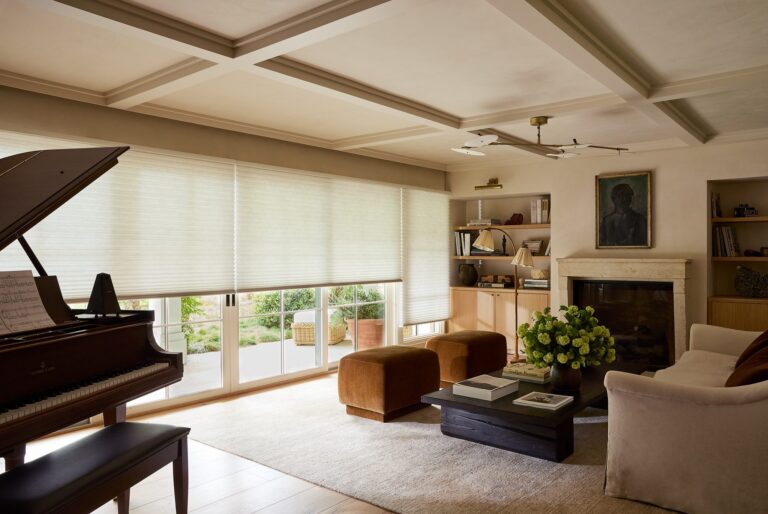
Homeowners upgrading living spaces with Vignette® Modern Roman Shades gain tailored fabric folds without exposed rear cords, improving safety for children and pets. Meanwhile, Duette® Honeycomb Shades trap air in distinct honeycomb pockets to block cold drafts across large northern panes. Compare the core Hunter Douglas® Top-Down/Bottom-Up product lines below to match material performance with your room requirements.
| Hunter Douglas® Shade Line | Structural Design and Material | Primary Performance Benefit | Best Canadian Home Application |
|---|---|---|---|
| Duette® Honeycomb Shades | Engineered cellular pockets in single or double cell depths (Duette® Architella®) with sheer to blackout opacities. | Thermal insulation, winter heat retention, and outside acoustic dampening. | Bedrooms, nurseries, and drafty windows facing harsh Canadian winter winds. |
| Vignette® Modern Roman Shades | Uniform contoured or flat fabric folds with a cord-free backside and multiple opacity linings. | Soft daylight diffusion and a clean, tailored interior profile. | Formal dining rooms, street-facing living areas, and high-traffic family spaces. |
| Provenance® Woven Wood Shades | Hand-woven natural woods, bamboo, reeds, and grasses paired with optional light-filtering or room-darkening liners. | Organic texture and dappled sunlight filtration with sturdy headrail support. | Sunrooms, home offices, and living spaces featuring natural wood or stone finishes. |
| Alustra® Woven Textures® Roman Shades | Globally sourced woven textiles blending lustrous yarns, linen weaves, and tailored Roman stacking. | Refined light filtering with distinctive textile depth and custom hardware finishes. | Main-floor feature windows and open-concept spaces needing glare control and visual warmth. |
| Applause® Honeycomb Shades | Streamlined single-cell honeycomb construction available in popular neutral tones and two fabric opacities. | Everyday energy savings and flexible privacy at an accessible price point. | Multi-window home renovations, guest bedrooms, and secondary living areas. |
Customizing Top Down Bottom Up Shades for Large Alberta Windows
Alberta properties with expansive glass panes absorb up to 16 hours of summer daylight and intense low-angle sun during winter afternoons. Installing Hunter Douglas® blinds and shades with a Top-Down/Bottom-Up (TDBU) lifting mechanism solves the conflict between blocking harsh solar glare and keeping an open view of the outdoors.
Edmonton Homeowner Scenario: Priya is remodeling an Edmonton living room featuring tall, west-facing windows. Standard bottom-up blinds force her to darken the entire room whenever afternoon sun hits her television screen, or sacrifice street-level privacy to bring in natural light. She needs a custom window covering from Blind Magic Custom Blinds & Drapery that blocks eye-level glare while keeping the upper glass clear.
How Dual-Direction Operation Solves West-Facing Glare
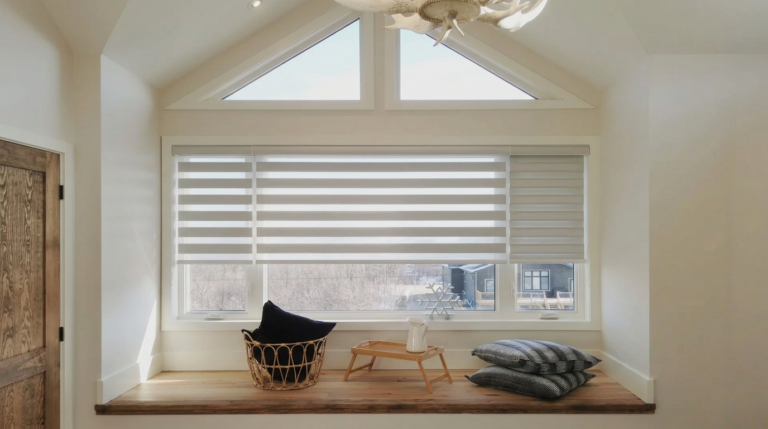
Selecting custom window shades equipped with dual-direction hardware gives homeowners independent control over the top and bottom rails. Instead of raising or lowering a single bottom bar, you position the fabric panel anywhere along the window frame to match the sun’s angle.
- Top-Down Positioning: Lower the upper rail by 30 to 45 centimetres to pull natural daylight across the ceiling while keeping the lower two-thirds of the window covered for street-level privacy.
- Center-Glass Floating: Position the shade across the middle section of tall west-facing windows to intercept direct afternoon glare at eye level without blocking the upper sky view or lower garden sightlines.
- Full-Frame Coverage: Extend the fabric from the headrail to the sill on -30°C Alberta winter nights, pairing the TDBU lift system with Duette® Honeycomb Shades to trap insulating air at the glass.
- Orientation and Budget Matching: Customize the operating hardware, from cordless LiteRise® systems to PowerView® Automation, based on window height, daily sun exposure, and project budget.
Professional Installation Standards And Shade Maintenance
Dual-rail window coverings require exact bracket alignment and tension calibration so the middle and bottom rails travel smoothly without tilting. Whether fitting expansive glass panes in modern Gold Bar infill builds or working with out-of-square original wood casings in historic Glenora and Highlands bungalows, precise mounting prevents cord friction and fabric fraying.
5-Step Installation Protocol for Top-Down/Bottom-Up Systems
- Three-Point Window Measurement: Measure width and height at the top, middle, and bottom of the window casing to identify frame settling in older heritage homes or drywall variances in new builds.
- Substrate-Matched Fasteners: Anchor mounting brackets directly into wood studs, header beams, or heavy-duty masonry anchors capable of supporting the combined weight of dual-rail headrails and fabric stacks.
- Laser-Level Bracket Alignment: Align all top brackets with a laser level so the floating middle rail and bottom rail rise and lower evenly across the entire window span.
- Travel and Tension Calibration: Cycle both the top-down and bottom-up rails through their full vertical range to verify clearance past window cranks, locks, and trim moldings.
- System Handover and Care Review: Set upper and lower motor limits on automated units and verify textile cleaning protocols for the specific fabric series installed.
Routine care protects the internal lift cords, spring motors, and specialized textiles of Hunter Douglas® window coverings. Selecting Provenance® Woven Wood shades requires gentle dry dusting to protect natural bamboo, reeds, and grasses from moisture distortion. Homeowners who install Vignette® Roman Shades or Duette® honeycomb fabrics can remove surface dust with a low-suction vacuum brush attachment or compressed air.
| Component or Shade Type | Recommended Care Schedule | Maintenance Action |
|---|---|---|
| Duette® Cellular and Fabric Shades | Weekly | Dust lightly with a microfiber cloth or vacuum using a soft brush attachment on low suction. |
| Provenance® Woven Wood Shades | Bi-Weekly | Use a dry feather duster or soft bristle brush; avoid water or liquid cleaners on natural fibers. |
| Spot Cleaning (Washable Fabrics Only) | As Needed | Blot fresh marks gently with lukewarm water and mild soap using a clean white cloth, then air dry completely. |
| Lift Cords and Dual-Rail Guides | Every 6 Months | Inspect side tracks, tensioners, and internal lift cords for dust buildup or uneven tension. |
| PowerView® Automation Batteries | Annually | Recharge internal lithium-ion battery packs or replace alkaline wand batteries when travel speed slows. |
Room-by-Room Daylight and Privacy Adjustments
Edmonton experiences up to 17 hours of summer daylight, with June sunrises starting around 5:00 AM, requiring flexible window coverings that adapt to shifting sun angles. Operating Hunter Douglas® top down bottom up shades lets homeowners position the middle fabric panel exactly where glare or sightlines enter the room. Instead of choosing between a completely dark room and an exposed window, you can open the upper glass for overhead sky light while keeping the lower pane covered.
| Room & Exposure | Recommended Shade Position | Primary Benefit |
|---|---|---|
| East-Facing Bedrooms | Lower the top rail 12 to 18 inches; keep the bottom rail closed | Blocks direct 5:00 AM sunrise at pillow level while admitting soft ceiling bounce light and maintaining street-level seclusion |
| Street-Facing Living Rooms | Cover the bottom two-thirds of the window; leave the top third open | Prevents pedestrians and traffic in busy neighborhoods like Terrace Heights from looking inside while keeping rooms bright |
| West-Facing Home Offices | Position the fabric panel across the middle third of the glass | Intercepts harsh late-afternoon glare on computer monitors without turning on artificial overhead lights |
| Ground-Floor Dining Areas | Adjust both top and bottom rails to frame eye-level landscaping | Filters high midday sun and blocks neighbor sightlines while preserving outdoor views |
Managing Streetlight Pollution and Total Blackout Limits
Urban neighborhoods with high-intensity LED street lamps and passing vehicle headlights benefit from dual-rail shade positioning at night. Lowering the top rail just a few inches provides natural ventilation when windows are cracked open, while the raised lower body blocks direct glare from road level. For rooms where you prefer textured fabrics with independent rail control, Alustra® Woven Textures® roman shades deliver refined light filtering alongside top-down/bottom-up operation.
Homeowners planning media rooms or nurseries should account for minor perimeter light gaps inherent to dual-operating shade hardware. Because the moving rails travel along side cords, a narrow sliver of light can pass between the fabric edge and the window casing even when opaque room-darkening textiles are selected. Pairing Silhouette® window shadings or cellular shades with custom side drapery panels and light-blocking side channels seals out peripheral light for dedicated home theaters and sleep-sensitive bedrooms.
Comparing Hunter Douglas® Top-Down/Bottom-Up Collections at Blind Magic
As the largest Hunter Douglas® dealer in Northern Alberta, Blind Magic Custom Blinds & Drapery supplies custom-measured top down bottom up shades engineered for Edmonton properties. Lowering the upper rail brings natural daylight high into the room, while raising the bottom rail blocks street-level sightlines and reduces afternoon screen glare.
Selecting Hunter Douglas® woven shades or cellular styles starts with matching the fabric construction and lifting hardware to each window’s orientation. Homeowners can compare the four primary Top-Down/Bottom-Up product lines below to evaluate thermal performance, light diffusion, and compatible operating systems.
| Hunter Douglas® Shade Line | Primary Application | Performance Advantage | Compatible Operating Systems |
|---|---|---|---|
| Duette® Honeycomb Shades | Thermal insulation and acoustic dampening | Traps air in cellular pockets to slow winter heat loss and summer solar heat gain | LiteRise®, PowerView® Automation, UltraGlide® |
| Vignette® Modern Roman Shades | Structured fabric styling with clean lines | Uniform contoured or flat folds stack neatly without exposed rear cords | LiteRise®, PowerView® Automation, UltraGlide® |
| Provenance® Woven Wood Shades | Organic reed, grass, and bamboo textures | Diffuses harsh sunlight into warm, filtered illumination across living areas | LiteRise®, PowerView® Automation, EasyRise™ |
| Alustra® Woven Textures® Shades | Exclusive designer weaves and finishes | Blends globally sourced fibers for distinct light filtering and visual depth | LiteRise®, PowerView® Automation, UltraGlide® |
Pairing these dual-action coverings with custom roller shades or Pirouette® sheer shades in adjacent rooms creates a cohesive interior package across an entire floor plan. Every order is built to exact window frame dimensions and tested for smooth rail movement across wide Alberta glazing.
FAQ
Choosing the right Hunter Douglas top down bottom up shades for your Edmonton home involves balancing light control, seasonal care, and household safety. Review the questions and answers below to learn more about how these versatile window treatments perform in our local climate.
| Question | Answer |
|---|---|
| What Hunter Douglas® top down bottom up shades handle afternoon heat and glare on large west-facing Edmonton windows? | Duette® and Applause® Honeycomb Shades offer the strongest thermal barrier against intense afternoon sun on large west-facing Edmonton windows, using air-trapping cellular pockets to block summer heat and winter drafts below -30°C. For living spaces in neighborhoods like Glenora or Gold Bar where softer light diffusion is preferred, Vignette® Modern Roman Shades provide clean fabric folds with no exposed rear cords. Homeowners seeking organic texture can opt for Provenance® Woven Wood Shades or Alustra® Woven Textures® and add an independent liner to control harsh glare. Evaluating both your room’s daily sun exposure and street-level privacy needs will guide you to the right fabric opacity for your top down bottom up shades. |
| Do Hunter Douglas® top down bottom up shades block 100% of sunlight for Edmonton bedrooms or media rooms? | Standard top down bottom up shades do not achieve 100% blackout on their own because small light gaps remain along the side edges and floating rails. To block Edmonton’s 5 a.m. June sunrises or darken a dedicated media room, choose opaque Duette® or Applause® fabrics and pair them with side channels or custom Hunter Douglas® drapery. The standard dual-action setup works best in spaces like home offices or street-facing living rooms where daytime privacy and glare reduction matter more than pitch darkness. |
| What winter care keeps Hunter Douglas® top down bottom up shades operating smoothly in Edmonton homes? | Routine care for Hunter Douglas® top down bottom up shades in Edmonton, Alberta starts with weekly dusting using a microfiber duster or low-suction vacuum brush, plus spot-cleaning stains with lukewarm water and mild soap. Check the internal lift cords and mounting brackets before temperatures drop below -30°C, and swap out low batteries in PowerView® Automation wands or remotes so both moving rails travel evenly. Because dry winter air and extreme cold can make original wood window frames in Glenora, Highlands, or Fulton Place shift slightly, re-level the brackets if the rails rub against the casing. Avoid lowering the fabric directly onto frozen window condensation so ice never bonds to the pleats or cellular pockets. |
| Are cordless or motorized Hunter Douglas® top down bottom up shades a better fit for Edmonton homes with children and pets? | Both cordless and motorized Hunter Douglas® top down bottom up shades eliminate exposed lift cords, meeting Canadian child safety rules for Edmonton households with young kids or pets. Manual cordless rails work well for accessible main-floor windows in older Fulton Place or Glenora homes where you adjust privacy by hand a few times a day. Motorized systems suit tall or hard-to-reach windows common in modern Terrace Heights and Gold Bar infill builds, letting you schedule rail positions for early 5 AM summer sunrises or dark winter evenings. Verify that the mounting brackets match your window frame material and shade weight during installation, then cycle both the top and bottom rails through their full travel to confirm smooth operation. |