
Learning how to choose the best window blinds for devon homes starts with assessing each space’s daily sun exposure, moisture levels, and thermal efficiency requirements throughout changing seasons. Investing in tailored residential blinds from Blind Magic ensures you achieve precise daylight control, dependable privacy, and robust insulation across every room profile. Choosing coverings for each window can help manage daylight and heat transfer. Energy savings depend on the covering, installation and how it is used.
Overview
Selecting reliable window treatments requires balancing local architectural styles with distinct seasonal weather demands. The following sections break down how to choose the best window blinds for Devon homes by analyzing room exposures, material resilience, and operating systems.
This guide includes a labeled real-world hypothetical that demonstrates how specific product recommendations solve multi-exposure comfort challenges under typical local conditions. Review the core planning topics below to identify the right treatment profiles for your property.
- Functional Layouts: Explore how to coordinate specific window treatments by examining room functions across main floor and upper level living spaces.
- Thermal Ratings: Review essential insulating metrics by comparing thermal performance ratings designed to mitigate winter heat loss and summer heat gain.
- Solar Management: Assess specialized fabric weaves and cellular profiles for evaluating thermal insulation against intense seasonal sun exposure.
- Daylight Privacy: Balance daytime visibility with evening screening when matching blind styles to family living spaces.
- Hardware Profiles: Compare cord-free operating mechanisms by choosing mechanical profiles that comply with federal safety regulations while streamlining daily adjustments.
- Real-World Example: Walk through a common situation featuring practical recommendations for everyday living spaces facing mixed sunlight and draft exposure.
Selecting window coverings for a Devon, Alberta home requires balancing seasonal insulation against daily privacy and light control. Nearby Edmonton climate normals show below-freezing winter averages and warmer summers. They do not establish that every Devon window develops downdrafts or raises cooling demand. Cellular shades trap insulating air near the window; Hunter Douglas describes Duette honeycomb construction and EverWood Alternative Wood Blinds as resistant to humidity and warping. These features do not establish identical performance for every installation.
Room orientation and window dimensions also dictate the best operating profile for each living space. Top-down/bottom-up shades can admit daylight from above while covering the lower part of a street-facing window. Somner Custom Vertical Blinds offer fabric, vinyl and aluminum vanes with a smooth-moving headrail and stacking options. The manufacturer does not quantify afternoon glare reduction or guarantee that a particular installation clears foot traffic.
Learning how to choose the best window blinds for devon homes starts with assessing each space’s daily sun exposure, moisture levels, and thermal efficiency requirements throughout changing seasons. Investing in tailored residential blinds from Blind Magic ensures you achieve precise daylight control, dependable privacy, and robust insulation across every room profile. Choosing coverings for each window can help manage daylight and heat transfer. Energy savings depend on the covering, installation and how it is used.
Matching Blind Styles to Room Functions in Devon Properties
When selecting blinds Devon households require window coverings configured specifically for room exposure, privacy, and seasonal temperature swings. Finding the right balance begins with how each window functions daily. Window coverings can reduce energy loss through windows, although privacy and light control depend on the particular covering.
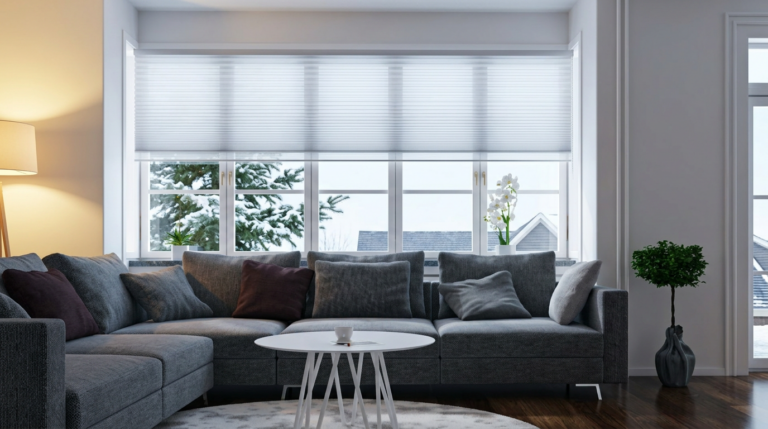
Cellular and faux wood blinds represent two distinct performance profiles for home renovators. For main-floor living areas and street-facing bedrooms in Devon, Alberta, Cellular shades trap insulating air in their cells and between the shade and window, although actual heating benefits depend on the window, shade and installation. Horizontal blinds have tiltable slats for adjusting daylight and privacy. The source does not establish how durable every faux wood or composite model is in high-traffic rooms.
Devon homeowners choosing between fabrics and solid slats often find that exploring modern window treatment ideas clarifies which operational style suits their architecture:
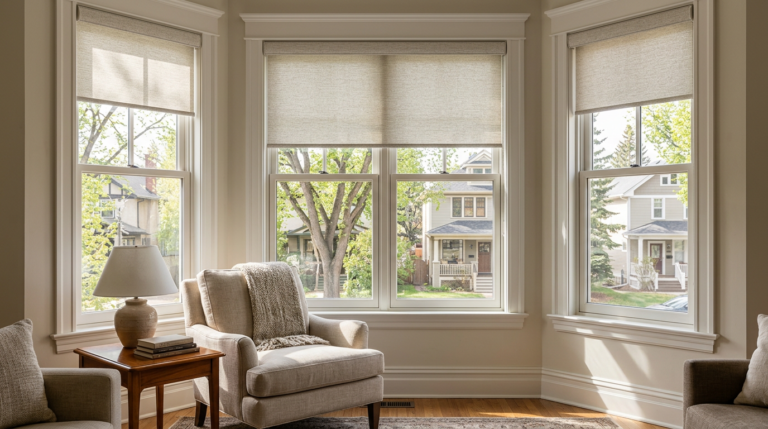
- Roller Shades: Minimalist profiles that roll neatly onto an upper tube, preserving open views across large backyard or river valley windows.
- Honeycomb Shades: Dual-layer or single-cell construction engineered specifically for thermal resistance and acoustic dampening.
- Faux Wood Horizontal Blinds: Rigid composite slats that replicate stained or painted wood grain while offering flexible light angle adjustments.
- Vertical Blinds: Functional vertical vanes tailored for wide patio sliders and expansive garden door openings.
Comparing roman shades vs cellular shades also helps determine whether decorative fabric folds or streamlined insulating cells better match your interior trim.
Thermal Performance Ratings and Window Coverings in Devon
where seasonal shifts produce harsh winters and warm summer afternoons. The U.S. Department of Energy identifies well-fitted cellular shades as an alternative to replacing windows for improving energy performance, although costs and results vary by home. Real thermal performance depends heavily on the mounting method;
Cellular and faux wood blinds deliver noticeably different thermal resistance across living spaces. Homeowners weighing cellular shades and insulation against traditional slatted treatments
For rooms demanding balanced daytime brightness alongside privacy, top-down bottom-up blinds let daylight enter through the upper pane while shielding the lower living area from street-level view.
Room Climate Management and Operating Safety
Installing Cellular Shades close to the glass creates an interior buffer zone that slows convective air currents across the pane. Environment and Climate Change Canada’s Edmonton (Airport) normals show monthly mean temperatures below freezing in winter and above 15°C in July and August. These are Edmonton-area station data, not Devon-specific measurements. The U.S. Department of Energy reports that well-fitted cellular shades can improve window energy performance. It does not establish that every tight-fitting covering minimizes both winter heat loss and summer solar gain. Cellular shade pleats trap insulating air near the window. The cited source does not show that the shade stops drafts entering through gaps in the window frame.
Sun-exposed main living areas benefit from slim roller treatments that cut afternoon glare while preserving architectural moulding. High-humidity zones require non-porous builds, making EverWood® alternative wood blinds practical for bathrooms and laundry spaces where composite materials prevent moisture swelling. For sliding patio doors, Somner® Custom Vertical Blinds provide smooth transverse gliding with rotating louvers that shield direct glare, whereas standard horizontal blinds allow homeowners along street-facing rooms to angle ambient daylight away from exterior sightlines.
Hardware security remains as important as seasonal temperature control. Health Canada warns that accessible blind cords can strangle young children. Health Canada’s corded-window-covering guidance limits reachable cords to no more than 22 cm and reachable loops to no more than 44 cm in perimeter under forces from 0 to 35 N; 35 N is a test force, not a required release force.
Selecting Window Coverings by Space and Privacy Needs
Nearby Edmonton (Airport) climate normals show monthly mean temperatures below freezing in winter and above 15°C in July and August. These figures come from an Edmonton-area station, not a Devon-specific climate record. Front-facing rooms require a precise balance between daytime visibility and neighbourhood privacy, while rear-facing living zones often demand strict glare prevention. Installing Cellular Shades close to the glass creates an effective interior barrier, as the U.S. Department of Energy notes that tightly fitted window treatments help reduce heat loss during winter and lower solar heat gain during summer.
Different spaces present unique environmental demands across a home:
- Bedrooms: Installing room-darkening honeycomb profiles blocks early sunrise while curbing evening radiant heat transfer through the glass. Lined Roman styles provide decorative depth, though their thermal efficiency depends heavily on casing depth and perimeter clearance rather than fabric weight alone.
- Living Rooms and Home Offices: Slatted horizontal blinds or sheer shadings allow work-from-home occupants to tilt directional daylight away from computer monitors without plunging the room into darkness. For wide patio doors or grand living room windows, Panel Track Blinds offer clean gliding panels that slide smoothly across large expanses of glass.
- Kitchens and Bathrooms: Cooking steam and bathroom humidity can warp natural wood over time. Engineered composite slats and moisture-tolerant synthetic roller materials handle daily humidity and resist condensation buildup, allowing fast cleaning with standard household cloths.
- Children’s Rooms and Play Areas: We ensure all nursery and playroom installations comply strictly with the Canadian Corded Window Coverings Regulations (SOR/2019-97). Because Health Canada emphasizes that accessible cords pose serious strangulation hazards to young children, modern family spaces rely on cordless manual lifts or automated wand controls rather than looped operating cords.
For large shared spaces, selecting Residential Blinds with dual-opacity features gives households the flexibility to switch between daytime filtered views and complete evening concealment as exterior street traffic changes.
Choosing Mechanical Profiles for Daylight and Privacy
Aligning the physical build of a shade with everyday household activity establishes reliable light management and sightline control. When comparing cellular and faux wood blinds for main-floor living areas, the difference in slat mechanics alters how daylight enters the home.
Mesh roll screens can reduce glare while retaining some outward view. The cited guidance does not establish the result for every shade fabric or lighting condition. Sifting through modern window treatment ideas reveals woven textures, solar screens, and
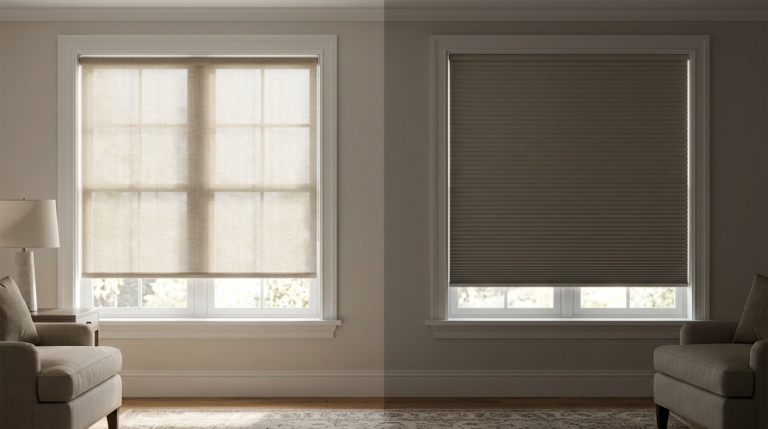
Sleeping areas and entertainment spaces demand tighter perimeter coverage to control ambient brightness. Room-darkening cellular shades can reduce incoming light and trap insulating air near a window. The cited evidence does not establish that they seal out all sunrise light. Tiltable horizontal blind slats can adjust light and privacy; EverWood faux wood blinds are designed to withstand humid conditions. The cited information does not establish that every slat position reflects sunlight toward the ceiling or prevents outside views.
Wide patio entrances and expansive backyard sliders present unique operating demands that horizontal formats handle poorly. Installing Somner® Custom Vertical Blinds provides broad fabric, vinyl, or aluminum vanes that slide clear of daily foot traffic while allowing precise directional rotation as the afternoon sun angles shift.
Window Coverings by Room Layout and Safety Rules
Installing custom residential blinds involves reviewing how daily routines intersect with solar heat gain and sub-zero drafts. Window attachments can improve a window assembly’s energy performance without replacing its glazing. The cited research does not promise dependable comfort in every season or room.
Different spaces require distinct physical mechanisms to balance exposure, humidity, and outward views:
- Cellular shades: Honeycomb pockets trap stationary air against cold glass, making designs like Duette® Cellular Shades well suited for bedrooms, nurseries, and unshielded perimeter walls.
- Composite faux wood blinds: Synthetic horizontal slats withstand steam and cooking grease while tilting smoothly to control line of sight along street-level living spaces and kitchen sinks.
- Roller shades: Compact rolling tubes support easy-to-clean fabrics with minimal mounting depth, serving home offices and hobby areas that need simple screen glare reduction.
- Vertical vanes: Sliding tracks support broad traversing louvers across outdoor patio entrances and expansive glass spans.
Deciding between light-filtering weaves and opaque backings determines whether a room softens harsh noon glare or blocks early morning summer light in primary sleeping areas. Top-down/bottom-up shades can admit daylight through the upper part of a window while covering the lower part for privacy.
Operating hardware must also satisfy Canadian safety requirements. Health Canada warns that accessible window-covering cords can strangle young children. Under Canada’s Corded Window Coverings Regulations, reachable cords must not exceed 22 cm in length or form loops exceeding 44 cm in perimeter when tested with forces from 0 to 35 N. The rules restrict loop size rather than prohibiting every reachable loop.
Research & Fact-Checking
This article has undergone a factual review covering product specifications, manufacturer information, installation considerations, and technical claims relating to how to choose the best window blinds for devon homes.
Product-specific statements and technical claims are evaluated against available supporting documentation. Where evidence requires qualification, wording is adjusted to reflect the available information.
Written by Blind Magic. Technical claims in this article were checked against the manufacturer guides and government pages linked here. Research reviewed: November 2026.
Primary sources linked in this article:
- https://natural-resources.canada.ca/stories/spotlight-energy-efficiency/winter-coming-top-tips-heat-your-home-less
- https://www.energy.gov/sites/default/files/2021-12/bto-cellular-shades-factsheet-112221.pdf
- https://climate.weather.gc.ca/climate_normals/results_1991_2020_e.html?climate_id=3012205&dispBack=0&lstProvince=&searchType=stnProv&stnID=363000000&txtCentralLatMin=0&txtCentralLatSec=0&txtCentralLongMin=0&txtCentralLongSec=0&wbdisable=false
- https://www.hunterdouglas.ca/stories/buyers-guides/top-5-window-treatments-for-kitchens
- https://www.hunterdouglas.ca/window-treatments
- https://www.hunterdouglas.ca/intl/en-ca/product/somner
- https://www.hunterdouglas.ca/stories/buyers-guides/blinds-vs-shades
- https://www.canada.ca/en/health-canada/services/home-safety/blind-cord-safety.html
- https://www.canada.ca/en/health-canada/services/consumer-product-safety/reports-publications/industry-professionals/corded-window-coverings-regulations/safety-requirements.html
- https://www.energy.gov/sites/prod/files/2013/12/f5/sustainable_guide_ch4.pdf
- https://www.hunterdouglas.ca/stories/buyers-guides/moving-beyond-mini-blinds
FAQ
To help you decide how to choose the best window blinds for Devon homes, we have compiled quick answers to common questions about moisture resistance, draft insulation, and ideal materials in the table below.
| Question | Answer |
|---|---|
| Which window blinds provide the best thermal insulation against winter drafts? | Cellular shades can improve window insulation by trapping air within their cells and near the window. The research compares specific shades with conventional vinyl blinds; it does not rank every covering, establish that an inside mount seals frame drafts, or quantify heat loss from aluminum blinds. |
| How do faux wood blinds hold up against moisture in kitchens and bathrooms? | Hunter Douglas describes EverWood faux wood blinds as resistant to humidity, warping and bowing, and says they can be wiped clean. The source does not establish that all faux wood blinds are PVC, never crack or peel, or last a specified number of years in humid rooms. |
| Can motorized window shades run on rechargeable batteries during freezing weather? | Lithium-ion battery packs engineered for modern motorized systems operate reliably in typical indoor climates, even when positioned near cool window panes. If severe drafts cause persistent frost or deep cold along the sill in an Edmonton residence, hardwired low-voltage power or an internal motor setup prevents cold-related battery discharge. |
| Should south-facing windows use light-filtering roller shades or cellular shades? | Mesh roller screens can reduce glare while retaining some outdoor view; cellular shades can improve window energy performance. The cited guidance does not establish that every low-openness screen is a better choice than a cellular shade for south-facing windows. |