
Answer
Upgrading wide patio entries requires balancing everyday walkway clearance with sleek aesthetics, prompting many homeowners to explore functional blinds sliding glass door options and modern alternatives like vertical cellular honeycombs and gliding fabric panel tracks. Pairing these expansive treatments with PowerView® Automation allows you to schedule scenes and glide heavy patio panels open with a simple tap or voice command. Blind Magic provides custom-measured solutions tailored to high-traffic entries, ensuring seamless light management and enhanced thermal efficiency year-round.
Overview
Homeowners evaluating functional blinds sliding glass door options and modern alternatives face unique challenges with stackback clearance, daily doorway traffic, and severe thermal drafts. The sections ahead compare popular shading styles, explain side-stack mechanics, and review durable materials suited for broad patio entries.
A labeled real-world hypothetical models typical opening dimensions and fabric selections to illustrate the overall planning process. Review the direct comparisons and technical requirements detailed across the following sections:
- Treatment Comparison: Evaluate material durability by comparing patio treatments side by side.
- Modern Alternatives: Discover sleeker aesthetics using modern shade designs that replace dated louvers.
- Performance Factors: Review R-values and stack width using critical patio factors before purchasing.
- Real-World Example: Walk through specific expenses using an Edmonton installation scenario to plan realistic budgets.
- Motorized Operation: Simplify daily doorway access with automated shade systems built for large openings.
- Panel Systems: Cover extra-wide glass expanses using sliding fabric panels mounted on overhead rails.
- Custom Services: Extend treatment longevity with local professional repairs and tailored sizing support.
Four Proven Window Coverings for High Traffic Patio Entrances
Standard six-foot to twelve-foot patio entrances lose nearly 30 percent more heated indoor air than insulated drywall, which makes engineered custom window coverings practical for steady temperature management and light control across severe Alberta seasons. Because patio portals slide sideways across a base track, your shade must glide out of the footway without catching on pets, high traffic, or hardware.
Homeowners deciding among treatments for sliding glass doors typically weigh four primary formats against stack width, insulation values, and daily functionality:
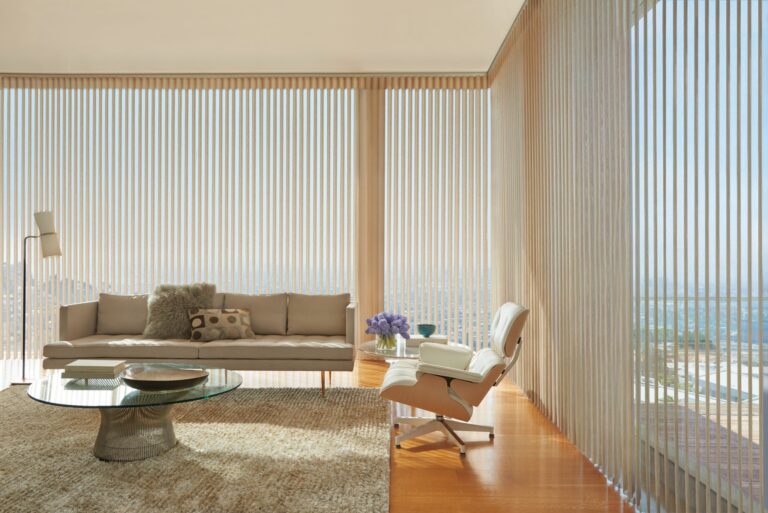
- Vertical Blinds: Vanes pivot a full 180 degrees to deflect blinding sun and stack neatly along the stationary pane. Systems such as Hunter Douglas® Somner® vertical blinds use heavy-duty vinyl, aluminum, or woven textures that resist edge curling in active dining areas.
- Panel Track Blinds: Wide fabric sections glide quietly across an aluminum multi-channel rail, resting flat in an overlapping profile when open to leave door glass unblocked.
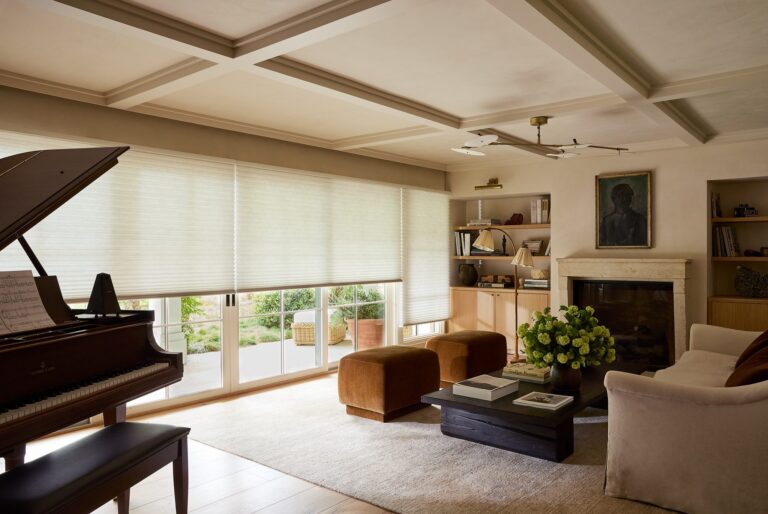
- Vertical Cellular Shades: Trapped interior air within double or single honeycomb cells resists sub-zero drafts in winter while rejecting mid-summer solar heat gain via lateral side-draw operation.
- Wide-Span Roller Shades: Single or dual headrail cassettes position above the casing to roll fabric directly upward, delivering clean lines without taking up side wall room.
| Treatment Style | Movement Direction | Stack Profile | Recommended Location |
|---|---|---|---|
| Vertical Blinds | Side-traverse with 180-degree rotation | Moderate side stack (one-way or split) | High-traffic back doors and family rooms |
| Panel Track Blinds | Horizontal gliding panels | Flat overlapping side stack | Expansive sliders, room dividers, and modern layouts |
| Vertical Cellular Shades | Horizontal accordion compression | Slim 6-inch to 8-inch stack | Draft-prone garden doors and west-facing exposures |
| Wide-Span Roller Shades | Vertical roll into overhead cassette | Zero horizontal stack width | Low-traffic balconies and media spaces |
Projection measurements on exterior handles and latches dictate correct headrail placement. Outside-mount hardware frequently demands extension brackets or shims so crossing vanes never rub against locks. Professional installation from Blind Magic verifies that every bracket spacing, stacking split, and wand system operates with precise clearance.
Modern Sliding Patio Door Coverings Replacing Classic Vertical Slats
Updating your residential blinds eliminates the rattle of outdated plastic louvers and introduces silent, thermal-efficient textiles across wide patio entrances. Edmonton properties endure intense weather swings, ranging from -30°C winter freezes to prolonged northern summer sun. Covering expansive glass demands engineered hardware that moves parallel to the entry threshold, keeping walkways open while stopping chilly convection currents and blinding southern light.
Contemporary patio track systems match the horizontal glide of modern door frames. Rather than noisy plastic strips that twist in drafty corridors, current solutions employ tensioned fabrics, insulating honeycomb structures, and rotating textile vanes to stabilize interior climates.
| Treatment Style | Mechanical Action | Benefit for Alberta Climates |
|---|---|---|
| Panel Track Systems | Broad textile panels travel along a slim multi-channel headrail | Parks neatly off the glazing to maximize natural light and fit wide architecture |
| Vertical Cellular Shades | Cordless lateral pleating guided by a Vertiglide™ rail | Dead air chambers prevent heavy winter drafts through large panes |
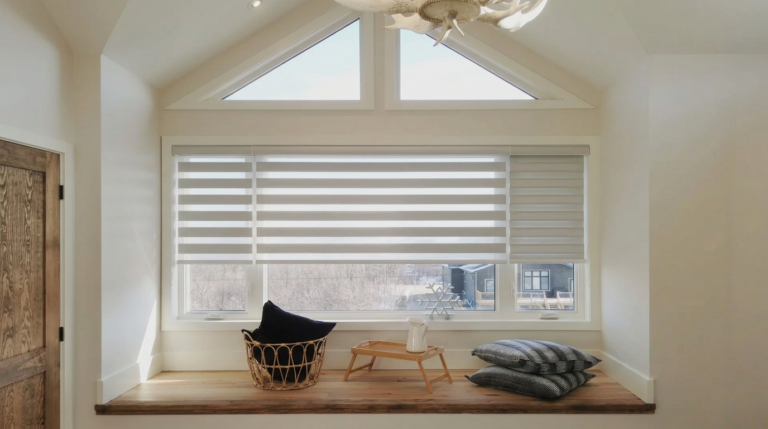
| Dual Roller Shades | Twin fabric rollers housed within an integrated top housing | Permits raising the active entry side while leaving the stationary panel shielded |
| Tailored Drapery Panels | Ripplefold™ or tailored pleats running on heavy-duty traverse tracks | Dampens echoing room noise and prevents perimeter light leaks using thermal linings |
| Luminette® Privacy Sheers | Translucent face drapery backed by 180-degree pivoting fabric vanes | Softens sharp glare across living spaces while maintaining immediate night seclusion |
As authorized dealers of Hunter Douglas® blinds in Edmonton, Blind Magic calibrates mounting hardware to match specific casing depths and handle clearances. Precision mounting brackets ensure every panel travels cleanly across sliding panels without catching latch plates or rubbing against exterior screen handles.
Performance Criteria for Sliding Patio Door Coverings
Standard sliding entrances range between 60 and 144 inches in width, creating massive zones of winter heat loss, summer UV exposure, and direct sightlines into living spaces. Installing custom blinds for sliding glass doors ensures that high-volume pedestrian access remains unobstructed while addressing intense climate demands across large expanses of architectural glass.
Operating Clearance and Stack Width
Patio door window treatments must shift horizontally rather than lift upwards, relying on reinforced aluminum tracks engineered for frequent sliding. Selecting the correct stack configuration guarantees the door handle and entryway stay completely free:
- Right-Draw or Left-Draw: Compresses the entirety of the fabric or vanes against one stationary jamb, leaving the active slider accessible.
- Split-Stack (Center Opening): Divides the covering evenly across both sides, framing wider multi-panel glass expanses.
Thermal Retention and Light Management
Expansive glass conducts temperature swings quickly, which drives up household energy consumption during extreme weather. Cellular designs like Hunter Douglas® Duette® Honeycomb Shades with the Vertiglide™ operating system trap air within internal pockets to insulate against cold drafts and direct solar warmth. Modern fabric options provide dual-opacity control, cutting daytime glare across television screens while sealing off nighttime visibility from outdoor patios.
Walkway Safety and Modern Materials
Eliminating pull cords prevents entanglement hazards in primary transit pathways. Spring-assisted wands, ergonomic hand grips, and automated motors create child-safe and pet-safe operation without loose strings. Upgrading to Hunter Douglas® Skyline® Panel-Track Blinds replaces clattering vinyl slats with sleek gliding fabric panels that match surrounding window styles. When outfitting entire living areas, coordinating these systems with matching Hunter Douglas® blinds establishes unified texture and design continuity throughout the home.
Edmonton Patio Door Cellular Shade Costs and Performance Scenarios
Installing Duette® honeycomb shades on a standard residential patio entrance typically costs between $900 and $1,000 in the Edmonton area. That investment provides an engineered barrier against severe Canadian cold snaps while preserving unobstructed access to backyard decks. The Hunter Douglas® Vertiglide™ mechanism reorients cellular insulating pleats into an upright, lateral orientation. The fabric traverses across a compact upper rail, collapsing into a minimal stack that leaves the doorway passage completely free for daily family traffic.
| Product Line | Fabric Style | Room Application | Hardware Configuration | Installed Budget |
|---|---|---|---|---|
| Hunter Douglas® Duette® | Moonstruck | Patio Entrance | Vertiglide™ Lateral Track | $900 to $1,000 |
Edmonton Homeowner Case: Winter Insulation and Daily Deck Access
Consider an Edmonton property owner managing large expanses of rear glass during sub-zero Alberta winters. Significant heat radiates through wide exterior glass panels, raising utility expenses while causing cold drafts across main living zones. At the same time, children or pets require immediate, simple operation to exit into the yard without tangling cords or wrestling heavy drapery.
Addressing winter drafts on large sliding glass doors requires choosing between structured fabric louvers or insulated cellular pleats:
- Vertiglide™ Insulating Shades: Internal hexagonal cells create stagnant air barriers directly over window panes, stopping heat conduction while maintaining clean side-to-side gliding movement.
- Custom Adjustable Louvers: Choosing structured vertical shades enables precise daylight deflection away from interior electronics without blocking the door threshold.
- Tailored Track Setups: Hardware options include left-stack, right-stack, split-draw, and centre-draw designs aligned directly to the sliding path of your architectural door panel.
Motorized Track Control for Large Sliding Doors
Covering expansive patio entries creates real operational challenges because broad fabric lengths generate heavy drag during everyday hand operation. Integrating PowerView® Automation removes cord hazards entirely while eliminating the physical strain of dragging wide shades across large glass panes. Property owners coordinate automatic adjustments through the Pebble® remote, mobile device apps, or voice commands, creating set routines that welcome early sun or block intense midday heat.
Installing PowerView® Motorized Drapery or automated horizontal tracks safeguards delicate fabrics against dirty fingerprints, curious pets, and erratic pulls. Smooth, motorized transit along the upper rail protects internal carrier glides from premature friction wear, keeping vertical louvers and drapery folds aligned over years of regular use.
Five Steps to Implement Motorized Patio Door Shades
- Mount the header hardware: Anchor structural brackets straight into wood studs or ceiling headers to bear the combined load of the drive motor and wide fabric panels.
- Connect power components: Click an unobtrusive rechargeable battery pack into place behind the upper casing or connect dedicated low-voltage wiring.
- Configure system controls: Connect the wireless receiver to your mobile application, handheld transmitter, or wall keypad, integrating platforms such as Apple® HomeKit®, Google Assistant™, or Amazon Alexa.
- Calibrate travel boundaries: Set precise end stops to protect protruding latch handles while sealing light gaps along the door jambs.
- Test transit clearance: Complete full test traverses to check glide quietness and confirm zero fabric friction before activating daily automated schedules.
Gliding Panel Track Systems for Expansive Patio Entrances
Panel track blinds deliver a sleek, modern profile for broad entryways by replacing thin vinyl slats with generous fabric screens that travel along an extruded aluminum headrail. Systems such as Hunter Douglas Skyline® Gliding Window Panels feature distinct fabric sections measuring 11.5 to 17 inches across. These broad vanes create clean horizontal lines across wide spans of glass without the clattering noise common to old plastic louvers.
Clearance Requirements and Stack Dynamics
Mounting sliding panels on sliding glass doors requires sufficient side-wall clearance. Because these fabric vanes slide past one another instead of compressing like an accordion, the stacked panels consume roughly 12 to 18 inches of width when drawn fully open. Blind Magic specialists measure the exact stack-back dimension before installation to confirm the fabric clears the operable door slab completely, preserving an unhindered walk-through passage.
| Patio Covering Style | Vane Dimensions | Operation Method | Light Control |
|---|---|---|---|
| Panel Track Systems | 11.5-inch to 17-inch flat fabric vanes | Side-to-side gliding motion along channels | Solar screen, room-darkening, or translucent textiles |
| Vertical Louver Blinds | 3.5-inch individual slats | 180-degree rotation plus lateral draw | Tiltable light direction with visible vane seams |
| Vertical Honeycomb Shades | Pleated cellular fabric chambers | Horizontal compression into a slim side stack | Thermal resistance and soft light diffusion |
| Overhead Roller Shades | Single continuous fabric panel | Vertical roll into an upper cassette | Unobstructed doorway when raised overhead |
Coordinating adjacent large windows with sliding patio entries is simple because manufacturers produce matching fabrics across both vertical tracks and overhead roller shades. In layouts where limited side wall prevents panels from stacking off the glass, overhead rollers lift vertically into a compact cassette to keep the threshold clear. Conversely, gliding tracks remain the premier choice for homeowners seeking rich architectural fabrics and smooth horizontal operation across wide openings.
Patio Door Treatment Selection and Local Track Maintenance
Investing in custom sliding glass door treatments protects interior living spaces against intense climate swings while matching foot-traffic patterns through exterior doorways. Large patio openings in northern climates lose significant heat during sub-zero cold snaps and introduce major solar glare on sunny afternoons. Blind Magic outfits local residences with hardware configurations that slide horizontally or roll vertically, keeping handles unobstructed and door thresholds open for seamless passage.
Arranging specialized window covering consultations lets homeowners examine vane opacities, measure frame recess depths, and confirm that fabric stacks clear the door glass entirely. The breakdown below details how core patio systems balance operational demands with material performance:
| Treatment Style | Best Application | Budget Range | Functional Benefit |
|---|---|---|---|
| Vertical Blinds | Active patio entries wanting fast tilt control | Budget-friendly | Individual vanes pivot 180 degrees for quick glare deflection and resist everyday surface grime. |
| Panel Track Blinds | Expansive glass spans and modern room partitions | Moderate | Flat fabric planes travel along aluminum channels, stacking tightly to preserve outdoor views. |
| Vertical Cellular Shades | Drafty glass entries exposed to severe winter freezes | High-end | Honeycomb cells form an insulating barrier directly over the glass and fold into a small footprint. |
| Roller Shades | Clean architectural designs focused on UV control | Moderate | Dual or independent rollers share one headrail and integrate with automated wall switches. |
Scheduling professional blinds repairs in Edmonton fixes common mechanical issues such as broken stems, slipping drive cords, and seized track rollers without the cost of purchasing a full replacement unit. Blind Magic supplies factory components, precision adjustments, and installation support to keep large patio systems sliding smoothly throughout every season.
FAQ
To help you navigate your patio entrance treatments, the following table addresses common inquiries regarding blinds sliding glass door options and modern alternatives. Explore these details on mounting clearances, draw styles, and cold-weather performance to find the best fit for your home.
| Question | Answer |
|---|---|
| Which alternative works better than traditional vertical blinds for wide patio doors? | Sliding panel track blinds and vertical honeycomb shades serve as modern upgrades over standard plastic louvers. Panel tracks feature broad fabric panels that glide smoothly along a slim multi-channel headrail without noisy rattling. If you need maximum draft protection during freezing Edmonton winters, vertical cellular shades trap air directly against the glass while stacking into a compact side footprint. |
| How much clearance depth is required for an inside mount on patio doors? | Most sliding panel systems and vertical cellular shades need at least 3.5 to 4.5 inches of recessed frame depth for a flush inside mount. If your door handle projects outward or the frame reveals shallow casing, an outside mount positioned directly onto the wall or trim prevents hardware collisions. This setup ensures your door latch operates freely without catching fabric edges. |
| Should you choose single-part or split-draw stacking for your sliding entrance? | Stacking orientation should match how your household uses the doorway daily. A single-part draw gathers all panels entirely to the stationary glass side, keeping the primary walking path completely clear. If you have an extra-wide center-opening door unit in your Edmonton home, a split-draw system slides equally to both sides to balance the visual frame and clear the middle walkway. |
| Can motorized track blinds operate during sub-zero Alberta winter temperatures? | Wire-free battery packs positioned directly against exterior glass panes can experience reduced charge capacity when frost forms along cold aluminum frames. Hardwired low-voltage setups or lithium rechargeable motors installed with thermal air gaps avoid cold-related power drops. Pairing motorization with insulating cellular fabrics also prevents indoor heat loss across large patio expanses. |