
Understanding how window blinds insulate and manage sun in edmonton homes comes down to creating a dynamic thermal barrier against northern Alberta’s dramatic temperature shifts. Homeowners can install energy-saving Duette® Cellular shades to trap interior warmth during deep winter freezes while effectively reflecting intense, low-angle prairie sunlight throughout extended summer days. The specialists at Blind Magic help balance these seasonal demands by tailoring treatments that curb glass heat transfer and optimize natural illumination year-round.
Overview
Managing indoor comfort across northern Alberta requires balancing extreme winter cold with intense summer daylight. The following sections examine the mechanics of interior thermal resistance, glare management during peak daylight, and practical window treatments tailored to local architectural styles.
This guide includes a labeled real-world hypothetical that illustrates window performance under typical local conditions, outlining practical recommendations for high-exposure rooms. Readers can use the directory below to review specific insulation criteria, solar metrics, and material recommendations.
- Seasonal Requirements: Local weather patterns dictate specific window covering requirements to counteract severe exterior shifts.
- Winter Heat Retention: Air pockets within specific fabrics provide measurable winter window insulation against deep drafts.
- Summer Sun Management: Dense weave structures assist in reducing solar heat and persistent daytime glare.
- Prairie Glazing Dynamics: Glass exposure and framing types influence thermal barrier performance across local residential properties.
- Glazing Performance Standards: Window ratings establish measurable efficiency benchmarks for modern and retrofitted installations.
- Real-World Example: A common residential scenario highlights year-round shade selection for balanced light and temperature control.
Beyond subzero draft reduction, managing Prairie solar exposure requires targeted shading systems for south-facing and west-facing rooms. Homeowners across Edmonton balance subzero winter insulation and intense summer light control by matching specific fabric opacities, cell designs, and cordless hardware to the sun exposure of each room.
Understanding how window blinds insulate and manage sun in edmonton homes comes down to creating a dynamic thermal barrier against northern Alberta’s dramatic temperature shifts. Homeowners can install energy-saving Duette® Cellular shades to trap interior warmth during deep winter freezes while effectively reflecting intense, low-angle prairie sunlight throughout extended summer days. The specialists at Blind Magic help balance these seasonal demands by tailoring treatments that curb glass heat transfer and optimize natural illumination year-round.
Edmonton Seasonal Swings and Window Covering Requirements
Environment and Climate Change Canada’s 1991–2020 normals list Edmonton’s average January daily minimum as -14.7°C.
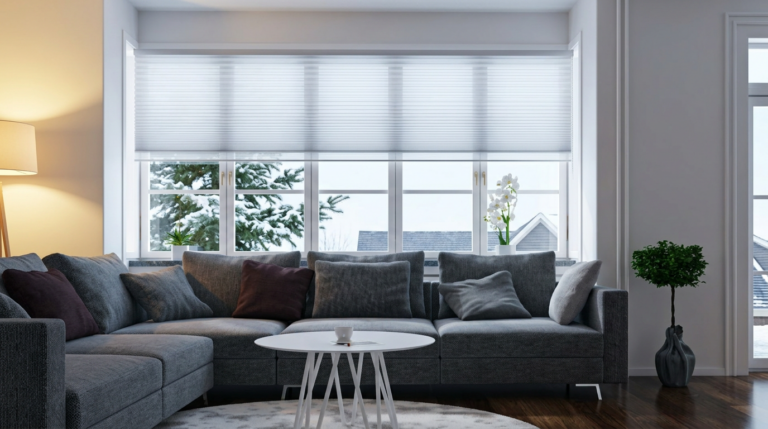
Large windows in Edmonton subdivisions often struggle with substantial heat transfer because expansive panes create interior draft currents as warm room air meets chilled glass. Hunter Douglas® engineered fabrics address this vulnerability directly. For maximum thermal resistance, installing Duette® Honeycomb Shades with Duette® Architella® multi-cell construction traps insulating layers of air directly against the glazing, dampening indoor temperature fluctuations.
Different spaces require targeted hardware configurations to handle daylight shifts without sacrificing comfort:
- Thermal regulation: Cellular honeycomb fabrics isolate frigid window surfaces to curb indoor conduction losses.
- Early sunrise shielding: Blackout roller textiles seal out dawn glare in primary bedrooms during midsummer mornings.
- Adjustable privacy: Top-Down/Bottom-Up systems lower from the headrail to admit upper skyward illumination while keeping street-level lines of sight blocked.
- Wide patio spans: Gliding track systems slide smoothly across multi-panel patio openings to cover broad expanses of glass.
Cellular Shades Trapping Heat Across Edmonton Subzero Winters
Environment and Climate Change Canada’s 1991–2020 normals give Edmonton an average January daily minimum of -14.7°C, but an average does not mean every winter day’s minimum is below 0°C. At Blind Magic, we measure and fit Cellular Shades specifically to create an insulating barrier against these prolonged freezing conditions. U.S. Department of Energy research finds that cellular shades can reduce nighttime heat loss through windows.
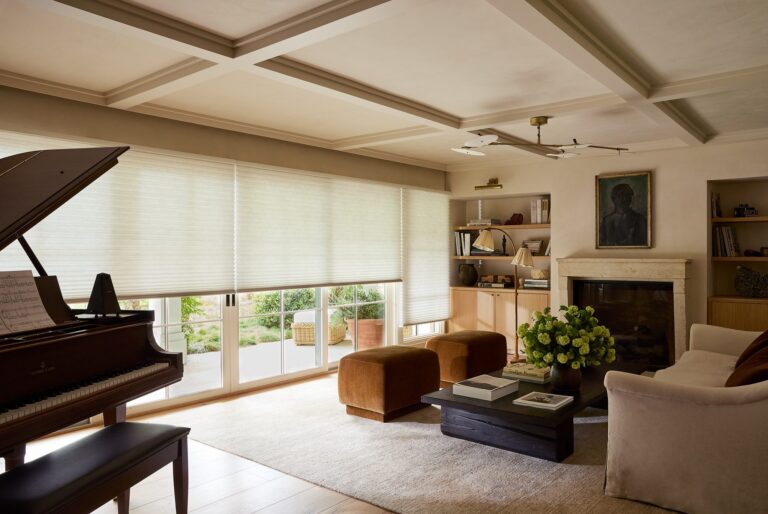
Insulation performance in honeycomb textiles stems directly from geometry. Installing Duette Cellular shades, particularly lines featuring Duette® Architella® honeycomb construction, adds multiple fabric layers and nested air cells into each pleat.
Selecting window treatments for northern Alberta requires balancing severe cold against seventeen hours of summer daylight. For patio exits and expansive glass, pairing honeycomb styles with Panel Track Blinds helps cover wide spans without sacrificing thermal protection. The U.S. Department of Energy notes that cellular shades can reduce nighttime window heat loss and unwanted solar heat gain. Managing daylight without giving up heat retention often involves integrating Top-Down/Bottom-Up shades can admit light through the upper part of a window while covering the lower part, but an open section reduces the area covered by the insulating shade.
Managing Sunlight and Solar Heat During Peak Summer Days
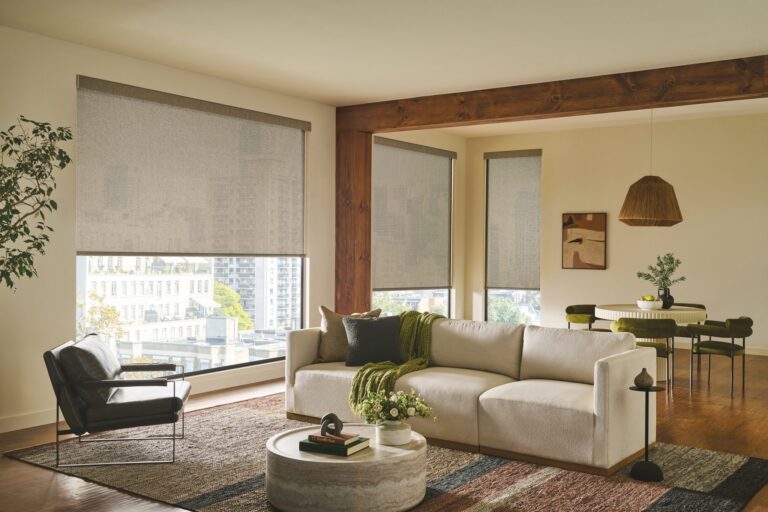
Edmonton experiences dramatic seasonal shifts, transitioning from sub-zero winter chills to June days with roughly seventeen hours of daylight. Selecting Hunter Douglas® Roller Shades gives homeowners a streamlined method to block direct sunlight and cut radiant warmth before midday temperatures heat up interior spaces.
Large south-facing and west-facing windows often admit intense brightness that washes out television screens and strains eyes in family rooms. Installing Sheer Shades softens midday rays using adjustable fabric vanes suspended between translucent panels, giving living areas balanced daylight without severe heat build-up.
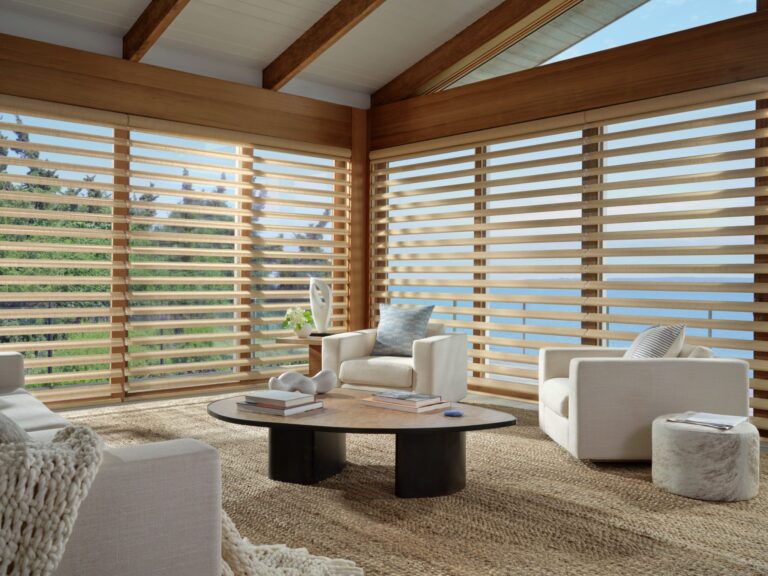
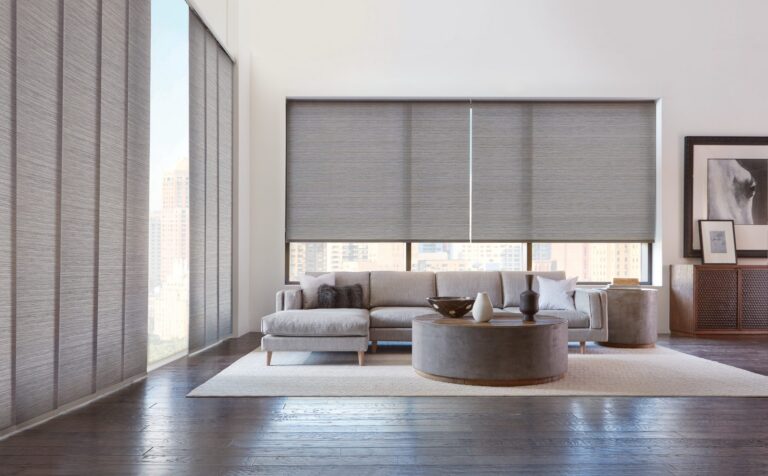
For wide glass openings and sliding patio doors, fabric orientation dictates daily convenience. Installing Panel Track Blinds allows broad fabric sections to glide horizontally along multi-panel tracks, preventing bright western exposures from overheating dining spaces while keeping doorway access effortless.
Glazing Dynamics and Thermal Barriers for Edmonton Windows
Edmonton weather presents an extreme thermal spread across the calendar. Environment and Climate Change Canada’s 1991–2020 Edmonton City normals record an average January daily minimum of −14.7°C and an average July daily maximum of 23.5°C. Winter periods regularly dip past -20°C or -30°C, while midsummer days bring up to 17 hours of bright sunshine.
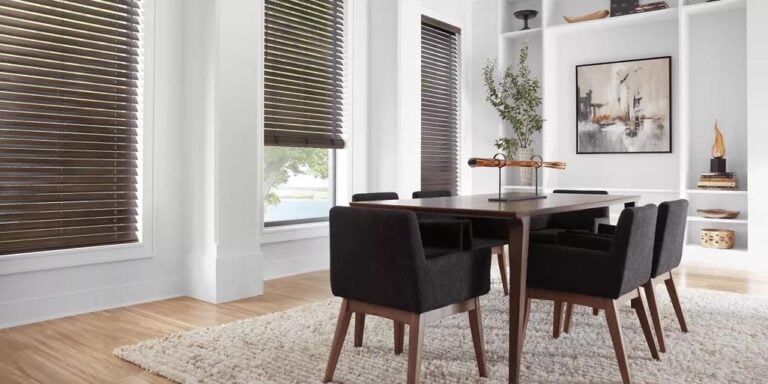
Hunter Douglas® blinds assist homeowners in balancing interior climate control alongside daily sun protection. Louvred products let you tilt horizontal or vertical slats to deflect blinding direct rays while still illuminating living spaces naturally. For wide sliding patio doors and two-storey glass assemblies, Skyline® panel-track blinds introduce expansive fabric screens that cut down low-angle glare across open-concept floor plans without enclosing the room in darkness.
When insulating performance against severe weather is the priority, Duette® Honeycomb Shades provide an engineered thermal barrier directly over the glass. The U.S. Department of Energy says cellular shades trap insulating air and can reduce cold drafts near windows; they are not a substitute for sealing window air leaks. At Blind Magic, we measure mounting depth carefully so shades sit close to the glass, maximizing draft resistance on both double-glazed windows and modern triple-pane installations.
Glazing Exposure and Thermal Dynamics Across Edmonton Residences
Edmonton experiences an extreme annual climate cycle, shifting between deep winter subzero spells and prolonged summer warmth. Those two monthly averages differ by 38.2°C, but outdoor temperatures alone cannot tell you a window’s heat-transfer rate.
Controlling room temperatures through extended cold snaps and up to 17 hours of June sunlight demands specialized barrier fabrics that limit thermal conduction. In our residential installations, specifying Duette® Honeycomb Shades engineered with the Duette® Architella® cell-within-a-cell profile adds multiple internal barriers directly against cold panes, reducing convective heat loss in both vintage and modern properties.
Window size and room layout also dictate hardware selection. When our specialists measure large windows in Edmonton, we evaluate frame depth and trim tolerances so the shade sits tight against the jambs, minimizing edge leakage and downdrafts. Broad openings create distinctive mounting considerations:
- Expansive glass spans: Standard top-down fabric assemblies placed over wide sliding glass doors often encounter operating drag, uneven fabric deflection, or edge gaps, making side-draw vertical cellular layouts or paneled systems a more reliable physical shield.
- Solar orientation: South-facing living areas in older neighborhoods like Garneau or Old Strathcona gain significant passive solar energy during peak afternoon hours, where denser cellular or blackout fabrics prevent indoor overheating without sacrificing cold-weather performance.
Balancing Solar Infiltration and Thermal Protection in Northern Climates
Edmonton properties face stark meteorological swings throughout the year. Managing these conditions requires indoor window treatments that control intense solar exposure in midsummer while helping retain indoor warmth during dark prairie cold snaps.
Installing Duette® Honeycomb Shades places a dedicated air pocket barrier directly over interior window glass. While these treatments are interior attachments rather than replacement insulated glass units, their hollow cells slow room-side air circulation. According to the U.S. Department of Energy, cellular shades help limit nighttime heat loss through windows and reduce cold drafts in adjacent living spaces, though specific thermal draft behaviour along interior window sills varies by frame and trim fit.
For rigorous winter defense, our installers often fit Hunter Douglas® blinds in Edmonton featuring Duette® Architella® honeycomb construction.
Sun control poses the opposite operational demand during northern Alberta summers, when daylight extends up to 17 hours. Expansive south-facing glass collects intense heat during prolonged sunny afternoons. Mounting interior shades close to the frame on large picture windows shields living spaces from direct solar rays before radiant energy accumulates indoors, stabilizing living spaces through seasonal temperature shifts.
Research & Fact-Checking
This article has undergone a factual review covering product specifications, manufacturer information, installation considerations, and technical claims relating to how window blinds insulate and manage sun in edmonton homes.
Product-specific statements and technical claims are evaluated against available supporting documentation. Where evidence requires qualification, wording is adjusted to reflect the available information.
Written by Blind Magic. Technical claims in this article were checked against the manufacturer guides and government pages linked here. Research reviewed: November 2026.
Primary sources linked in this article:
- climate.weather.gc.ca/climate_normals/results_1991_2020_e.html
- energy.gov/sites/default/files/2021-12/bto-cellular-shades-fact…
- energy.gov/documents/bto-cellular-shades-factsheet-112221pdf
- hunterdouglas.com/window-treatments
- energy.gov/cmei/femp/purchasing-energy-efficient-residential-wi…
FAQ
To help you choose the right window treatments for our extreme seasonal shifts, the table below explores how blinds insulate Edmonton homes and control sunlight across different styles and mounting setups. Use these quick comparisons to address draft prevention, daylight management, and energy efficiency for your space.
| Question | Answer |
|---|---|
| Which mounting option provides the strongest thermal barrier against winter drafts? | A well-fitted cellular shade can reduce nighttime window heat loss and cold drafts near a window, but the cited research does not identify one universally best mount or prescribe a several-inch overlap. |
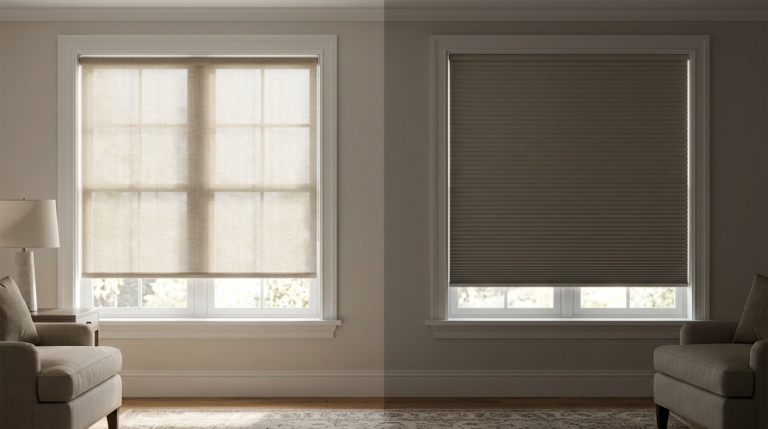
| How do honeycomb fabrics manage intense sunlight during long summer evenings? | Cellular shades can filter glare and reduce unwanted solar heat gain, but even an opaque shade does not stop heat gain completely; compare fabric and window performance for west-facing rooms. |
| Can motorized schedules improve energy performance through changing prairie seasons? | Compatible automated shades can follow opening and closing schedules, and operating them to admit winter sun or limit summer sun may help manage heat gain, but energy savings depend on the window, season and control settings. |
| Should faux-wood blinds be chosen over cellular shades for drafty basement windows? | Cellular shades trap insulating air in honeycomb cells and can reduce nighttime window heat loss; conventional slatted blinds generally provide less insulation, but the cited evidence does not assess basement moisture or guarantee results for a particular ground-level window. |