
Answer
Navigating this stony plain blinds styles and sizing guide for modern homes helps you pair energy-efficient fabrics, sleek slat profiles, and tailored depth specifications to contemporary architecture. Investing in professional custom measures ensures your window frames accommodate flush inside mounts or insulating outside coverage without unsightly light gaps. Let Blind Magic outfit your living spaces with high-performance window coverings designed to elevate both comfort and modern curb appeal.
Overview
Selecting custom window coverings requires matching fabric opacity, slat proportions, and depth requirements to the framing of each room. This reference breaks down design options and technical requirements to help you plan practical installations across varied floor plans.
The sections below detail product specifications, color selections, and physical measuring standards. The discussion includes a labeled real-world hypothetical to demonstrate how these principles apply to specific window dimensions.
- Design Movements: Review current architectural preferences and contemporary styling options for regional properties.
- Palette Strategy: Compare room lighting impacts when choosing light or dark tones across living spaces.
- Solar Defense: Examine fabric specifications and thermal control materials engineered for wide expanses of glass.
- Brand Comparisons: Assess modern cellular and roller builds from Hunter Douglas® and Alta® collections.
- Sizing Standards: Follow step-by-step depth calculations and slat width requirements for inside or outside mounting.
- Mounting Support: Identify local professional mounting, fit verification, and ongoing repair services available in the area.
Trending Window Covering Styles For Parkland County Architecture
Winter temperatures regularly plunge past -20°C in Alberta while northern summer skies deliver nearly 17 hours of intense sun, forcing regional households to balance draft reduction with harsh sun glare. Selecting modern window coverings gives local properties the exact insulation needed to stop radiant heat loss through expansive glass without compromising architectural aesthetics.
Cordless manual mechanisms and motorized lift profiles dominate renovations throughout Parkland County as property owners replace loose mini-blind slats with clean, architectural fabric treatments. Modernizing residential window panes also removes dangling operational loops, aligning every room with current Health Canada cord safety regulations while ensuring stress-free adjustments across two-storey Great Room windows.
High-Performance Residential Treatment Styles
| Design Direction | Core Mechanical & Material Attributes | Stony Plain Climate Advantages |
|---|---|---|
| Smart Motorization | App control, schedule programming, and smart home hub integration powered by PowerView® Automation systems | Adjusts heat gain dynamically on deep summer afternoons and secures privacy automatically after dark without cord risks. |
| Natural Woven Fibres | Handcrafted reed arrangements, renewable bamboo slats, and spun grasses | Diffuses raw southern glare into gentle interior daylight while complementing hardwood and stone finishes. |
| Layered Assemblies | Full-length custom drapery hung across insulated cellular shades or roller screens | Creates a multi-barrier thermal pocket against sub-zero window panes while absorbing ambient sound echoes. |
| Muted Earth Tones | Raw linen, bone white, warm taupe, and slate finishes | Maintains stylistic flexibility alongside seasonal furniture shifts without fading under strong UV exposure. |
Selecting Room Tones And Opacity Levels For Alberta Climates
Alberta daylight swings dramatically from 17 hours in midsummer to under eight hours by late December, which means fabric pigmentation and material density dictate interior brightness and thermal performance year-round. Pale surfaces bounce ambient sun across ceilings to naturally brighten compact footprints, while deep pigments capture solar energy and eliminate monitor reflections across private media spaces.
Window Orientation And Fabric Selection
Solar angles in Stony Plain alter how fabrics perform throughout the day:
- North exposures: Linen, soft off-white, and warm ecru textiles optimize diffused sky lighting across cold, low-sun winter mornings.
- South and west exposures: Deep graphite, espresso, or dark slate materials diminish harsh afternoon glare and limit unwanted warmth during peak heat hours.
- Shared family areas: Installing versatile living room window treatments in balanced sand or biscuit weaves balances exterior street privacy with bright ambient lighting.
Balancing Pigment Density And Hardware Seals
Material color represents only one part of illumination control; fabric construction and mechanical side tracks govern ultimate light leakage. The patented Hunter Douglas LightLock® system integrates micro-channeled U-tracks along the window jambs to absorb incoming perimeter rays, securing deep darkness inside sleeping quarters.
For rooms that serve multiple functions, choosing Duolite® dual-opacity shades places a light-filtering front layer and an independent darkening liner on one unified roller, delivering open daytime sightlines alongside complete nighttime seclusion.
| Illumination Goal | Recommended Fabric And Hardware | Ideal Window Location |
|---|---|---|
| Total room darkening and glare removal | Deep blackout textiles paired with side-channel seals | Primary bedrooms, nurseries, and basement home theaters |
| High daylight distribution with street privacy | Translucent sheer weaves in pale warm tones | Front-facing gathering rooms and north-facing kitchens |
| Solar deflection in direct sun paths | Charcoal or bronze cellular or solar shade fabrics | Southwest home offices, sunrooms, and lofts |
| Dual-purpose daytime view and evening shade | Front light-filtering shade coupled with a rear room-darkening liner | Dining rooms and multi-use guest bedrooms |
| Strong visual definition on trim | Matte black, walnut wood, or slate stain finishes | Executive libraries and vaulted two-story spaces |
Thermal Shielding And Solar Defence On Wide Glass Openings
Alberta properties absorb roughly 2,300 hours of glaring daylight each year while enduring sub-zero freezes reaching below -30°C. Selecting energy-efficient residential blinds regulates heat transmission by curbing midsummer solar warming and limiting winter warmth escape across unshaded panes.
Wide Pane Performance Comparison
Off-the-shelf shades purchased from big-box retailers feature generic dimensions that leave perimeter perimeter margins exposed. Unprotected window edges admit persistent drafts and direct solar radiation, degrading nearby interior furnishings. Investing in custom treatments for large windows eliminates edge voids through exact site measurements while employing reinforced hardware engineered against rail deflection under heavy textile loads.
| Performance Factor | Off-the-Shelf Retail Stock | Custom-Engineered Systems |
|---|---|---|
| Perimeter Light Gaps | Noticeable border spacing lets heat escape and rays penetrate | Milled-to-order profiles seal side gaps cleanly |
| Operating Mechanism | Basic cords prone to binding under heavy wide fabric | Heavy-duty mechanisms tuned precisely to panel weight |
| Solar Ray Mitigation | Generic synthetic textiles let destructive rays through | UV-blocking materials filter as much as 99% of solar radiation |
Real-World Project Profile: Protecting South-Facing Expanses
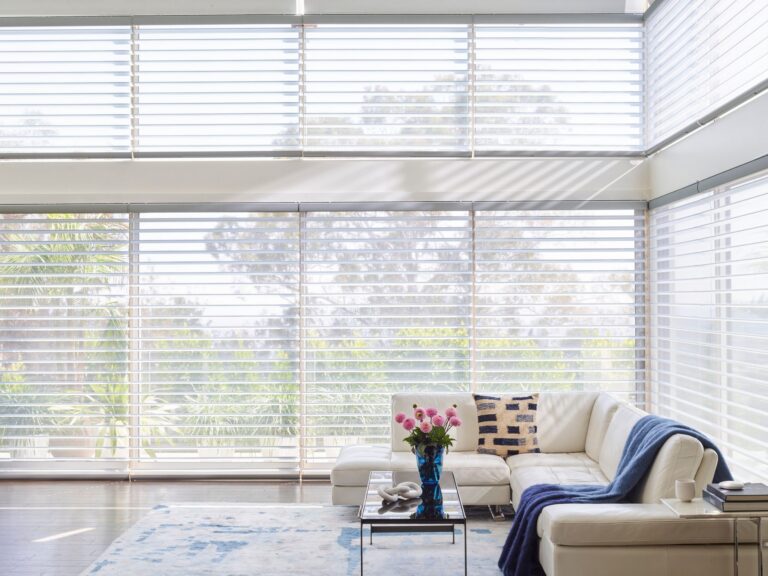
Stony Plain resident Eleanor Vance recently renovated a living area illuminated by expansive floor-to-ceiling glass receiving afternoon sun. Seeking to balance long-term interior protection against budget constraints, Eleanor considered standard warehouse shades versus precision options. Upgrading to Hunter Douglas® custom blinds resolved her durability concerns, establishing continuous insulation and stopping premature sun fading across her site-finished hardwood floors, fine art, and soft seating.
High-Performance Shade Options From Hunter Douglas® And Alta®
Modern residential builds throughout Stony Plain feature expansive glazing and clean trim profiles that benefit from minimalist window coverings. Upgrading to Hunter Douglas® blinds and shades delivers slim headrails alongside motorization options like PowerView® Automation for hands-free adjustments. Similarly, choosing Alta® Window Fashions coverings provides durable textiles tailored to fit tight jambs without obstructing sightlines.
Precision Shading Profiles For Modern Living
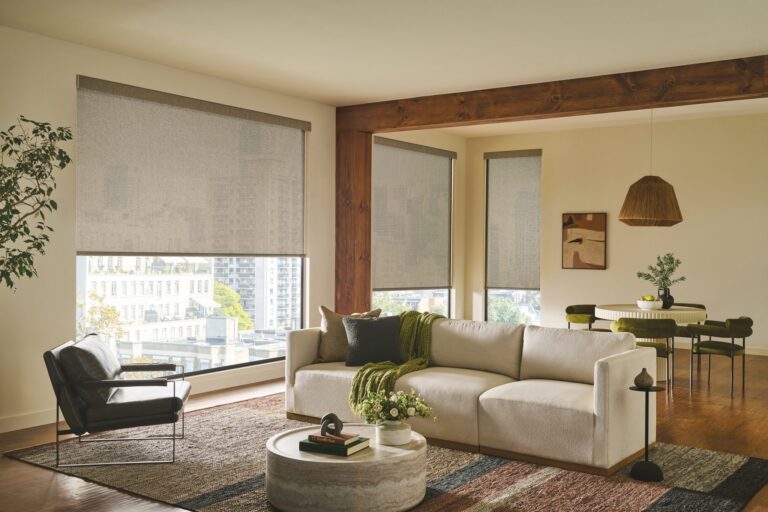
- Designer Roller Shades: A slim cassette encloses the rolled textile when raised, keeping glass clear for outward views. Homeowners select from a broad spectrum of weave densities, patterns, and light blockages to complement open-concept layouts.
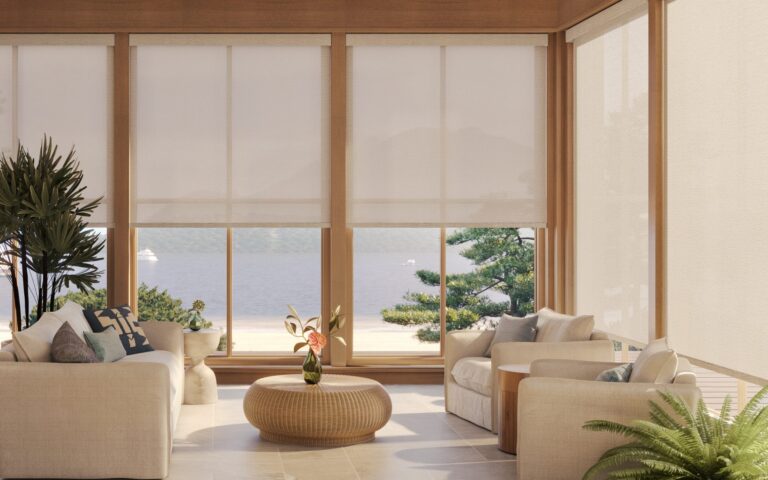
- Designer Screen Shades: Solar-deflecting textiles reduce harsh glare on monitors and televisions while repelling solar heat gain. These engineered weaves protect interiors from ultraviolet degradation without darkening the room or cutting off daytime views of the yard.
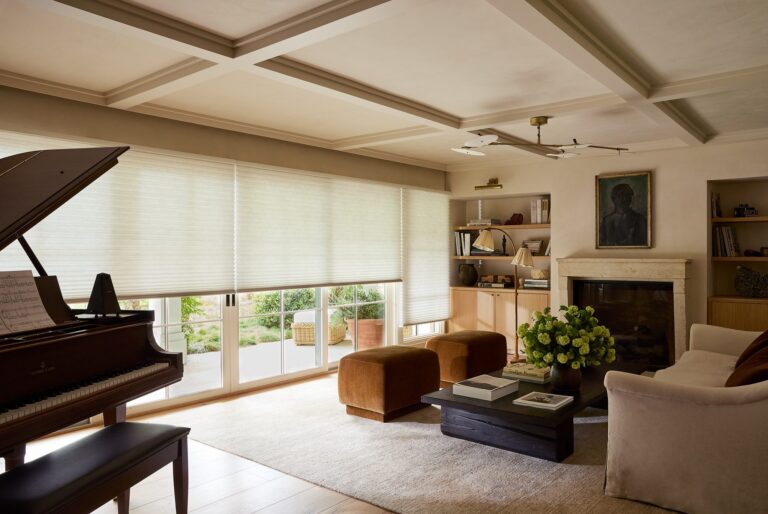
- Duette® Honeycomb Shades: Cellular fabric chambers trap stationary air against the pane, delivering thermal resistance during harsh cold snaps and midsummer heat. Configurations such as top-down/bottom-up operation let you block street-level views while daylight enters from above.
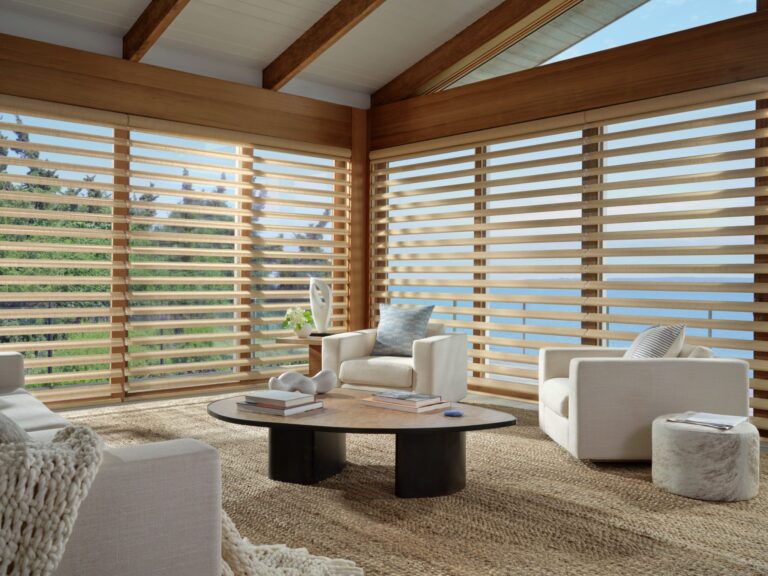
- Pirouette® Window Shadings: Horizontal fabric vanes mount directly to a sheer backing. These vanes contour outward to direct natural daylight into the room, or lay flat to form an opaque privacy screen.
- Silhouette® Window Shadings: Curved, S-shaped vanes rest between two sheer fabric panels, transforming sharp exterior sunlight into soft ambient illumination while shielding the interior from outdoor eyes.
Accurate Window Sizing And Slat Dimensions For Stony Plain Properties
Scheduling a professional custom measures service eliminates side gaps, harsh light halos, and operating friction across every window. Newly constructed residences throughout Stony Plain routinely feature framing variations between 0.125 and 0.25 inches across upper, central, and lower sections as drywall settles over seasonal temperature shifts. Precise measurements protect against costly reorders and ensure smooth daily operation.
Inside Mount Versus Outside Mount Configurations
Mounting location dictates how measurements must be calculated:
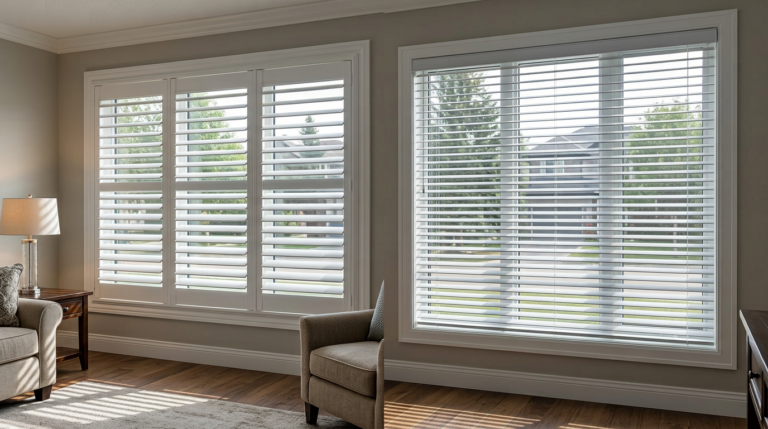
- Inside Mount: Installers record the smallest horizontal width alongside the greatest vertical height within the trim. This method guarantees that rotating vanes clear the side jambs cleanly without scraping paint or binding against the casing.
- Outside Mount: Overlapping the wall or trim by 2 to 3 inches on all sides shields against side light bleed and solves clearance limitations on narrow sills.
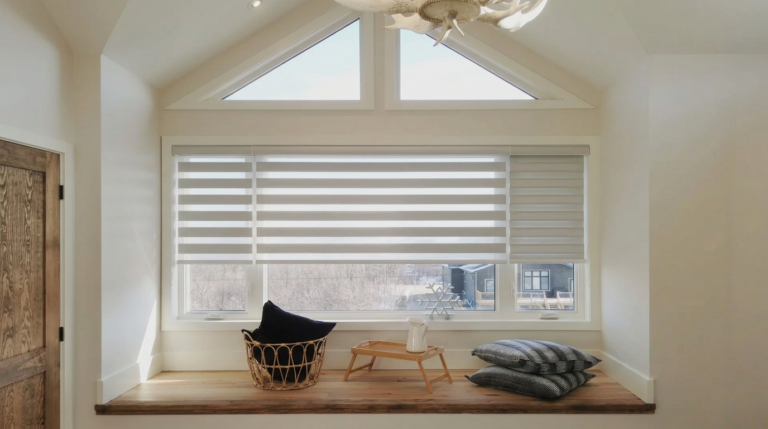
- Specialty Architecture: Securing a precise fit for window coverings on angled transoms, bay windows, or patio doors demands verified depth checks to clear door handles and window cranks.
Selecting Slat Widths By Window Scale
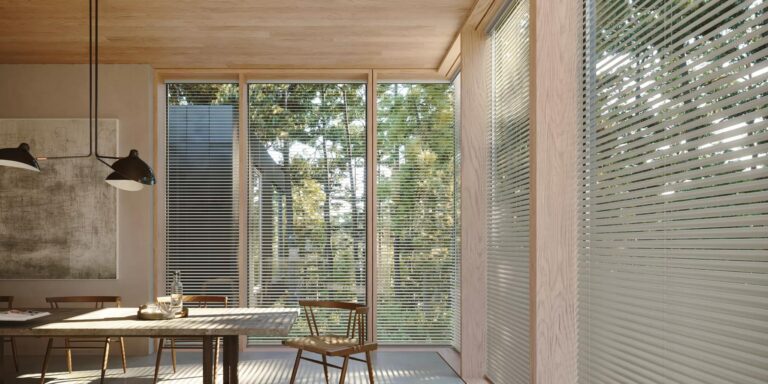
Vane dimensions dictate external visibility, interior privacy, and overall aesthetic weight. Selecting Modern Precious Metals® aluminum blinds provides streamlined 1-inch and 2-inch options suited for compact spaces, whereas composite and natural timber profiles extend into broader 2.5-inch and 3-inch louvers.
| Slat Dimension | Recommended Window Applications | Daylight And Privacy Characteristics |
|---|---|---|
| 1 inch (2.5 cm) | Narrow casements, sidelights, shallow jambs | Offers firm closure and maximum seclusion, though dense slat stacking can clutter expansive glass. |
| 2 inches (5.0 cm) | Primary bedrooms, kitchens, dining areas | Creates balanced daylight intake and street-level screening suitable for traditional or modern architectural layouts. |
| 2.5 to 3 inches (6.3 to 7.6 cm) | Expansive picture windows, primary living spaces | Maximizes open view-through between louvers while reducing the total number of horizontal lines across large panes. |
Precision Fitting And Hardware Restoration For Local Properties
Custom window coverings protect hardwood finishes and upholstery against intense high-altitude sunlight while sealing living spaces against harsh Parkland County winter chills. Blind Magic fits architectural shades to non-standard shapes, such as vaulted transoms, sharp arches, and wide sliding patio doors. During an initial on-site consultation, our specialists record millimeter-precise laser dimensions, assess bracket clearances, and test textile samples under direct sunlight to guarantee proper room dimming and zero side light leaks.
Custom drapery panels layered over cellular shades cut perimeter air movement across massive glass spans, preventing winter cold sinks while muting harsh exterior reflections. Tailoring assemblies to specific structural dimensions prevents fabric bunching, skewed bottoms, and unwanted light gaps.
| Product Line or Service | Primary Application | Price Bracket | Core Performance Advantage |
|---|---|---|---|
| Custom Architectural Blinds | Trapezoids, arches, and high-peak clerestory windows | Mid to High | Engineered millimeter fit prevents frame edge light gaps |
| Residential Shades and Blinds | Everyday light management for whole residences | Entry to Mid | Diverse materials spanning engineered hardwoods and synthetics |
| Hunter Douglas® Duolite® Shades | Bedrooms and multi-use spaces wanting versatile light levels | Mid-Range | Dual-opacity build houses translucent and opaque textiles in one unit |
| On-Site and Workshop Fixes | Restoring snapped strings, damaged slats, and tired drive units | Budget-friendly compared to replacements | Revives existing mechanics without throwing away undamaged fabrics |
Professional blind repairs fix broken tilters, frayed internal cords, and unresponsive automated rollers quickly without the expense of full system replacements. Selecting appropriate solar protection based on specific seasonal climate demands maintains balanced indoor room temperatures throughout the year.
FAQ
To help you navigate measurements and design choices for your next window upgrade, this stony plain blinds styles and sizing guide for modern homes addresses key technical questions in the reference table below.
| Question | Answer |
|---|---|
| Which slat size works best for modern casement windows? | A two-inch slat width fits most modern casement depths without striking window cranks or protruding past the trim. Narrower one-inch slats suit shallow frames, while two-and- half-inch slats provide broader outdoor views in deep window casings. If your window depth measures less than two inches, an outside mount or low-profile cellular shade prevents clearance conflicts. |
| Should you choose inside or outside mounts for older drafty window frames? | Outside mounts provide superior thermal coverage by overlapping the surrounding trim and blocking peripheral air leaks during cold Edmonton, Alberta winters. Inside mounts offer a sleek, recessed profile that modern architecture demands, but require at least two inches of unobstructed jamb depth. If you want a flush inside mount without sacrificing warmth, add magnetic side channels to stop cool air drafts. |
| How do you measure deep window casings for motorized shades? | Measure the inside width across the top, middle, and bottom of the casing, recording the narrowest measurement down to the nearest eighth of an inch. Next, verify that your casing depth provides at least three inches of clearance to accommodate the motorized roller tube, battery wand, or wired power housing. Installers in Edmonton, Alberta double-check bracket placement to guarantee the motor antenna clears metal window mullions and drywall corners. |
| When should homeowners select dual-roller shades instead of single-layer fabrics? | Dual-roller systems are ideal for south-facing living areas and bedrooms that demand daytime glare reduction alongside nighttime darkness. The system pairs a solar screen for filtered daylight with an opaque blackout fabric on a shared bracket. If you only need daylight softening in common living areas, a single light-filtering roller shade handles the job at a lower project cost. |